Poverty in Kolkata
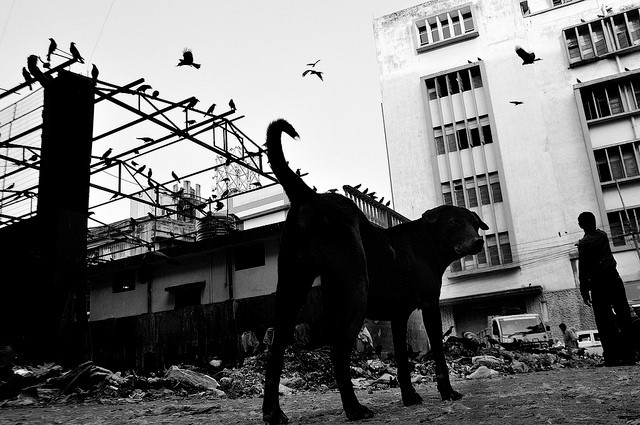
For a city that has produced Nobel laureates like the poet Rabindranath Tagore, physicist CV Raman, economist Amartya Sen and Saint Mother Teresa, Kolkata’s demise into poverty is both unprecedented and alarming.
According to the 2011 census, over 70,000 people in the city are homeless, even with suppression of numbers to improve Kolkata’s rankings. Most of the urban poor who drive cycle rickshaws and work on construction sites or in small, hazardous factories prefer to sleep on the streets. While living in these conditions leaves them vulnerable and unsafe, it allows them to send a few meager savings home.
Perhaps the most disconcerting example of slum formation in this ancient city can be found under the Dhakuria bridge in South Kolkata. A strange patchwork of migrant workers and poorer locals, the railway colony formed along the active train track below the bridge features over a 1,000 residents housed in bamboo shelters. With no social welfare reaching them from the government, the slum-dwellers have confined themselves to a lifetime along the railway tracks, shared with stray dogs and cows.
This extreme form of poverty in Kolkata stems from several factors. The partition of Bengal in 1947 left raw material suppliers of commodities like Jute in East Bengal (now Bangladesh) and the mills in West Bengal, particularly around Kolkata which was then a flourishing port. By the 1970s, aided by the political unrest, major industries like Jute were dead, leading to the loss of jobs and livelihoods.
In 1971, the city opened its arms to around 10 million refugees from Bangladesh after the Bangladeshi Liberation War. While a morally necessary gesture, the sudden massive spike in population led to rampant unemployment for both the 1.5 million immigrants who stayed back after the war as well as for local Bengalis. The infrastructural stagnation of the city ensured that hardly any new jobs were added even when unemployment threw masses into abject poverty.
Despite already bursting at the seams, Kolkata, as an urban metropolitan surrounded by expanses of rural land, has been a magnet for job seekers from neighboring states like Bihar, Jharkhand, Utter Pradesh and Orissa. While most migrants come in with aspirations of making it in the city and having remittances to send home to their families, they often end up trapped in a vicious cycle of underemployment and chronic poverty that compels them to stay in decrepit conditions just to make a few extra rupees. They then become the population inhabiting the slums of Kolkata.
The consequences of extreme poverty in Kolkata are felt by the most vulnerable sections, most notably Muslims and backward castes with low social capital. To battle poverty in Kolkata is as much a matter of bridging social inequalities as it is of providing stable jobs and infrastructure to the less empowered.
– Mallika Khanna
Photo: Flickr
