The Potential of Female Entrepreneurship
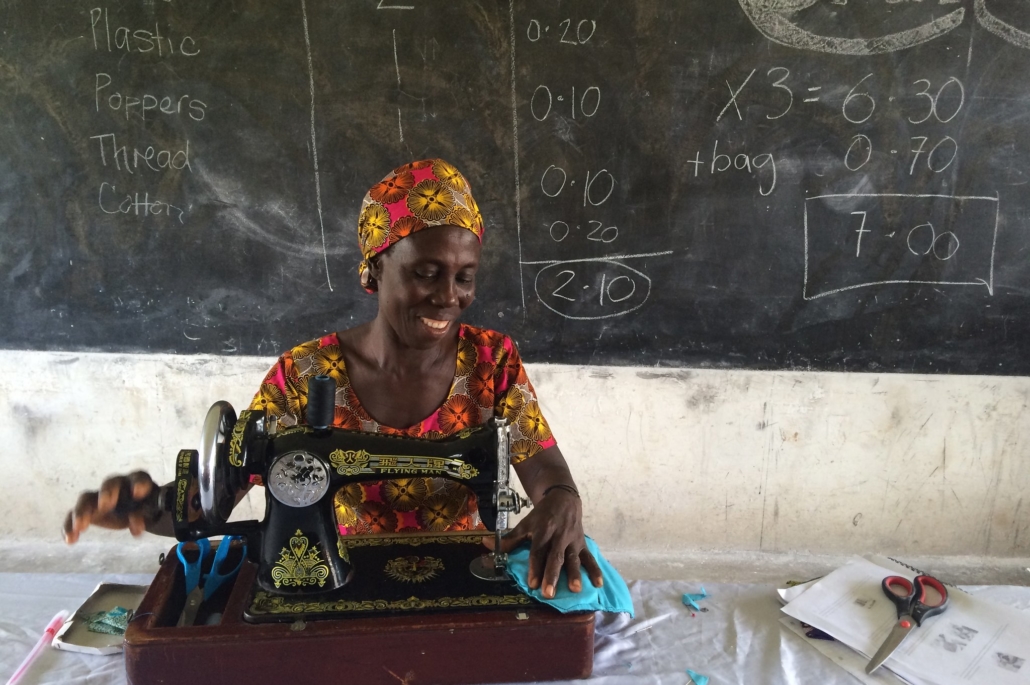
Female entrepreneurship has great potential for poverty reduction in the developing world, helping women support themselves and their families. By becoming entrepreneurs, women can contribute to economies through “innovation, employment and the creation of wealth,” an OECD policy brief states. However, women are underrepresented in the entrepreneurial sector and often run “smaller and less dynamic businesses than men.” Women also tend to run businesses in “non-capital intensive sectors, including personal services,” which have “lower potential for generating a high and sustainable income,” according to the OECD. Women also face a multitude of challenges that hinder their full entrepreneurial potential.
Trends in Female Entrepreneurship
Female entrepreneurship rates are higher in developing nations compared to developed ones. This is because women face increased difficulties in entering “the formal labor market,” thus, many women turn to entrepreneurship as an opportunity to address both unemployment and poverty.
Interestingly, “Larger gender gaps in start-up activity are found in middle-income countries, whereas they tend to be narrower in lower-income countries probably because many women start businesses out of necessity,” an article by Maria Minniti and Wim Naudé explains. Furthermore, women in these lower-income countries tend to be more self-assured in their abilities to start such ventures and are less deterred by possible business failure than women in higher-income countries.
Remarkably, research has found that in developing regions, female entrepreneurship rates are the highest. In the developing world, there are as many as “10 million formal small and medium enterprises (SMEs)” with at least “one female owner,” the World Bank reports.
A 2021-22 report by Global Entrepreneurship Monitor (GEM) report stated that four out of five women in the Middle East and Africa recalled starting entrepreneurial ventures due to “job scarcity.” In particular, Sudan showed the highest rates of female entrepreneurship and Morocco showed the lowest.
Challenges That Female Entrepreneurs Face
Worldwide, in a developed or developing region, entrepreneurs face numerous challenges. However, these challenges and barriers are more significant for women.
- The impact of culture and society. Negative stereotypes persist despite the substantial advancement of women within the labor market. The construction of entrepreneurship as a “masculine” undertaking has profound implications for women. One of the most important is that it lowers the level of legitimacy of female entrepreneurs’ work, thereby affecting the market position of their business along with their resource mobilization. Traditional gender expectations limit the “full realization of their entrepreneurial potential,” according to the OECD.
- Entrepreneurship skills. Women tend to doubt their entrepreneurial skills and abilities more than men do. Furthermore, women find that entrepreneurship skills training programs are difficult to access. Although their education levels mirror or exceed those that men possessed, women often “lack experience in self-employment” and encounter “fewer opportunities” to hold management positions, which “acts as a barrier to gaining management experience and skills that can be used in entrepreneurship,” the OECD says.
- Accessing finance. Women have greater difficulty accessing financial resources for their businesses compared to men. These barriers arise due to “lower levels of entrepreneurial experience, participation in more marginal female-dominated sectors, gender-biased credit scoring and gender stereotyping in the lending process,” the OECD explains. As such, female entrepreneurs usually start their ventures with less funding and are “more reliant on self-funding.”
- Support networks. Unlike their male counterparts, female entrepreneurs “tend to have entrepreneurial networks that are smaller and less diverse.” Women entrepreneurs’ networks typically include family and friends “rather than business services providers or other entrepreneurs.” This can impede the expansion and development of ventures, restricting female entrepreneurs’ access to persons who can provide critical business advice and support.
Successful Female Changemakers in Developing Countries
Jamila Mayanja founded Smart Girls Uganda in 2012 to “tackle the female unemployment rate and train young women to grow their skillset[s],” according to Elle magazine. Her business supports women to become “innovators and solution solvers” and gain financial autonomy. She says “One of the biggest causes of gender-based violence is the power the men have over the women when it comes to money.” Annually, the organization trains and supports 150-200 females through economic initiatives.
As a university student, Zuhura Abdul Sakaya co-founded Youth For Change Tanzania in 2019 as a way to end gender-based violence. Growing up in poverty, Sakaya witnessed her mother’s abuse at the hands of her father. The goal of the organization is to provide women with opportunities for empowerment and economic independence. By engaging the power of traditional and digital media, action networks and coalitions, Youth for Change is able to effect transformation.
Encouraging Female Entrepreneurship
In 2022, the Jammu and Kashmir Rural Livelihoods Mission (UMEED) helped 400,000 women in 48,000 Self Help Groups access capital for entrepreneurship endeavors. The Jammu and Kashmir government is committed to assisting these women to re-skill or obtain new skills through mentorship opportunities in order to help the women entrepreneurs expand their markets.
The World Bank avidly supports female entrepreneurship in developing nations and sees it as a viable route to encourage economic expansion and reduce poverty. Policies that encourage ventures, such as credit access facilitation and business development programs, have the potential to close the gender pay gap for poor women. Supporting female entrepreneurship is one of the key ways to help women rise out of poverty. Despite the challenges, such initiatives ensure that women become empowered and independent.
– Harkiran Bharij
Photo: Flickr
