Paraguay’s Political Future
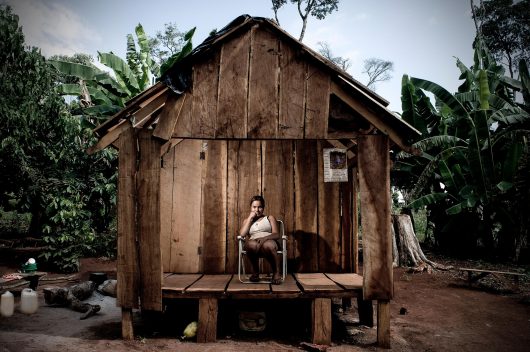
Recently, thousands of Paraguay’s working class, or Campesinos, marched on Asuncion in protest of President Horacio Cartes. Many in Paraguay believe his presidential policy has become too similar to the dictatorships of the past. Campesinos cite an inability to provide debt relief to the small farmers of Paraguay as a fundamental cause of the protest.
Extreme inequality in land ownership has long been a central issue for Campesinos with only two percent of the population owning 80 percent of the land. This almost-monopoly over land has created a powerful and influential agricultural group.
The Campesinos demand a more liberal approach to the issue and elected former President Fernando Lugo for just that reason. Following Lugo’s election, a now notorious massacre occurred, when 60 Campesinos occupying land in Curuguaty encountered a violent struggle with the local police. This incident resulted in the deaths of 11 Campesinos as well as six police officers.
Shortly after, in June 2012, the course of Paraguay’s political future was changed when Congress suddenly impeached former President Fernando Lugo during what many believe was a planned coup d’état. The other members of both Mercosur and UNASUR skeptically considered suspending Paraguay’s membership as a result.
Lugo was replaced by his vice president, Federico Franco, who almost immediately began dialing back many of Lugo’s efforts at aiding the Campesinos in favor of big agriculture. Many believe the massacre at Curuguaty gave parliament the opportunity to scapegoat Lugo as the cause of the conflict. Shortly after Lugo’s impeachment, new President Franco closed all investigation of the massacre at Curuguaty, raising the suspicion of many across Paraguay.
Now Cartes will be expected to answer the plight of the Campesinos in light of several land evictions to occur merely weeks before the march on Asuncion. Despite many bold promises including job creation, new roads and mass transits, the former businessman has not been able to deliver politically. Many countries around the world took note of the transparency laws Cartes introduced, up until they revealed extreme corruption on public payrolls that incited more protests.
While some, like the Campesinos, question Cartes for his policy and odd behavior, it is worth noting that he was able to push through two key changes upon entering the office. The first was a law focused on fiscal responsibility that limited the national debt to 1.5 percent GDP, while the second effort focused on improving Paraguay’s failing infrastructure through a public-private partnership program.
Paraguay’s political future is undergoing rapid and expansive change with each passing year and 2016 is looking to keep things moving forward. Currently, the World Bank predicts the Paraguayan economy to grow three percent this year, making it the second fastest growing nation in South America.
Even with such unrest, Paraguay’s political future is on a path towards entering the rightful hands of the people. Now, maybe more than ever, groups in Paraguay like the Campesinos are making their voices heard loud and clear.
– Aaron Walsh
Photo: Flickr
