A Possible Solution for Meningitis in the DRC
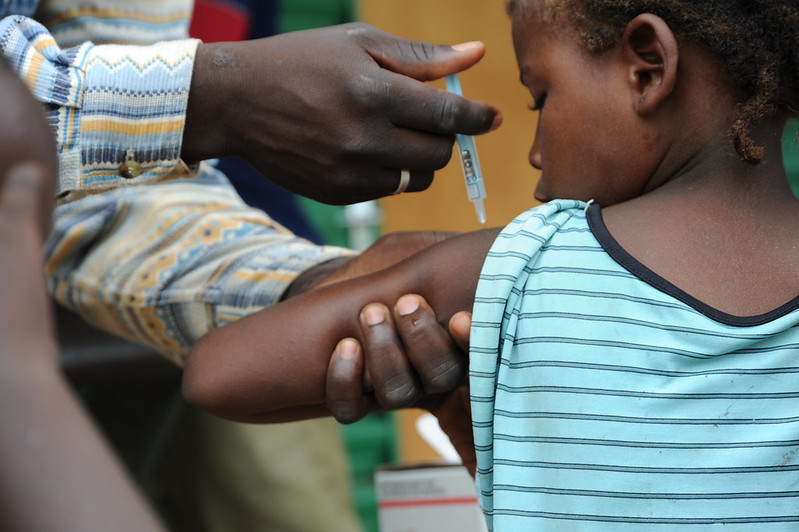
The Democratic Republic of the Congo (DRC) is one of the highest-risk countries for meningitis in the world. During the annual dry season from December to June, the disease claims thousands of lives and disables survivors with chronic illnesses.
Following decades of meningitis-related deaths and urgent calls for international support, the World Health Organization (WHO) launched the Defeating Meningitis by 2030: A Global Road Map. The 2030 roadmap lists three goals: eliminate bacterial meningitis epidemics, reduce cases of vaccine-preventable bacterial meningitis by 50% and deaths by 70% and improve aftercare.
In its new approach, WHO plans an aggressive intervention in the DRC and across the African continent. Experts from across the world have supported and contributed to the campaign through research and advocacy efforts. Yet, reaching the 2030 goal requires much more attention from organizations, funds and community advocacy.
Meningitis in the DRC
Meningitis has plagued the DRC for decades with an estimated 6,000 to 10,000 cases each year. It takes various forms, with some serogroups being more fatal or serious than others. The most recent success in meningitis research targeted meningitis A through the MenAfriVac conjugate vaccine. In the DRC and across the sub-Saharan region where meningitis is most prevalent, MenAfriVac significantly reduced cases of meningitis A. Still, many other common serogroups require attention.
Furthermore, meningitis does not always leave individuals unaffected. “Meningitis is the second cause of neurological conditions in Africa, after strokes,” said Dr. Andre Bita, Regional Control Officer for WHO Africa, in an interview with The Borgen Project. “In the world, it’s the fifth. With meningitis you can have epilepsy, blindness, and so many disorders.” The long-term effects of meningitis have caused medical debt, burdens on families and communities, and lifelong aftercare.
“It is very difficult for a country to have a vaccine stockpile,” continued Bita. In the DRC where diseases including COVID-19, Ebola and measles also run rampant, there is a “competing outbreak response” that often delays meningitis research or vaccinations. For instance, during the COVID-19 pandemic, meningitis control activities fell by 50% from 2019 to 2020.
WHO’s 2030 Plan
Still, the many variations of meningitis leave the DRC vulnerable. “Unfortunately,” Bita continued, “we have other epidemics due to other germs.” Where the MenAfriVac campaign focused on eliminating only meningitis A, WHO’s new vision “towards a world free of meningitis” is to completely defeat the disease and all of its variations by 2030.
The Defeating Meningitis by 2030 initiative outlines five interconnected pillars of meningitis treatment: prevention and epidemic control, diagnosis and treatment, meningitis surveillance, aftercare for meningitis survivors and advocacy and engagement. If WHO can meet these five goals, it will have a higher chance of reducing bacterial meningitis.
While the 2030 roadmap will particularly help sub-Saharan countries like the DRC, it also addresses meningitis in other regions. Bita helped conduct a risk assessment to determine a country’s risk for meningitis, discovering that “we now have 38 countries at high to medium risk, and we only have nine countries at low risk. That means, apart from the sub-Sahara, we have other countries such as Algeria with medium risk.” Therefore, to completely defeat meningitis by 2030, WHO will have to use a continental approach.
Spreading the Word
The 2030 roadmap has all the right goals in place. Experts in meningitis research and community advocates have created a medical and social approach to the problem. However, carrying out the plan will be no easy feat. To be successful, it will require more funds and community awareness from the DRC and the international community.
Bita stated that to carry out the 2030 plan, “we need to really involve all the beneficiaries, all the people who can support it, to make it possible.” It will require advocacy and engagement “at all stages” and resources that many countries do not have.
Through mobilizing provinces around the DRC, Bita hopes the 2030 plan will reach as many communities as possible. To do so, there needs to be more visibility on the 2030 plan, meningitis research, and community engagement at the local, national and international levels. If WHO’s regional plan for Africa receives full funding at its $1.5 billion estimate, the 2030 plan could save more than 140,000 lives.
– Anna Lee
Photo: Flickr
