Maternal Mental Health in Pakistan
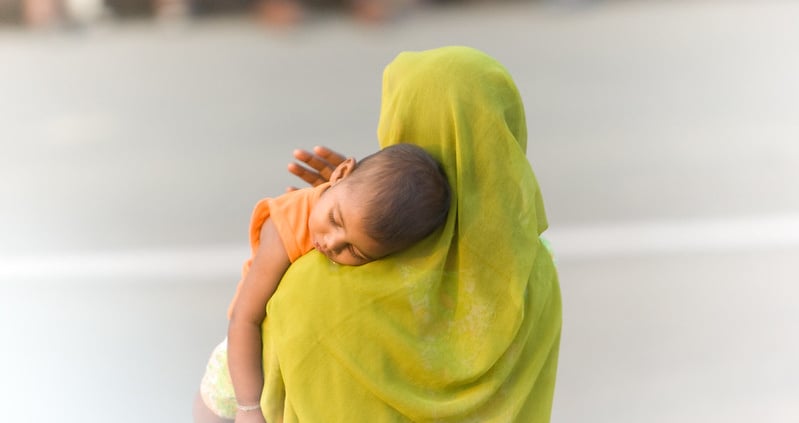 Worldwide, about 10% of pregnant women and 13% of women who have just given birth experience a mental health condition, primarily depression, according to the World Health Organization. In developing countries, that figure rises to about 15.6% during pregnancy and nearly 20% after childbirth.
Depression is among the most common mental health conditions during pregnancy. It is often exacerbated by conditions brought on by poverty, such as unstable living situations, low social support, violence and more.
In Pakistan, poverty remains a significant challenge. In 2024, approximately 23% of the population lived below the World Bank’s $3-a-day poverty line. This economic instability made access to mental health care even more difficult.
Pakistan’s landmark trial addresses the importance of maternal mental health while also taking a novel approach by considering the strain on resources in low- and middle-income countries (LMICs).
The Perinatal Mental Health Crisis
The well-being of the mother is crucial for both the long-term stability of the family and the healthy development of the child, as it contributes to preterm birth, low birth weight, anemia and preeclampsia.
While certain nations have begun to bring attention to maternal mental health, with the United States even devoting $125.5 million in federal funding to the National Maternal Mental Health Hotline, other developing nations simply lack the resources to address this crisis at the same level.
Challenges
Low- and middle-income countries lack the resources. There is a shortage of trained mental health professionals due to limited educational opportunities. Social stigma permeates many cultures, with help-seeking behaviors seen as weak or shameful. Healthcare infrastructure, such as hospitals and mental health clinics, remains unavailable to the larger population, and proper funding is practically nonexistent.
Pakistan has one of the highest reported rates of postpartum depression in Asia, ranging from 28% to 63%. Additionally, more than half of cases go undiagnosed, meaning the majority of women receive no treatment at all.
Maternal Mental Health in Pakistan
Researchers worked to address the high rates of anxiety and depression among pregnant women in Pakistan. By treating women early in their pregnancies, they aimed to prevent more serious mental health issues, such as psychosis and suicidal ideation, following childbirth.
Led by Pamela Surkan, the researchers’ first step was to recruit pregnant women in Pakistan and randomly assign them to control and intervention groups. Then, they trained non-specialist providers in cognitive behavioral therapy (CBT) and the Happy Mother-Healthy Baby program. These providers held a degree in psychology but were not licensed clinical therapists. They received around 50 hours of training and weekly supervision from mental health specialists.
The Human Development Research Foundation (HDRF), a Pakistani research organization founded in 2003, also played a role in the trial. Abid Malik supervised its implementation and data collection, while Najia Atif helped develop the Happy Mother-Healthy Baby intervention.
Every woman in the study attended six individual sessions during their pregnancy. The sessions helped them manage anxiety through techniques such as targeting unhelpful thoughts and practicing healthier behaviors. Additionally, the trial considered culture.
The women were encouraged to turn to their families and their communities as sources of strength and support, rather than isolating them to a singular provider. After childbirth, the researchers checked in with women about their current levels of anxiety and depression.
Results
Although 12% of women in the intervention group developed postpartum depression, the numbers were significantly lower compared to the 41% of women in the control group. Overall, the cognitive behavioral therapy approach given by non-specialist providers led to 81% lower odds of postpartum depression or moderate-to-severe anxiety.
Support from trained non-specialists clearly improved maternal mental health outcomes in Pakistan. These positive results also suggest that the approach could be cost-effective and more easily implemented in low-resource settings, offering a potential model for other LMICs as well.
Scalability
Somalia, another region where maternal mental health is overlooked, could benefit from this intervention. Similar to Pakistan, mental health care is extremely limited, with a lack of trained specialists, disparities between rural and urban areas, lack of transportation and high costs associated with treatment.
Additionally, stigma prevents many women from seeking help. A culturally sensitive approach is necessary for participation, which could include community health workers, home visits, religious leader support and more.
Pakistan’s trial demonstrates that certain forms of maternal mental health care can be delivered by trained non-specialists, potentially reducing many of the barriers created by shortages of resources and mental health professionals.
Given that Somalia has an even more fragile healthcare system, the intervention would need to be adapted to its unique context. Regardless, the results in Pakistan demonstrate the potential of community-based, low-cost care to expand access to maternal mental health services in resource-limited settings. As similar interventions are adapted to the needs of underserved communities, these findings could help expand access to maternal mental health care in countries where traditional options remain limited.
– Diya Rajkumar
Diya is based in Redmond, WA, USA and focuses on Good News and Global Health for The Borgen Project.
Photo: Flickr
