Growing Jamaica’s Agricultural Sector Improves Rural Livelihoods
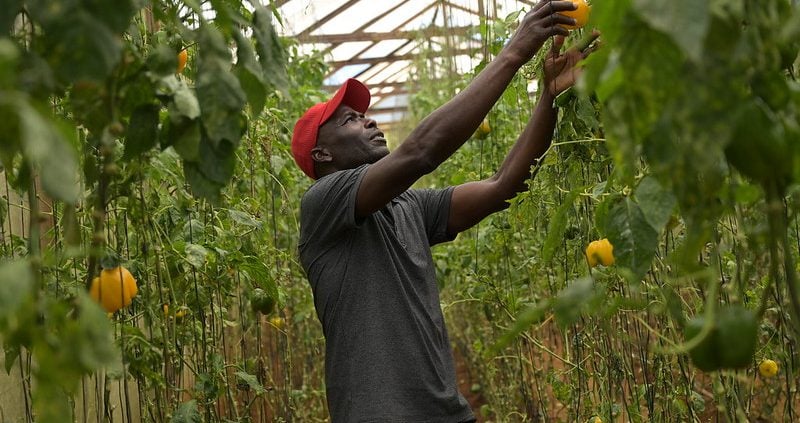 With one in three respondents suffering from severe food insecurity in Jamaica in the 2023 Caribbean Food Security & Livelihoods Survey, food poverty and agricultural production are pressing issues in Jamaica. The high cost of agricultural inputs further intensifies financial difficulties for Jamaican farmers in rural areas, where income levels are lower. However, the government and international organizations like the U.N. and the World University Service of Canada have contributed to Jamaica’s growing agricultural sector, improving rural livelihoods.
Government Investment
The agricultural industry employs close to one in five Jamaicans. Demonstrating its commitment to improving the livelihoods of agricultural workers, in April 2025, the Jamaican government invested over $4.5 billion through the Rural Economic Development Initiative II (REDI II) Programme, which focuses on strengthening the agricultural and tourism sectors.
The investment involves an upgrade in agricultural infrastructure, including the installation of greenhouses in 22 sites, cold storage facilities and irrigation facilities, making crops more resistant to decay and variations in temperature and rainfall. REDI II also aims to increase farmers’ access to hotel and export markets. As of December 2025, more than 5,000 beneficiaries have received income-generating small grants, while close to 1,000 have received training and agricultural inputs, facilitating higher crop yields and more stable sources of income for Jamaican farmers.
Combating Praedial Larceny
Praedial larceny, the theft of agricultural produce, farming equipment and livestock, has been extremely damaging to Jamaica’s agricultural sector, resulting in losses of millions of dollars per year and reducing investment. Addressing this problem, the government set up the Agricultural Protection Branch within the Jamaica Constabulary Force in June 2025.
This specialized unit provides training in agricultural laws, educating officers in investigating and prosecuting cases of farm theft. Additionally, through gathering intelligence, increasing patrols, and teaching farmers about preventive measures, the unit heightens security on the farm, deterring potential criminals. In the span of a year, reports of theft in Trelawny farming communities dropped to almost zero. Given that praedial larceny threatens local production and supply, the unit’s work is vital in securing the livelihoods of farmers as well as in stabilizing Jamaica’s food supply and agricultural economy, protecting Jamaica’s growing agricultural sector.
UN Project Increases Resilience in Kitson Town
The efforts of international organizations have also been instrumental in Jamaica’s growing agricultural sector. The Improving Rural Livelihoods through Resilient Agrifood Systems project, carried out by the Food and Agriculture Organization of the United Nations, concluded this March, laying a solid foundation for the continued development of agricultural businesses in Kitson Town, St. Catherine.
Under the project, more than 200 participants received training in protected agriculture (growing crops in a controlled environment), the management of livestock and business skills, while agricultural programs for high school students paved the way for future prosperity in agricultural communities.
Furthermore, the provision of greenhouses and related production inputs such as fertilizers, organic pesticides and pH meters, fortified crop production and farmers’ income sources against unpredictable climatic patterns, enhancing rural livelihoods. The project was particularly empowering for women, who accounted for over 60% of its participants, increasing their independence and contributions to agricultural production.
Helping Farmers Recover from Hurricanes
The World University Service of Canada is committed to consolidating Jamaica’s growing agricultural sector through both short-term and long-term approaches. Due to frequent hurricanes in Jamaica, the organization strives to improve farmers’ abilities to respond to and recover from natural disasters. More than 1,000 farmers acquired agricultural recovery kits, consisting of essential production inputs, facilitating the resumption of agricultural production in the wake of the destruction wrought by Hurricane Melissa in October 2025.
Regarding long-term measures, the “trade-and-aid” initiative both secures access to export markets and revitalizes potato production in Jamaica through the provision of Canadian agricultural technology, ensuring farmers possess the necessary resources to earn a living. By offering storm-preparedness training and promoting climate-smart agricultural systems, the organization equips vulnerable rural communities with the knowledge and tools to protect their livelihoods against an increasingly volatile climate.
Stronger Agricultural Economy Benefits Jamaican Farmers
These various efforts are continually supporting Jamaica’s growing agricultural sector, enhancing its resilience and improving the lives of Jamaican farmers. The agricultural sector grew by close to 14% in the second quarter of 2025, demonstrating a swift bounce back from Hurricane Beryl, which struck in the summer of 2024. Infrastructure, material aid, education and security measures have made significant progress in increasing production, strengthening income stability and reducing food insecurity.
– Katy Wong
Katy is based in Hong Kong and focuses on Good News and Global Health for The Borgen Project.
Photo: Flickr
