Higher Education in Thailand
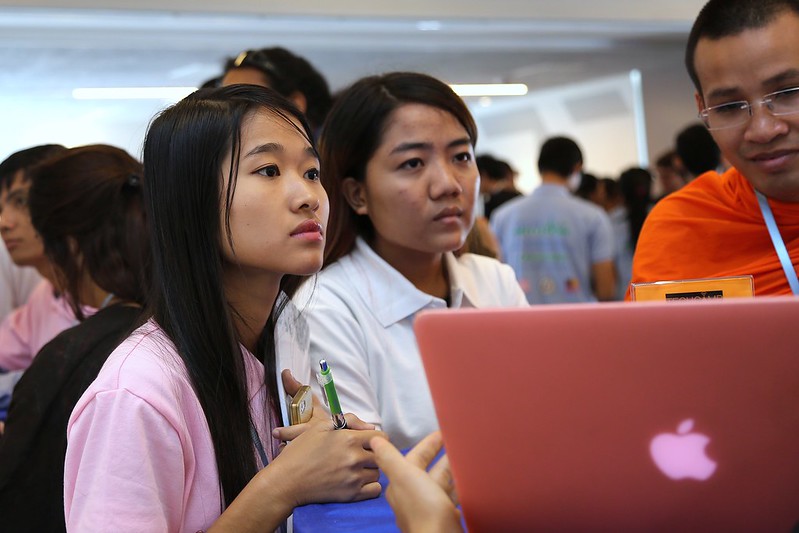
In 1916, Thai monarch King Vajiravudh established the first formal university in the nation. Named Chulalongkorn University after the king’s father, the institution’s founding, along with the royal family’s surrounding emphasis on higher education in Thailand, represented the high value that the Thai monarchy has historically placed on higher education.
Overview of the Higher Education System
Throughout the next century, higher education in Thailand expanded, and as of 2016, the country had 170 institutions of higher education in the form of universities. Admittance to universities largely hinges upon a standardized entrance exam that Thailand has used since 1962.
Unfortunately, the widespread use of this “meritocratic system” of the entrance to universities “favors those of higher socioeconomic background from the best secondary schools” over students from more rural and impoverished backgrounds as rural students are not as likely to take or pass the exam.
Just as unfortunate, in recent decades, enrollment in Thai universities has declined as the demand for university education has dropped off due to reasons “such as the decline of the Thai birth rate and international competition.” Decreased enrollment is now a critical issue that higher education in Thailand faces. For example, in 2015, the number of students who participated in entrance exams stood at around 105,000 while the entrance system had the capacity to annually admit 156,000 students.
The Reason This Matters
On the surface, this may not seem like a pressing problem. However, unfortunately, the declining enrollment is an indication of something far more serious: the rapid aging of the Thai population.
In the year 1970, the Thai government introduced the National Family Planning Program, which, combined with the rising education levels in Thailand, caused a decrease in fertility rates. By 2014, Thailand’s declining fertility rate was falling the fastest out of all the world’s developing nations.
The number of college-age citizens is decreasing and will continue to do so. According to the World Bank Group, “By 2040, it is projected that 17 million Thais will be 65 years or older – more than a quarter of the population.”
The consequences are that higher education in Thailand is now at risk. Universities might have to start downsizing programs or even close their doors permanently. Additionally, this is a challenge for Thai education as the nation is struggling to improve the quality of its colleges. Thailand does not have any highly ranked universities in the international world of higher education and this may be causing the best and brightest students to seek their diplomas elsewhere.
Taking Action
There is a concern that Thailand will not be able to cope with its changing labor market. Recent economic trends show that Thailand is in need of workers with technical or vocational training, and in light of the aging population, this area requires attention.
Fortunately, efforts are underway to reallocate resources, ensuring that the nation prioritizes the most practical programs. Some universities are becoming vocational training institutes and others are simply putting a larger emphasis on technical education.
In September 2021, the Association of Private Higher Education Institutions of Thailand (APHEIT) and Oracle Thailand partnered to increase access to computer science training for students in Thailand. The initiative will involve 39 universities from APHEIT and will help students “succeed in the new digital era” through hands-on practical training. These skills will open up more job opportunities relevant to today.
Higher education in Thailand has a unique challenge ahead of it, but fortunately, there are always innovative ways to increase the future efficiency of a workforce and the education system provides an opportune starting point.
– Mia Sharpe
Photo: Flickr
