Embracing High-Tech Agriculture in Vietnam
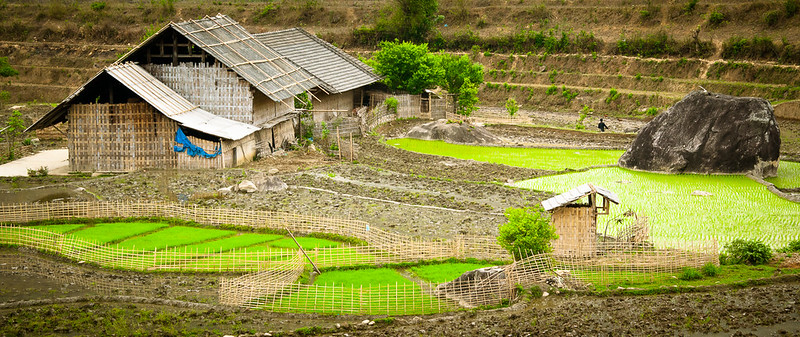 Vietnam is an agricultural giant. It is not only one of the largest rice industries in the world, but also readily produces products such as coffee, rubber and fish. However, despite Vietnam’s success in the agricultural sector, challenges such as pests, water scarcity, climate change and natural disasters threaten the security of agricultural production and the income of Vietnamese farmers, and a need to combat these challenges has arisen. Farmers in Vietnam are embracing high-tech agriculture to keep up with these challenges and sustain their livelihoods, spreading the use of sustainable farming methods that increase productivity.
Sustainable Agriculture With VinEco
VinEco is a pioneer of sustainable agriculture in Vietnam. It owns 15 high-tech farms spreading over 3,000 hectares and aims to increase the quality and output of production through the application of advanced production technology such as Microgreen Production, Nutrient Film Technology (NFT), Drip Irrigation and Sprinkler Irrigation.
VinEco is working with Bayer, a global company delivering innovations in sustainable agriculture, to facilitate a knowledge transfer from the experts in VinEco and Bayer to farmers in local communities. The farmers receive training and support for using sustainable farming practices, resulting in better harvests through clean farming and allowing them to keep their jobs in the ever-changing landscape of the agricultural industry.
Smallholders dominate Vietnam’s agricultural industry and account for over 80% of its coffee exports. VinEco has a network of over 1,000 smallholder farmers, and providing them with technology and training to boost production can unlock opportunities in international markets and trading. By participating in international fairs, VinEco is sharing Vietnam’s agricultural products with the world and promoting local businesses. Embracing high-tech agriculture in Vietnam contributes to poverty reduction through the export of local products to Japanese, Korean and European markets.
Bac Ninh’s Agricultural Breakthrough
In Bac Ninh, a densely populated province, the use of high-tech agricultural production has expanded to account for 30% of total agricultural production value, with 100% of the province’s communes and districts applying advanced rural development standards. There are 72 high-tech cultivation facilities in Bac Ninh, covering a total area of 161.65 hectares, and 72 high-tech livestock farms with automated stalls and water suppliers. There are also 153 aquaculture farms that supply 400–500 tons of fish per year to the market, bringing in a revenue of VND 18–20 billion annually. By investing in synchronous mechanization, there has been an increase in productivity as well as the quality of products, resulting in high economic efficiency.
Bac Ninh’s efforts at sustainable economic development have not only contributed to poverty reduction by increasing economic value and efficiency for farmers, but have also attracted nearly 200 agricultural companies, such as Vietnam National Seed Group Joint Stock Company (VINASEED) and Orion Company. With farmers cooperating with companies to increase efficiency and innovations in production, Bac Ninh has established close links to giant firms and created more than 20 certified safe food and agricultural supply chains.
Rice Farming in the Mekong Delta
Much of Vietnam’s rice farms run along the Mekong Delta. The emergence of climate change, however, has started changing the waterscapes of the Mekong, leading to farmers looking for change in the water-intensive process of rice farming.
In one pilot project, university researchers from Tra Vinh University (TVU) have teamed up with local farmers in the Phu Can cooperative to implement the alternate wetting and drying (AWD) technique, which allows farmers to reduce water consumption. Instead of continuously flooding fields for rice harvest, as farmers from the Mekong Delta have traditionally done, AWD allows farmers to flood and drain their fields in quick rotation, leaving the fields to dry for several days before flooding them again. To ensure farmers can monitor their fields to determine when they should reflood, TVU researchers have created an app that links to solar-powered sensors in AWD plots that record the underground water levels every five minutes.
Upon realizing that AWD not only uses up to 20% less water, but also costs less and consumes fewer resources, farmers in the Mekong Delta have started taking up AWD, recognizing the need for innovation and moving away from traditional methods. AWD also has environmental benefits — it reduces greenhouse gas emissions by 30–50%, creating a more sustainable method of rice farming without negatively impacting productivity. In the face of climate change, these benefits are more important than ever for farmers to sustain their livelihoods.
Embracing Sustainable Agriculture in Vietnam
With climate change affecting the landscapes of Vietnam, dense populations creating more demand for agricultural goods and natural disasters impacting the security of farmlands, there is a need to embrace sustainable agriculture in Vietnam to prevent farmers from losing their livelihoods. By adopting high-tech methods and innovations, farmers can increase productivity and generate more income, sustaining Vietnam’s status as an agricultural giant.
– Stephanie Chan
Photo: Flickr
