The UN Is Helping Women Fight the Gender Pay Gap in Rwanda
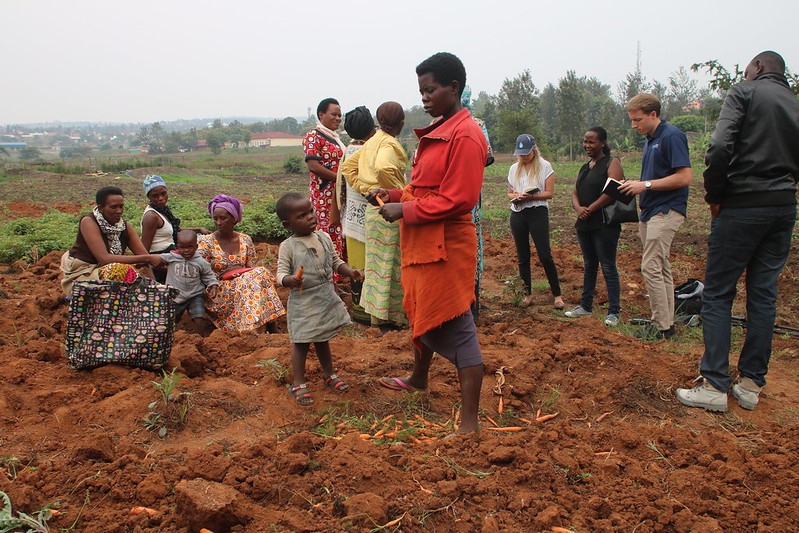 Rwanda is a fascinating country in terms of women’s rights. Even though it’s one of the poorest countries in the world, it ranks fifth in the Global Gender Gap Index, beating even the United States. The main reason for that is due to the genocide that happened in the country in 1994, which killed most of the male population, forcing women to take on most of the available jobs. Today, women constitute 86% of the workforce (as opposed to only 56% in the U.S.). Additionally, 61% of the Rwandan Parliament and 50% of the President’s cabinet are women. However, this high participation rate does not translate to wage parity: women in Rwanda earn approximately 88 cents for every dollar men earn. As such, the gender pay gap in Rwanda remains a significant challenge to the country, despite its progressive gender policies.
Main Causes behind the Pay Gap
Several factors contribute to the gender pay gap in Rwanda, such as discrimination in hiring practices and educational disparities between men and women. Nevertheless, the main reason is that women disproportionately shoulder unpaid domestic and care responsibilities, limiting their availability for paid work and career advancement opportunities. In Rwanda, for every hour a man spends on care work, a woman spends three hours.
Addressing the gender pay gap involves multifaceted approaches, one of the most impactful being economic empowerment programs. These initiatives aim to provide women with the skills, resources and opportunities to enhance their financial situation. Economic empowerment programs in Rwanda focus on various aspects such as access to finance, entrepreneurship training and creating supportive environments for women to balance work and family responsibilities.
One notable initiative is the U.N. Women’s partnership with local districts to establish Early Childhood Development Centres (ECDs). These centres offer affordable childcare services, allowing women to engage in income-generating activities without the burden of unpaid care work. In the Nyaruguru district, the establishment of three ECDs has enabled more than 200 women to participate in the labor market, significantly improving their productivity and income.
Impact Stories
The power of this noble measure to diminish the gender pay gap in Rwanda is best illustrated through the personal experiences of the women it benefits. For instance, Christine Mukamana faced the challenge of balancing her farming duties with the demands of raising five children. The introduction of an ECD in her community allowed Christine to enrol her youngest children, ensuring they received proper care and education while she focused on her work, according to the U.N. Women. This support significantly boosted her productivity on the farm, leading to increased income and improved living conditions for her family.
Another example is Dative Mfitumukiza, a woman living with a physical disability in Musanze, Rwanda. Despite the numerous challenges posed by her condition, Dative was determined to pursue a business venture to support herself and her children. She participated in a U.N. Women’s training program that provided her with essential business skills and financial support. Through this program, Dative was able to start a cassava flour business, which now generates a steady income, U.N. Women reports. Her success story highlights the importance of inclusive economic empowerment initiatives that cater to the diverse needs of women, including those with disabilities.
Collaborative Efforts for Greater Impact
The success of these programs depends on collaboration between various stakeholders, including government agencies, non-governmental organizations and international partners. For instance, the “Safe Rural Public Spaces” project, funded by partners such as the Republic of Korea, aims to create safe environments for women to pursue economic activities. Additionally, partnerships with organizations like the Rwanda Men’s Resource Centre (RWAMREC) and Action Aid are crucial in addressing cultural and social barriers that deter women’s economic participation, according to U.N. Women.
These partnerships are particularly essential to challenging harmful social norms about gender roles, a pivotal step to bridging the gender pay gap in Rwanda. These collaborations promote gender equality training and awareness campaigns, encouraging men to support and share domestic responsibilities, thus enabling women to contribute more effectively to the economy.
Moreover, access to financial resources is a critical component of economic empowerment. Programs that provide women with microloans, business training and financial literacy are making a significant difference. The partnership between U.N. Women and ADEPE Rwanda, supported by the Swiss Agency for Development and Cooperation, has reached more than 2,500 women, including marginalized groups such as former sex workers and adolescent mothers, U.N. Women reports. These women have received training in entrepreneurship and financial management, with about 80% starting or expanding their businesses.
A Model for Gender Equality
Economic empowerment programs are playing a pivotal role in closing the gender pay gap in Rwanda and promoting gender equality. By providing women with the necessary tools and resources, these initiatives are enabling them to become economically independent and contribute meaningfully to their communities. The success of these programs demonstrates that with the right support and collaboration, significant steps can be made toward achieving not only gender parity but also unlocking the full potential of the country’s workforce, driving sustainable economic growth and development.
With efforts from government, businesses and civil society to continuously invest in such programs, coupled with efforts to change societal attitudes towards gender roles, Rwanda can continue to serve as a model for gender equality in Africa and beyond.
– Clara Tripodi
Clara is based in Salvador, Bahia, Brazil and focuses on Business and Technology for The Borgen Project.
Photo: Flickr
