Four Reasons to be Excited About Nanosatellites
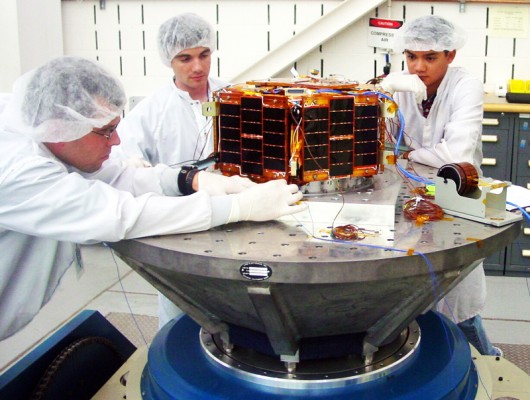
Recently, there has been a lot of hype surrounding nanosatellites. These satellites are an emerging technology in space development and offer the potential for more developing countries to reap the benefits of traditional satellites without the hefty costs associated with them.
Nanosatellites are small satellites weighing between 1kg and 10kg. CubeSats are box-shaped versions of nanosatellites and are currently one of the most widely-used forms. They are very light compared to traditional satellites, which can weigh up to several tons.
Why are nanosatellites so exciting? The reasons range from their cost and convenience to unique benefits that they can bring to the table. Here are four of the main reasons:
1. They are cheap and convenient. Compared to traditional satellites, nanosatellites retain the same or similar capabilities, while costing significantly less. According to the online publication The Conversation, while the cost of traditional satellites can be hundreds of millions of dollars, a CubeSat can be built for around $100,000 and can be launched for many of the same missions that their traditional counterparts can. “Including the launch, a nanosat of CubeSat dimensions might cost $150,000-1m, rather than $200m-1 billion for a full-sized one,” an article in the Economist corroborates.
Furthermore, nanosatellites are more convenient to build. According to the Economist, due to their low cost and less stringent standards of regulation, they can be built faster. Nanosatellites also have a relatively short lifespan of perhaps no more than a year or two in low-Earth orbit before re-entering the atmosphere and burning up. This allows for less risk-management during the building and launch phases.

2. They will help the space programs of developing countries. Funding is often a big problem for these programs; they are constrained by the high cost of traditional satellites and supporting infrastructure. The low costs of nanosatellites, however, offer a solution.
“From being cheaper to build and launch into space, they provide a cost-effective platform for training and research, especially for countries where heavy investment in a space industry has to be weighed against more immediate needs such as health and welfare,” the article on The Conversation says.
In addition, nanosatellites will encourage more youth to enter the space industry. Speaking about Africa, the Conversation notes that young people are entering careers in STEM at low rates. Nanosatellites, though, can be integrated into training at a lower cost and will thus give young people more first-hand exposure to the technology. They also have a “cool” factor: “Combining the vibrant ingenuity and creativity of this generation with an equally ingenious and cool space technology can no doubt have a profoundly positive socioeconomic impact on Africa,” says the Conversation.
3. They are closely integrated with modern, advanced technology. According to the Economist, small satellites benefit from the constant improvements in price and performance being achieved by the consumer-electronics industry, particularly in smartphone technology.
A modern phone is equipped with technologies such as an accelerometer to measure how fast it is moving, a magnetometer to detect magnetic fields and provide a compass reading, a gyroscope to measure its position, a barometer to detect pressure and much more. These technologies provide nanosatellites with a wealth of resources to work with.
4. They provide unique benefits. Though traditional satellites are able to certain complex tasks that nanosatellites cannot, nanosats have their own unique advantages.
According to the Conversation, because they are low cost, multiple nanosatellites can be launched into low-Earth orbit. The satellites in these constellations pass over a specific geographic area more frequently than single, big-satellite missions. This allows nanosatellites to be used for rapid responses to disasters or to gather timely information relating to telemedicine, environmental management and asset tracking.
The unique potential of nanosatellites is also being seen in other projects. According to the online publication Inverse, the company SkyFi is working on creating a nanosatellite network to provide the entire world with free internet access. The cheap costs and flexibility of nanosatellites would allow them to circumvent the problems preventing traditional satellites from providing reliable wifi.
“The high flexibility of our nanosatellites and the ability to provide multiple services to different customers enables us to offer free internet access to the whole planet in the same manner as GPS services are free. We think this has the potential to bridge great divides and give everyone worldwide a part in the great global connected community,” Raz Itzhaki Tamir, Co-Founder and CEO of SkyFi, said in a press release.
– Anton Li
Sources: The Conversation, The Economist, Inverse, PRWeb
Photo: Kirtland Air Force Base
