Currency Crisis Deepens Food Insecurity in Laos
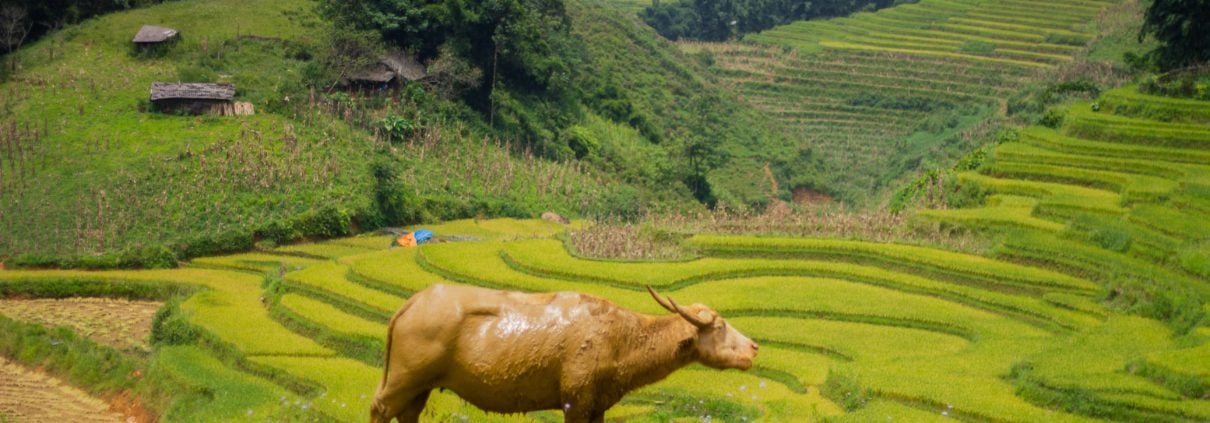 Despite a decrease in poverty, food insecurity in Laos has increased amid a currency crisis. According to the World Food Programme (WFP), the prevalence of food insecurity is significantly higher in rural (12.8%) and mountainous areas (19.3%) than in urban (5.6%) and non-mountainous (7.1%).
A Currency Crisis Affects Household Budgets
The Lao kip has fallen by 60% against the U.S. dollar since 2022, driving up prices for food and fuel and straining households already dealing with malnutrition. Inflation climbed above 40% in 2023 before easing to just under 20% by late 2024, following tightened monetary policy and new exchange rate controls.
High food inflation has increased food insecurity in Laos, particularly among urban households that do not grow their own food. The World Bank conducted a survey between May and June 2024, finding that average wages grew 8% in the first half of the year, far below the 26% inflation rate at the time. The share of households reporting a significant negative impact from inflation rose to 58% by June. Many families responded by scaling up home food production and foraging, while rising numbers of workers migrated to Thailand for better pay.
Heavy flooding in 2024 further reduced agricultural output in the country’s northwest, putting pressure on a population where nearly one in three children experiences stunting. According to reports, 20% of the population also remains food-insecure. Even still, Laos is one of the fastest-growing economies in the Asia-Pacific region and is expected to graduate from least-developed country status in 2026, though persistent malnutrition and rising anemia and wasting rates continue to threaten that progress.
WFP’s Two-Decade Investment in School Meals
WFP has spent two decades partnering with the Lao government on nutrition and school feeding programs, providing nutritious food and cash assistance when needs exceed government capacity. School feeding began in Laos in 2002 as a pilot program serving 30,000 children and has since expanded to reach hundreds of thousands of students nationwide. The program has been credited with increasing school enrollment by helping 140,000 children in 1,430 schools. According to WFP’s Country Director and Representative, well-nourished, healthy schoolchildren are better equipped to learn, to “fulfill their potential as adults” and to contribute to national development.
With this assistance, there has been a growing number of children enrolled over the past two decades, including children receiving school meals. Thanks to this, they have spent six months longer at school in contrast to their peers who do not receive meals.
WFP’s current strategic plan targets improved nutrition for women, girls and children under 5, alongside a national school meals program intended to reach vulnerable districts by 2026. The plan builds on a partnership with the Ministry of Agriculture and Forestry. It helps smallholder farmers, especially women, to supply diversified, nutritious food directly to schools, strengthening local agricultural markets alongside child nutrition outcomes.
ADRA’s Community-Based Nutrition Programs
The Adventist Development and Relief Agency (ADRA) also runs programs addressing hunger and malnutrition directly, focusing on reproductive-age women and children under 5 in Lao, Khmu and Hmong villages. ADRA staff, village health volunteers and health center staff visit pregnant and lactating mothers at their homes to inform them on health messages and teach them how to take care of their own health, their families and children.
Its Positive Deviance/Hearth approach enrolls malnourished children in a 12-day community feeding and education program, teaching mothers to prepare nutritious meals while monitoring children’s growth for a full year afterward. In Xiengkhuang Province, acute malnutrition among children under 5 has reached as high as 10.43%, chronic malnutrition 33.43% and underweight 12.71%, underscoring the need for sustained intervention.
In addition, through past projects like the Mok Mai Integrated Development Initiative, which was implemented in Lao and Hmong villages in Mok Mai District, Xiengkhuang Province from 2010 to 2016, ADRA analyzed the local communities to determine what kinds of agriculture systems are suitable in the local context.
ADRA worked to provide training for the establishment of Group Enterprises to aid in the development and sustainability of local markets, which helped local value-adding processes within the target villages. By having farmers and producers collaborate, the Group Enterprises empowered local producers to not only improve their livelihoods but to improve the overall agricultural landscape within their communities.
The project’s goal was to increase resilience and decrease vulnerability to poverty in target rural communities through a comprehensive integrated approach to ground-level community development.
Building Resilience Amid Economic Uncertainty
These programs are building long-term resilience against food insecurity even as Laos navigates continued economic uncertainty. With the launch of the National Action Plan on Transition toward Sustainable Food Systems Transformation in partnership with the United Nations Resident Coordinator’s Office, the Food and Agriculture Organization of the United Nations and Asian Development Bank, the plan focuses on specific areas to bring action and prioritize inclusive, resilient and nature-positive food systems. As it heads toward graduation from least-developed country status, this will be an opportunity for change.
– Joy Kohol
Joy is based in Muncie, IN, USA and focuses on Good News and Global Health for The Borgen Project.
Photo: Unsplash
