Five of the Most Important Facts About Poverty in Jordan
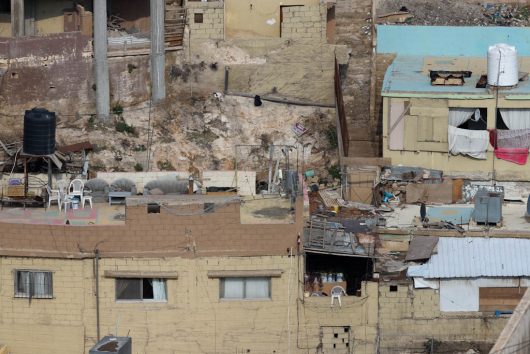
Located at the crossroads of Asia, Africa and Europe, Jordan is known for being one of the most politically stable countries in the Middle East and home to numerous historic sites, including Petra and the Dead Sea. Despite this rich cultural history, Jordan has suffered from poverty and underemployment, exacerbated in recent years by an influx of refugees from Syria — its neighbor to the north. Here are five facts about poverty in Jordan that give further context to this nation’s economic challenges.
Five Facts About Poverty in Jordan
- With an arid climate and a paucity of water catchment systems, Jordan is the third most water scarce country in the world. An increasing majority of Jordan’s population inhabits urban areas. Yet large cities are often far from sources of water, necessitating costly water shipments. Furthermore, most of Jordan’s water resources go to its agriculture sector, which contributes minimally to Jordan’s GDP (despite its large intake of natural resources). As the population continues to swell, water scarcity will increasingly challenge farmers to improve food security through environmentally sustainable practices.
- The problem of water scarcity contributes to food insecurity. Dominated by a far-reaching steppic zone, only 1.97 percent of Jordan’s land is arable. Approximately 67 percent of the agricultural production relies on rain, leaving farmer’s vulnerable to drought. With limited production levels, Jordan must import 97 percent of its food. The resulting dynamic has made food security a common problem among Jordanians. A UNDP study found food insecurity in over one third of households, where families could not afford three meals a day.
- Recently, faltering GDP growth represents another telling fact about poverty in Jordan. Jordan has suffered from an underperforming economy, stymied by the global economic crisis of 2007 and further exacerbated by the turmoil of the Arab Spring and ensuing conflict in Syria. The effect has been to depress Jordan’s GDP growth by hindering trade, industry and tourism. The GDP growth dropped from 8.2 to 2.8 percent between 2007 and 2013. Public debt reached 79 percent of GDP in 2014 and unemployment rose to 14 percent. Furthermore, women participate in the economy at lower rates than other nations in the region, despite comparatively higher educational outcomes.
- An influx of refugees from Syria has put a further strain on Jordan’s stagnant economy and limited resources. According to the United Nations High Commissioner for Refugees, there are 630,776 registered persons of concern and approximately 1.4 million Syrian refugees in Jordan. With only 20 percent of these asylum seekers located in camps, the majority are interspersed throughout the state, increasing the strain on Jordan’s water and food supplies, housing and energy.
- Regional Instability has exacted further costs on Jordan’s economy. Due to the low availability of domestic energy reserves, Jordan relies heavily on subsidized imports from its neighbors, such as natural gas piped in from Egypt. Since the 2011 uprising that resulted in the ouster of Hosni Mubarak, dozens of attacks by militants on energy pipelines have disrupted the supply chain to Jordan, incurring billions of dollars in losses as the country has had to substitute costlier heavy-fuel oils.
Though these facts about poverty in Jordan are troubling, Jordan’s government has launched major programs to stimulate the economy and protect against food insecurity. The World Bank projects Jordan to have a a 2.3 percent growth rate for 2017, and an average rate of growth of 2.6 percent between 2017 and 2019.
Furthermore, with the support of the United Nations Development Programme and the World Food Programme, the Jordanian government has initiated anti-poverty policies aimed at improving sustainable agriculture and supporting citizens and refugees hit hardest by poverty in Jordan.
– Whiting Tennis
Photo: Flickr
