Environmental Displacement in Bangladesh
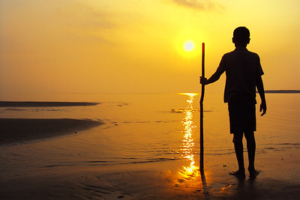
The sea is slowly swallowing the coast of Bangladesh. Meanwhile, inland erosion along riverbanks is eating away much of the arable land. With 50% of Bangladeshis living as farmers, their livelihoods are quickly becoming unsustainable, and many are being left with only one option: migration.
Rising Waters
Over thousands of years, the rivers that lace Bangladesh have forged the land. The Ganges, Brahmaputra and Meghna rivers deposited sediment that eventually made up the Ganges Delta. Constant flooding has made the soil incredibly fertile, but it also has made environmental displacement in Bangladesh one of the most pressing issues in Asia.
Projections determine that the country will lose 11% of its land by 2050 because of sea-level rise. Most notably, the increased melting of glaciers in the Himalayas is eroding river banks and destroying 10,000 hectares of land a year.
Consequently, 87% of Bangladeshi people living in disaster-prone areas have been either temporarily or permanently displaced by flooding, riverbank erosion or sea-level rise. Many of these people move to Dhaka, the densely populated capital city, or across the border into India.
The Environment’s Impact on Migration
“The impacts of environmental degradation are almost always felt among the poorest populations,” said Pablo Bose, an Associate Professor at the University of Vermont. Dr. Bose studies geography and has published comprehensive research on environmental displacement in Bangladesh, as well as across the globe.
Unfortunately, few places have accepted these environmental migrants with open arms. India has a 2,000-kilometer fence on its border and a shoot-to-kill policy for anyone trying to cross over from Bangladesh, including unarmed villagers.
Dhaka, on the other hand, is very accepting of its domestic, rural migrants. However, the population increase has exacerbated pollution, congestion and poverty throughout the capital city. With 13 million people in just 125 square miles, much of the city’s infrastructure is struggling to function.
Dr. Bose sees Bangladesh as a “hotspot” for learning about environmental displacement. Globally, projections determine that 200 million people will be at risk from sea-level rise by 2100, so the solutions Bangladesh discovers will be relevant to the entire world in the following century.
Exploring Solutions
But what options are there to reduce environmental displacement in Bangladesh? From the environmental perspective, there are actually quite a few: as Dr. Bose said, “Our vulnerability to environmental disasters has a lot to do with our choices.”
For Bangladesh, this process may mean creating further conservation protections for the Sundarbans, which is a mangrove forest located on the southern coast of the country. This area provides the country with essential ecosystem services. For instance, the Sundarbans maintain the health of fisheries and protect the land from hurricanes.
To prevent environmental displacement inland, the government could work towards planting trees beside rivers. Tree roots help keep the soil of river banks compact, reducing the amount of erosion from rainfall and Himalayan glacier melt.
The question of how to reintegrate environmentally displaced people is somewhat more complex. The case of Bangladeshi migrants in India demonstrates the deep influence of socio-political and historical factors. “The question of how we welcome people is a question of how we understand these issues,” Dr. Bose said on the subject, adding, “a lot of who we accept is about identity.” Perhaps viewing migrants as people who experienced environmental challenges, rather than as citizens of a foreign, Islamic country, will help better understand environmental displacement in Bangladesh.
Ultimately, every country in the world may experience environmental difficulties. For this reason, the impacts of environmental displacement in Bangladesh are relevant to every person.
– Christopher Orion Bresnahan
Photo: Flickr
