Education in Indian Languages: Expanding Economic Opportunity
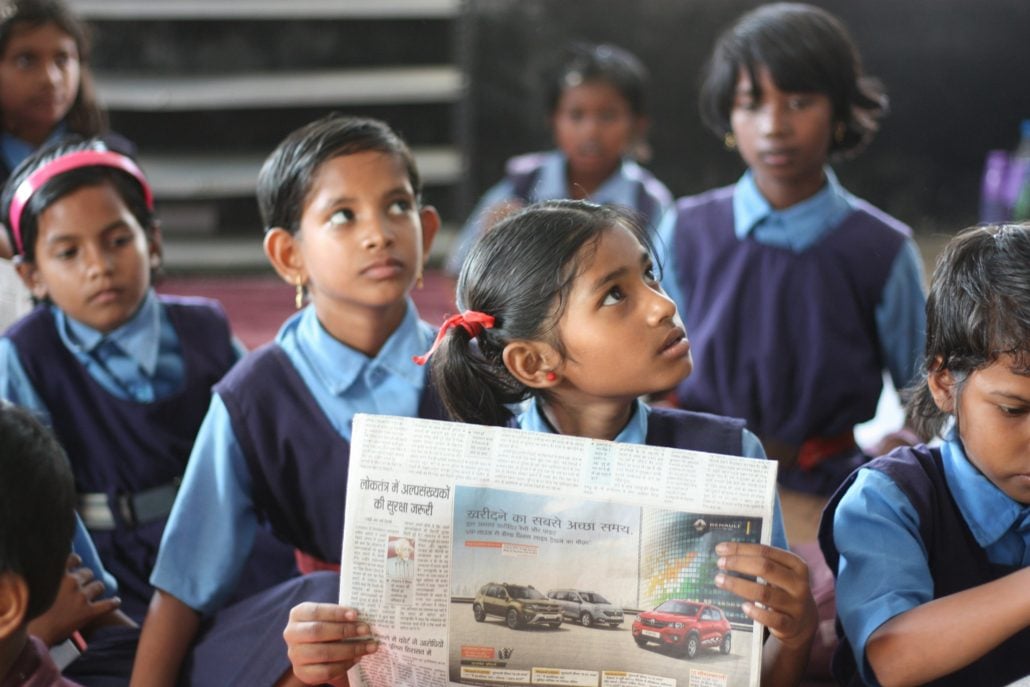
India’s linguistic diversity is an important part of its culture, but language can also affect how students access education. For students who are more comfortable learning in their home or regional language, being taught primarily in another language can make it harder to understand lessons and participate in school. Education in Indian languages could help reduce this barrier while expanding access to educational and economic opportunities.
The Government of India has recently increased its focus on multilingual education. The Bharatiya Bhasha Pustak Scheme, announced in the 2025 Union Budget, aims to provide digital educational books in Indian languages for school and higher education. The scheme envisions making educational content available in 22 Indian languages.
When Language Becomes a Barrier to Learning
For some students, the language used in the classroom may not be the language they understand best. UNICEF India has found that children can struggle when they enter school and are expected to learn in a language different from the one they speak at home. These difficulties can affect understanding, confidence and participation and can increase the risk of leaving school early.
A UNICEF-supported language mapping project in Chhattisgarh examined more than 400,000 first-grade students and 30,000 teachers across 24 languages, including 11 tribal languages. The project found that about three-fourths of students and nearly half of teachers had minimal or functional understanding of the language used for instruction. The project responded by developing teacher training and learning materials that better reflected students’ languages.
These challenges can be especially important for students from communities with fewer educational resources. When students have difficulty understanding classroom material, they may also have fewer opportunities to build the knowledge and skills needed for higher education and employment.
Education and Economic Opportunity
Education is closely connected to economic opportunity. The World Bank describes education as a foundation for developing skills, finding employment and building a pathway out of poverty. Higher levels of education are also associated with better employment opportunities and higher earnings.
For this reason, improving access to educational materials is not only about making lessons easier to understand. It can also help students develop the academic foundation needed to continue their education and prepare for the workforce. Education in Indian languages can be particularly relevant for students who face language barriers in school. Providing textbooks and other learning materials in languages students already understand can make educational resources more accessible and support students as they move through different levels of education.
Expanding Books Across 22 Languages
The Bharatiya Bhasha Pustak Scheme is one of the Government of India’s recent efforts to expand access to educational content in Indian languages. According to the Ministry of Education, the scheme is intended to provide digital books for school and higher education in 22 Indian languages. The Ministry is working alongside organizations including the University Grants Commission and the All India Council of Technical Education on initiatives to increase educational content in Indian languages.
The effort builds on earlier government initiatives. In 2024, the University Grants Commission launched ASMITA, a project intended to produce 22,000 books in 22 scheduled Indian languages over five years. Other initiatives have also focused on multilingual dictionaries and technology for real-time translation.
Making Education More Accessible
India’s National Education Policy 2020 also emphasizes multilingual education. The policy recommends that, wherever possible, the medium of instruction remains a student’s home, mother or regional language until at least grade five and preferably through grade eight and beyond.
Digital resources can make these efforts more accessible because students can use educational materials without depending entirely on physical textbooks. The government’s Rashtriya e-Pustakalaya, for example, provides thousands of digital titles in multiple Indian languages and is intended to promote more equitable learning opportunities for underserved and marginalized readers.
The Government of India is also using newer technology to expand multilingual education. In 2026, the Ministry of Education reported that AI-based tools such as ANUVADINI and BHASHINI were being used to support translation and language-enabled digital services across Indian languages.
A Step Toward Greater Opportunity
Education in Indian languages cannot solve poverty by itself, but it can address one barrier that affects how students access and understand education. For students from underserved communities, having learning materials available in a familiar language can make educational opportunities more accessible.
As India continues expanding multilingual textbooks, digital resources and translation technology, these efforts could help more students participate fully in their education. Improving language access can support the larger goal of ensuring that a student’s language does not become a barrier to gaining the knowledge and skills needed for higher education and future economic opportunity.
– Anvitha Nakka
Anvitha is based in Frederick, Maryland and focuses on Politics for The Borgen Project.
Photo: Unsplash
