Child Marriage in the Ivory Coast
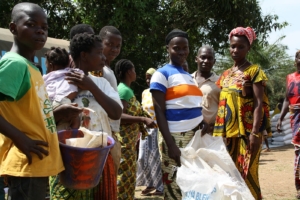
Child marriage in the Ivory Coast remains a prevalent issue. The Marriage Act of 1983 states that the legal age for marriage is 18 for women and 21 for men. However, 27% of women marry before the legal age of 18 and 7% marry before the age of 15. The numbers are less extreme on the male side where 4% marry before the age of 18.
Driving Factors
There are a few factors that lead to child marriage in the Ivory Coast. According to Girls Not Brides, poverty and education drive child marriage. Child marriage is often a survival mechanism to escape poverty especially when parents cannot afford to pay for education. Education is limited in the Ivory Coast. Secondary schools are scarce and oftentimes girls must board or find temporary living situations to attend them. As a result, they end up without parental or guardian supervision and are vulnerable to sexual violence and child marriage.
The third factor that can lead to child marriage in the Ivory Coast is adolescent pregnancy. In fact, according to Girls Not Brides, one in four women have their first child before the age of 18 and after pregnancy, many end up in a forced marriage. This attitude towards marriage ties into traditional religious beliefs that many leaders in the Ivory Coast have promoted. Many communities still abide by traditional beliefs regarding child marriage instead of the actual law.
Early Progress
In the early years of combatting child marriage in the Ivory Coast, there was steep progress. The government funded the development of more than 9,000 preschools and primary schools between 2011 and 2013 along with 38 secondary schools. In addition, in 2013, it also passed a law to allow students without birth certificates to attend primary school. In 2017, there was an initiative following the law to allow students in primary schools to acquire birth certificates through their school directors.
Between 2013 and 2015, the national government tried to enforce a plan to engage the community and religious leaders to address the child marriage issue. The President endorsed the plan. However, it fell through due to a lack of resources and budget.
Current Progress
The Ivory Coast government does not have a current plan or strategy to tackle the child marriage issue. However, there are organizations that focus on improving education, especially for girls which could have a direct impact on the child marriage rates. One such organization is Girls Not Brides. Girls Not Brides has a national partnership with the Ivory Coast which includes 17 member organizations working together to end child marriage.
Réseau Ivoirien pour la Défense des Droits de L’Enfant et de la Femme (RIDDEF) is a local non-governmental organization that originated in 2013. It has committed itself to women’s and children’s rights in the Ivory Coast. In partnership with the Embassy to Canada in the Ivory Coast, RIDDEF conducted a project addressing child marriage. RIDDEF brought sexual education campaigns to more than 20 schools and reached more than 6,000 students.
In addition, RIDDEF started a program where older women are partnered with younger girls to talk through sensitive conversations. The project also mobilized community leaders in both religious and education sectors to speak out against child marriage.
Ending child marriage means granting human rights to young people and especially young girls. When progress on the governmental level is slow, tackling issues that have direct impacts on the child marriage rates such as increasing education and shifting traditional attitudes are crucial.
In addition to improving human rights, ending child marriage could lead to more economic and social opportunities. Therefore, there is great potential for both social and economic growth in communities within developing nations such as the Ivory Coast.
– Jordan Oh
Photo: Flickr
