Backpacker Tourism: The Crux for Alleviating Poverty in Laos
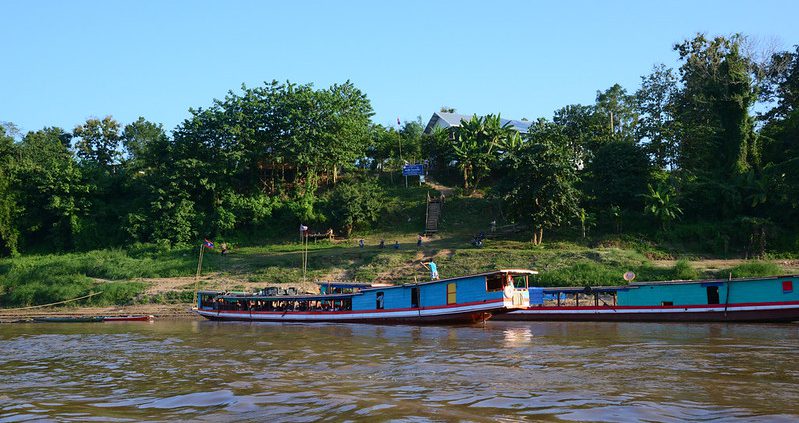 Tucked away in Southeast Asia lies Laos, one of the poorest nations in the region. Its landlocked borders have historically caused it to be overlooked. However, Laos is rebranding itself as a tourist destination. Within its borders are unique landscapes: blue lagoons, cascading waterfalls, and bucolic villages set against mountains and rice paddies. These natural assets are attracting more tourists to this verdant gem.
Like the unexploded ordnance buried deep within the land, the scars of poverty and economic underdevelopment linger in Laos. Economic recovery has gained traction in the last two decades. The World Bank recorded a decrease in the national poverty rate from 27.6% to 18.3% between 2007 and 2018. That trend continues despite a sharp decrease in tourism due to COVID-19. Foreign investment, primarily from neighboring China, has prompted large infrastructural developments, increasing connectivity. Economically, progress is evident. However, the government sees tourism as the most promising sector: an untapped resource helping to alleviate poverty nationwide.
Current Minister of Information, Culture and Tourism Suansavanh Viyaket is leading the development of Laos’ tourism growth. “Tourism,” she asserts, “is a sector prioritized by the Party and State to stimulate economic growth.” Her plan is to “stimulate economic growth by harnessing the nation’s rich tourism potential,” and this has been actioned via a set of 10-year plans focused on regions in Laos harboring the richest promise.
Vang Vieng: The Tourism Blueprint for Laos
The first of these 10-year plans is set in the backpacker capital Vang Vieng. Nestled in the Vientiane Province, Vang Vieng has been crucial for producing one of the lowest poverty headcounts in Laos. Its strategic location between two renowned destinations, Luang Prabang and Vientiane, has allowed tourism to prosper; recent infrastructural developments compound upon this, improving access by road and rail.
Vang Vieng-based publican Gary O’Donoghue has owned his Irish-Laos bar for 18 years and has witnessed tourism-driven developments in the area. Speaking to The Borgen Project, O’Donoghue noted that “during the early stages, most backpackers came specifically to go tubing,” back when “it really was a party town.” Vang Vieng has utilized its reputation as a party hub for backpacking tourists, now attracting foreign visitors for its expansive options for outdoor activities. From tubing and hiking to paragliding and hot air balloons, Vang Vieng offers a plethora of activities.
Under the Master Plan, Vang Vieng has moved toward diversifying its tourism. The government noted that historically, the region showed an “over-reliance on the cheaper-end, lower-spending Western backpacker markets” which has been the predominant demographic of visitors. However, through adherence to ASEAN tourism standards, lifting industry safety standards, the region expects to see that demographic diversify. O’Donoghue’s insights reflect on “the new infrastructure” which has “encouraged people of all ages to come here.” Hard infrastructure developments like the high-speed rail and express road, he comments, have “been a massive game changer,” along with the recent development of “several high-end hotels.”
Government records in Vang Vieng reflect positive growth under the Master Plan. By 2033, Laos PDR forecasts up to 741,535 annual visitors, producing approximately $75 million in direct expenditure. Such numbers would see tourism contribute to over 40% of GDP and could generate 4,500 direct jobs. Significant opportunities would not only be limited to the higher-paid service sector but would indirectly develop the agricultural, manufacturing, and construction sectors. O’Donoghue stresses how vital international tourism is for the local community. During COVID-19, he notes, “the entire community was desperate for tourism to come back. Tourism creates a lot of jobs, and without it this area would struggle badly.” Impacts trickle down, not only creating jobs but promoting better and more sustainable urban planning in the town, increases in education opportunities, and local participation in administration. Tourism has bolstered both opportunity and quality of life for local people.
Following Suit: The Spread of Tourism
Tourism has proved crucial to alleviating poverty here. Elsewhere in Laos, the poverty headcount remains high. Almost a quarter of the population of Luang Prabang province remain in poverty. Champassak province to the south has an upper limit of 18.8% of its population in poverty. Both governmental and local initiatives to alleviate poverty in these regions center on tourism.
Mirroring the Master Plan for Vang Vieng, Viyaket has proposed a Master Plan focused on the Don-Det and Don Khon Area between 2026-2036. The region, situated in the southern province of Champassak, is home to the uniquely beautiful “Four Thousand Island” area. Tourism development focuses on the area’s nature-based attractions and local way of life, with hard infrastructure being implemented mindfully to mitigate negative impacts of development along the Mekong River. The government has outlined zoning plans and development guidelines to manage tourism influxes sustainably. The plan indicates that the government is attempting to spread similar benefits to those reaped by Vang Vieng to alleviate poverty elsewhere in Laos.
Despite no official government-led plans being implemented in Luang Prabang’s northern communities, areas such as Nong Khiaw are driving a tourism boom independently. Locally run schemes such as Yensabai Organic Farm are capitalizing on the region’s agricultural industry, promoting “agritourism.” Tourists are invited to stay at the farm, working the land alongside Laos locals. Five percent of the profits are donated to the local community.
Travel blogs such as Indie Traveller are advertising Nong Khiaw as an off-the-beaten-path destination that is home to unique and authentic opportunities. Just outside of UNESCO World Heritage Site Luang Prabang, Nong Khiaw offers a hotspot of ecotourism in Northern Laos. From Pha Daeng Peak and Som Nang Viewpoint to Pho Tok Caves and the hundred waterfall tour, Nong Khiaw is driving a decentralized economic boom in one of Laos’ most rural and underdeveloped regions.
Southeast Asia’s Rising Star
Laos has already seen tourism increase by an astounding 21% between 2023 and 2024. This is before the implementation of the government’s Master Plans. In 2026, experts recorded that high transport and accommodation costs in Southeast Asia are the most significant limiter to increasing tourism. With Laos’ reputation for affordability, especially compared to tourist hotspots Thailand and Vietnam, Laos is set to become a bucket list destination. This anticipated boom in tourism is set to alleviate poverty nationwide.
– Millie Lavington-Owen
Millie is based in London, UK and focuses on Good News and Technology for The Borgen Project.
Photo: Flickr
