Building AI in African Languages
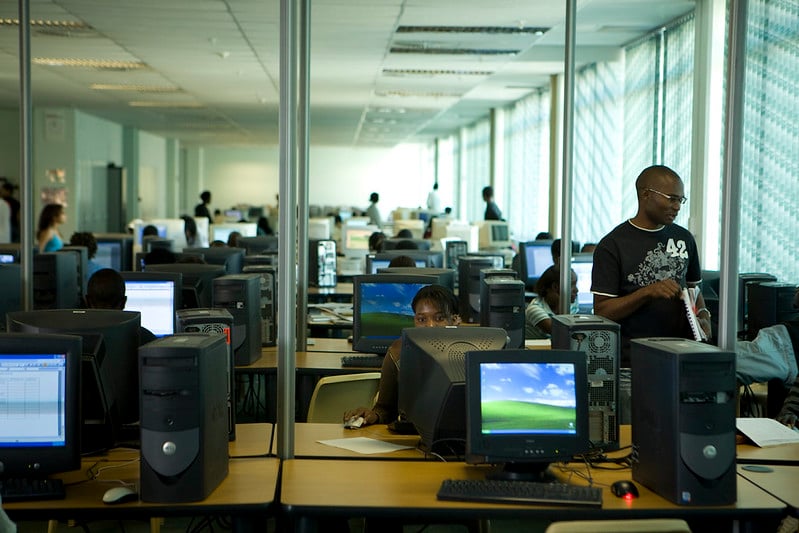
Africa is home to more than 2,000 languages, yet many African languages remain underrepresented in the digital resources used to train artificial intelligence systems. UNESCO notes that AI technologies trained primarily on content in dominant global languages often perform significantly less effectively in African languages, highlighting the shortage of digital language resources available for many communities. This imbalance creates challenges for artificial intelligence systems, which depend on large volumes of digital text and speech for training. The Gates Foundation’s 2026 Goalkeepers Report reported that leading speech-recognition systems achieved error rates below 6% in English but above 60% in Yoruba, a major West African language. Researchers, foundations and nonprofits are now working to close that gap by investing in AI in African languages.
Historical Marginalization
This gap did not emerge by chance. Researchers involved in the African Next Voices project argue that global political and economic systems historically marginalized African languages, while decades of policy decisions favored a smaller number of languages in education, government and media. As a result, many African languages have limited digitized text and speech resources available for training AI systems. Researchers say this shortage contributes to inaccurate translations, weak speech transcription and other reliability problems. Many people still struggle to access news, educational materials and health information in their preferred languages. Deshni Govender of GIZ South Africa adds that language barriers can also limit access to jobs and economic opportunities. Without AI in African languages, existing technological inequalities may deepen.
Challenges of Multilingual Environments
Large AI models have not automatically solved these challenges. Pelonomi Moiloa, co-founder and CEO of Lelapa AI in Johannesburg, argues that many current systems remain costly and difficult to adapt to highly multilingual environments. She notes that multilingual language use is common in South Africa, where people often switch between languages in daily conversation. According to Moiloa, some African languages also present structural characteristics that can be difficult for models originally developed around English-language patterns. She further argues that the high computational demands of large AI systems raise important questions about accessibility and inclusion. As Daniel Brumund, an adviser at GIZ, asks: whose languages do these models actually represent?
Community-Driven Solutions
Masakhane offers one answer. Its name means “we build together.” The grassroots organization brings together more than 2,000 African researchers working in natural language processing. In April 2025, it launched the Hub for African Languages, an initiative that aims to provide one billion Africans with relevant AI tools by 2029. The Hub supports community-driven datasets that document and preserve 50 African languages, while its grant-making programs focus on historically underserved communities. This approach positions AI in African languages as a collaborative local effort rather than an imported product.
Another effort, African Next Voices, focuses on collecting speech data for automatic speech recognition, the technology that converts speech into text. The project is primarily funded by the Gates Foundation, with additional support from Meta, and involves a network of African universities and organizations. In an October 2025 article, project researchers described how partners including the Maseno Centre for Applied AI in Kenya, Data Science Nigeria and the Data Science for Social Impact lab in South Africa were gathering speech data across multiple African languages. The researchers described the resulting release as what they believed was the largest African-language speech-recognition dataset available at that time. They also reported that recordings were collected using informed-consent procedures, participant compensation and clearly defined data-rights agreements. While these practices aim to support responsible AI development, they do not guarantee that every future application of the data will be ethical.
Corporate and Development Contributions
Companies and development agencies are also contributing to the effort. Lelapa AI has developed translation and transcription tools for isiZulu and is exploring approaches that reduce the amount of training data and computing resources needed for language technologies. Moiloa argues that such methods could help support other low-resource languages worldwide. Meanwhile, GIZ’s FAIR Forward initiative works with partners in Ghana, Kenya, Rwanda, South Africa, Uganda, Indonesia and India to promote open and inclusive AI development that supports local innovation.
Increased Funding and Support
Funders are increasingly backing these efforts. In February 2025, the Gates Foundation and public donors from Germany, the United Kingdom and Canada pledged $10 million to support African-led initiatives that seek to make AI more inclusive of African languages. Then, in May 2026, the Gates Foundation joined the Masakhane African Languages Hub, Microsoft’s AI for Good Lab and Google.org to launch LINGUA Africa, a program supporting projects in data creation, model development and practical applications. In September 2026, the Gates Foundation announced plans to invest at least $1 billion over two years in a broader equitable-AI strategy, with part of that funding supporting the digital infrastructure and datasets needed for underserved languages. Through initiatives such as LINGUA Africa, supporters hope AI in African languages will expand access to education, health information and economic opportunities across the continent.
– Juan Guillermo Rueda Castrillón
Juan is based in Barcelona, Catalunya, Spain and focuses on Technology and Solutions, and Politics for The Borgen Project.
Photo: Flickr
