Agricultural Development in the Philippines
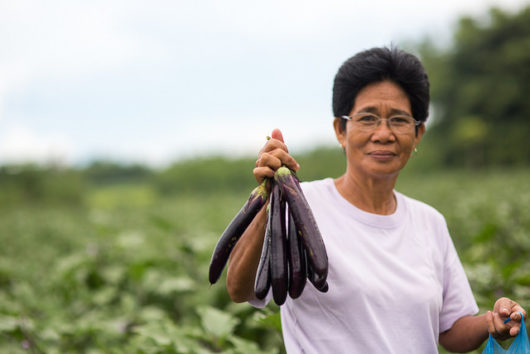
Southeastern Asian country of the Philippines faces many problems in the agricultural sector. This sector employs around 37 percent of people in the country, being a major source of income for many households.
Yet, this sector’s share in the country’s GDP has gone down over the years, showing a decline. The Philippines government is also decreasing funding on agriculture. Starting in 2011, agriculture only makes up about 4 percent of the national budget. This makes agricultural development in the Philippines questionable.
To make matters worse, the Philippines is notoriously vulnerable to natural disasters, facing around 20 typhoons each year. For farmers, one typhoon or tropical storm could be enough to wipe out the entire crop. Starting over with the work can be expensive and time-consuming. For example, coconut farmers need up to 10 years for their crops to grow. The lack of financial support coupled with frequent natural disasters leaves farmers in a compromising state.
As a result, 57 percent of agricultural households are impoverished. In comparison, non-agricultural households are three times less impoverished. This rate is even worse in agricultural-dependant areas, and reach up to 74 percent in Central Visayas.
Government’s Role in Agricultural Development in the Philippines
For these farmers, high poverty rates can be attributed to underemployment. Almost 70 percent of underemployed Filipinos work in agriculture, forestry or fishery. While many farmers and agricultural workers are searching for employment, the Government of the Philippines seems to be moving away from reliance on local farmers, turning to imports instead.
In 2016, the Philippines was the biggest rice importer in the world, with close to 2.45 million tons of imported rice. The lowered funding and employment of Filipino farmers put more than 12 million people who work in the agricultural sector at risk. Evidently, more support needs to be given to farmers in order to reduce poverty. Consequently, many poverty-fighting organizations target agricultural development in the Philippines.
IRRI and IPAC
The International Rice Research Institute (IRRI), for example, has developed a rice variety that can survive natural disasters, especially floods. With funding from the Gates Foundation, the IRRI hopes to increase rice yields by 50 percent in the next 10 years. Based on an Indian rice variety called Swarma, this climate-smart rice has an additional flood-resistant gene.
The rice was able to grow even after two weeks of flooding, whereas most rice varieties would not survive more than four days. This is a huge advancement that can attribute to the lingering agricultural issues in the Philippines.
The Philipinnes government is also working towards agricultural development by implementing the Inclusive Partnerships for Agricultural Competitiveness (IPAC) Project. Funded partially by the World Bank, the project works on expanding the capacity of small farmers to make a living.
Through commercial agriculture and improved infrastructure, small-holder farmers can increase their incomes and slowly become more self-reliant. Developing irrigation systems in rural farming lands which is an important aspect of the project, makes farming more efficient for the people of the Philippines. The project plays an important role in reducing poverty, with 20 percent of the beneficiaries being poor farmers.
IFAC Projects in the Philippines
The International Fund for Agricultural Development (IFAD) has funded 16 projects that aid farmers from the Philippines. One project, Convergence on Value Chain Enhancement for Rural Growth and Empowerment (ConVERGE), helps Filipinos develop their farms into larger businesses by utilizing value chains.
IFAD provides investment and business plans to 55,000 farming households in the poorest parts of the Philippines. Through educating and guiding farmers, especially with the use of sustainable farming methods, IFAD hopes to increase their incomes and reduce poverty in the Philippines.
Through the combined efforts of organizations and the government, the issue of poverty among farmers in the Philippines is being addressed. Still, more work needs to be done in the field of agriculture development so that poverty rates in the country can begin to decrease.
– Massarath Fatima
Photo: Flickr
