The Earthquake and Poverty Situation in the Philippines
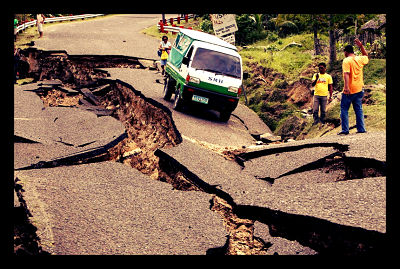 October 15, 2013. This date will be forever etched into Filipino records. On the fateful Tuesday morning, a magnitude 7.2 earthquake rocked the island country, less than a mile from the town of Carmen in the Bohol province. The earthquake wiped out several of the country’s most revered church sites, and an estimated 82 people were slain by its effects. The Philippines are not well equipped to handle an earthquake of this magnitude; the island country has struggled with poverty issues for an extended period of time. The repair costs and restorations will only add to the list of issues chaining the Philippines to poverty.
The earthquake’s ramifications will be felt throughout the Philippines. Power was reported to be out across Cebu City (the fifth largest city in the country), Masbate, and the Bohol province. Part of Cebu Doctor’s University in Mandaue City collapsed, and Cebu City also suffered two collapsed buildings and a ruined fish port. The death toll was first reported to be 28 people, but by the end of the day it had risen to 82. An additional 159 people were injured.
The child poverty situation was atrocious before the earthquake, following the effects of it the situation can only be expected to worsen as restoration projects expect to take a majority of the aid’s attention.
Child poverty is defined in two separate ways: child income, which is based on family income, and child deprivation, which is examined through availability of shelter, food, and water. An expected 47 percent (12.8 million) of Filipino children are suffering in poverty. One of the elements where this poverty is most evident is the malnutrition shown on full display in the bodies of Filipino children.
In the 0-5 age group, the percentage of underweight children rose 1.6 percent from 2003 to 2006. With the malnutrition factor settling in at a young age, the children are growing up underfed, and being forced to live the majority of their lives in this state of unhealthiness.

Not only are children suffering from a lack of access to food and water, education rates remain low in the Philippines. The number of children aged 6-16, who are currently out of school, rose from 1.8 million in 2002 to 2.2 million in 2007. Many of these children are being forced to scavenge for a living, rummaging for street scraps and thrown out food.
Now, it is estimated that the well-being of Filipino children has never been worse. The almost 13 million children residing in poverty are struggling to survive, and issues such as malnutrition from lack of suitable source of food and water and an utter drop in education rates has the Philippines moving backwards. The earthquake repair costs will not help these rates. The damage caused by the earthquake will be repaired in time, but the true issue in the island country lies in the hardships faced by the youth for the last several years.
– Zachary Wright
Sources: Global Issues, NBC, PIDS, UNICEF
Photo: MSNBC
