Updates on SDG 3 in Thailand
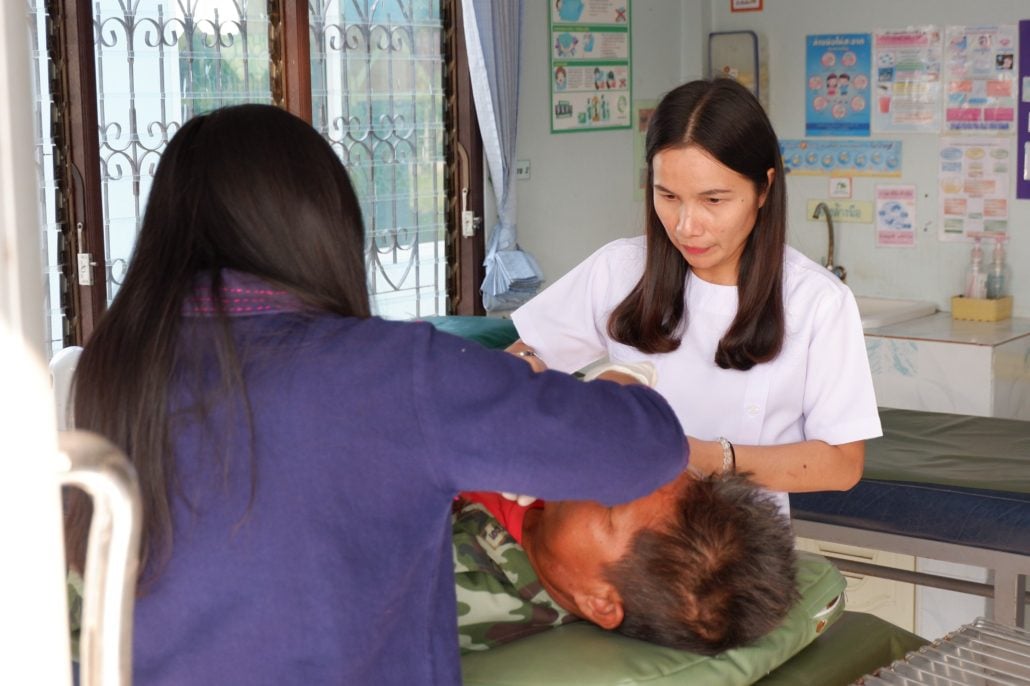
Between 2000 and 2019, Thailand saw one of the region’s biggest poverty reductions (48.6% in 2000 to 6.2% in 2019). This may be due to a large public assistance system, which the World Bank has seen as the main driver of poverty reduction in the late 2010s.
Sustainable Development Goal 3 (SDG 3) stands as a cornerstone of the fight against poverty, calling for healthy lives and well-being for all regardless of age. Here are some updates on SDG 3 in Thailand.
The First Steps Towards Free National Healthcare
After 1945, Thai citizens still paid out-of-pocket for healthcare, with exemptions for the poor, until two employment-based schemes were introduced: the Civil Servant Medical Benefit Scheme (1980), which covered public servants and their dependents, and the Social Security Scheme (1990), which was for private sector employees. Until 2001, informal workers had no coverage, and out-of-pocket payments were one-third of total health spending. Additionally, roughly 30% of the population had no health insurance or access to free care. It was during those years that universal health coverage became the government’s engine to turn a poor developing nation into one of the world’s most recognized health successes.
The Universal Coverage Scheme
In April 2001, the newly elected government launched the Universal Coverage Scheme (UCS) in six provinces, and in 15 more provinces by June 2001. Then, it expanded nationwide by April 2002 under the memorable banner “30 baht treats all diseases,” a 30 baht (around $1) co-payment per visit.
The UCS is the largest of Thailand’s three public insurance schemes. Tax-financed, it covers those not protected by the other two schemes. By 2015, the three public schemes together covered 98.5% of the population. The 30 baht payment was then abolished in November 2006, making health services free for UCS members at designated facilities, even if re-introduced with many exceptions in 2012.
Gaps certainly remain: for example, separate schemes cover migrants, and in 2018, 40% of documented migrants did not have insurance, alongside 800,000 eligible for the Migrant Health Insurance Scheme. Here are some examples of the SDG 3 targets that Thailand has met.
Decrease in Maternal Mortality
Maternal mortality fell to 21.8 per 100,000 live births by 2017, with skilled personnel attending 99.1% of births in 2015, and out-of-pocket payments declining significantly. Families are now protected from catastrophic health expenditures, although such payments have not yet disappeared completely. One can see an interesting update on SDG 3 in Thailand in a WHO analysis, which shows how coverage is nearly identical between rich and poor households, matching the financial protection and equity that SDG target 3.8 demands.
Winning the Battle Against HIV
Following these successes, HIV treatment is now covered under the Universal Coverage Scheme, no longer depending on the patient’s ability to pay. In 2016, WHO recognized Thailand as the first country in Asia to eliminate mother to child transmission of HIV and syphilis, meaning that transmission has fallen below the level of a public health problem. Combined prevention measures and effective antiretroviral regimens cut transmission from more than 24.2% (1994) to 1.9% (2015). In 2000, HIV newly infected an estimated 1,000 children, and by 2015, the number had fallen to 85.
By 2023, 98% of people with HIV receiving antiretroviral therapy had achieved suppression. In June 2026, Thailand’s Cabinet endorsed the 2026 Political Declaration on HIV and AIDS, pledging to end AIDS as a public health threat by 2030, aiming to fewer than 1,000 new infections and 4,000 deaths a year. Yet, officials said infections remain above 7,000 a year.
Updates on SDG 3 in Thailand continue. In fact, in September 2026, the country hosted an ASEAN workshop in Bangkok on extending this model to the triple elimination of HIV, syphilis and hepatitis B.
30 Baht Treatment Anywhere
The “30 Baht Treatment Anywhere” program was established nationwide from January 1st, 2025, after a four phase rollout started on January 7th, 2024. All eligible Universal Health Coverage patients can receive care at any participating facility within their province, even if it’s not their assigned one, by simply showing their ID card. This brought digital patient records, expanded telemedicine and community pharmacies acting as primary care units. By the end of 2024, 7 million people used the scheme through 13,004 participating health units. For the 2026 fiscal year, the National Health Security Office set a record budget of more than 265 billion baht (around $8 billion USD), for more than 47.5 million members, around 4,176 baht per person.
Looking Ahead
While challenges remain, such as financial stability, healthcare workforce and “the demographic and epidemiological transitions,” these are challenges of a maturing success, not a failing one. In August 2026, the Ministry of Public Health ordered an in-depth review of the scheme’s funding, following warnings that public hospitals face liquidity problems. Meanwhile, one of the most recent updates on SDG 3 in Thailand, comes from Prime Minister Anutin Charnvirakul who has reassured the population that he will strive to maintain “healthcare spending despite” the new “fiscal constraints,” which are affecting the country.
Remaining gaps, such as health coverage for migrants, show that SDG 3 is still a work in progress rather than a finished achievement, while carrying an important message: the SDGs are not a distant aspiration, and through political commitment, technical expertise and sustained investments, improvement is possible even for countries considered poor in living memory.
– Nicole Weir
Photo: Flickr
