3 Recent Improvements to Higher Education in Peru
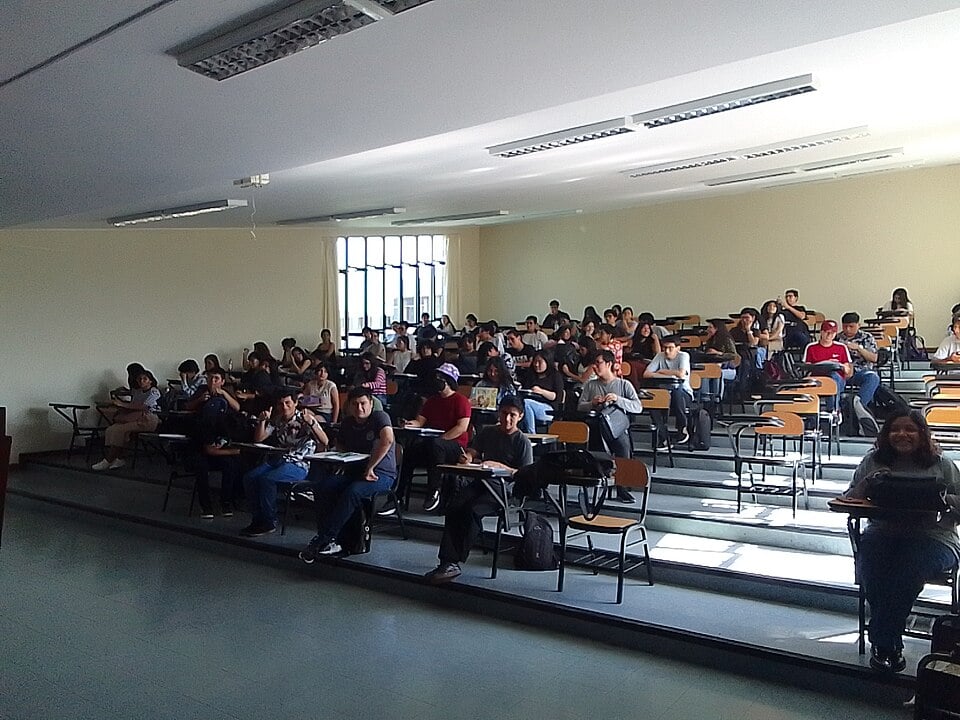 Peru is currently ranked 77th in education worldwide and, in recent years, has seen major improvements in its higher education system. Here are a few worth noting:
The 2014 University Law
In 2014, Peru enacted the University Law, bringing much improvement to Peru’s tertiary education system, requiring universities to go through evaluations to prove basic quality standards, set stricter academic requirements for educators and provide special monthly bonuses for researchers at public universities who produce indexed scientific papers.
Before this, universities experienced lots of expansion with limited government oversight, which resulted in disparities in the quality of education among schools. During this time, many institutions operated without meeting any specific academic standards, resulting in graduates who often lack adequate experience to be successful in the labor market. To mitigate this, the law established SUNEDU, a specialized agency responsible for institutional licensing, taking away operations for universities that failed to meet a set of minimum quality requirements.
This system required universities to demonstrate that they met minimum quality conditions regarding faculty, infrastructure, student services, etc. Universities that failed to meet these standards had their operating licenses revoked and, in some cases, had to close. These efforts highlighted the goal to prioritize the quality of education in Peru, strengthening public confidence in higher education, and encouraged institutions to invest more in student success.
The 2016 Law on Institutes and Schools of Tertiary Education
This law was built on the University Law, laying the foundation for a more transparent and rigorous quality checking system. It was designed to “promote more effective student-centered, competence-based approaches to teaching and learning.”
Technical schools play a crucial role in getting students ready for a career in industries that might require practical skills, yet they have historically received less attention than universities. This 2016 law introduced several changes, including licensing requirements, quality assurance systems and stronger oversight for schools offering technical and professional education. These changes pushed for clearer educational standards while promoting continuous improvement among institutions. Additionally, the law aimed to strengthen the connection between technical education and labor market demands by encouraging institutions to engineer programs that reflect employer needs and evolving workforce trends. This allowed graduates from technical institutes to be better prepared for their future employment, and gave employers access to workers with more relevant skills, depending on the work. This reform also recognized technical schools as a crucial aspect of Peru’s tertiary education, as opposed to a secondary alternative to university.
The 2020 National Policy
When Peru enacted this policy, the policy “laid out, for the first time, a comprehensive strategy for the entire vocational and tertiary education sector through to 2030.”
This policy gives Peru more direction when creating a tertiary system that is increasingly aligned with national priorities. Instead of concentrating only on institutional regulation, this policy provides a more complete vision for the entire higher education sector, including universities and technical institutes. Its primary goals include improving educational quality, expanding equitable access, strengthening government institutions and ensuring that graduates develop the knowledge necessary to be successful in Peru, as well as increasing collaboration among institutions. The policy encourages better coordination between educational institutions, employers, the government and regional authorities so that academic programs can remain responsive to changing labor market demands. Furthermore, it seeks to lessen educational inequalities by increasing opportunities for disadvantaged groups and improving student services that result in successful graduation.
How Has This Benefited Peruvian Citizens?
About 54% of adults aged 25-34 have completed tertiary education as of 2024. This gives Peru the highest tertiary attainment rate compared to all OECD countries in the region. The country’s tertiary participation rate in the early 2000s was close to that of other OECD countries; however, Peru’s net enrollment rate has since increased at a faster pace than its peers. This achievement highlights substantial progress in accessibility in university programs, both academically focused institutions and technical-focused institutions.
Between 2000 and 2023, enrollment in private universities has increased by more than 600% (going from about 169,000 to 1.2 million students). Enrollment in public universities has seen minor increases, going from about 255,000 students to 355,000 (about a 40% increase).
To add to this, overall enrollment has increased, going from 33.92% of eligible children in 2006 and skyrocketing to 73.22% of eligible children in 2016. This highlights the ability of Peruvian schools to make changes in their educational structures that increase participation in schooling as a whole.
In terms of unemployment rates, Peru was also on a steady decline until the effects of the COVID-19 Pandemic in 2020, sitting at 3.38% in 2019. This is likely a result of improved tertiary education, which draws the connection between quality education and post-grad success. Since the pandemic, unemployment rates have decreased again from 7.18% to 5.12% as of 2025, and will likely return to the low numbers we were seeing in the late 2010s.
Concluding Thoughts
In all, these reforms have significantly improved the higher education system in Peru by creating a system that prioritizes accountability and student-centered tertiary education. Peru has done a great job of making efficient and effective adaptations to the education system that focus on the quality of the student experience, not the institutions themselves.
– Emily Fleetwood
Emily Fleetwood is based in Seattle, Washington, USA and focuses on Good News and Celebs for The Borgen Project.
Photo: Wikimedia Commons
