How Modernization Promotes Higher Education in Turkmenistan
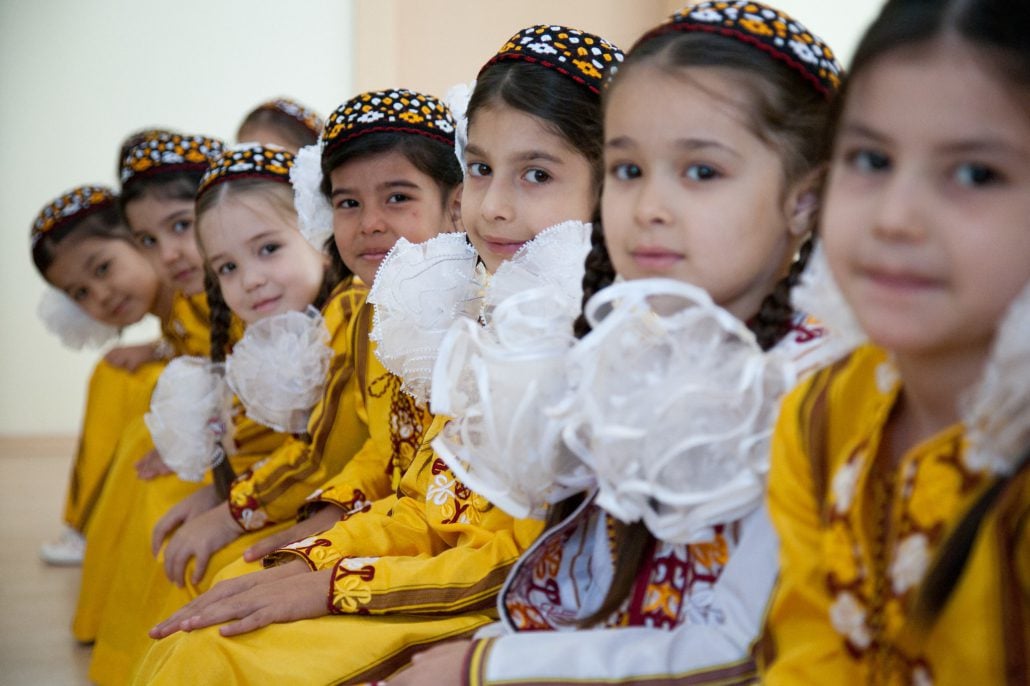 In the 2025-2026 cycle, 13 universities in Turkmenistan as opposed to the zero from the prior year reported data to the Times Higher Education World Rankings. While none of the mentioned universities achieved rankings, the choice to report data signals increased dedication towards developing higher education in Turkmenistan, a development that prompts intrigue due to Turkmenistan’s long history of government funded and controlled nationalistic education. This stronger emphasis on higher education in Turkmenistan will lead to better learning outcomes, a learning system that better fulfills global standards and creates graduates who will go on to better paying jobs. These benefits of promoting higher education in Turkmenistan also pose a potential solution to widespread poverty in Turkmenistan.
The Relationship Between Poverty and Education
Government censorship makes knowing the exact statistics on poverty in Turkmenistan difficult but experts at the World Food Bank predict that 35.08% of the population lives on less than $3 a day. Additionally, the International Labor Organization (ILO) predicts that 47% of Turkmen live in poverty. Education, however, can help alleviate some of these numbers. People who receive substantial education are more likely to find high paying jobs and to escape poverty. Thus, the prioritization of education is essential to ending global poverty, particularly in a nation where 20% of the population is ages 15-24. However, the call for education in the face of poverty becomes complicated in the complex political climate of Turkmenistan, making an examination of the nation’s history essential to understanding poverty and education in combination.
Niyazou and Education’s De-funding
Inequality, censorship and state control have profoundly impacted the development of higher education in Turkmenistan. Following Turkmenistan’s emancipation from the Soviet Union in 1991, the first president, Saparmurat Niyazou instated an authoritarian cult of personality. To maintain this cult, Niyazou implemented strict controls on education, going so far as to impose his semi-autobiographical novel, “Ruhnama” as a cornerstone of the curriculum. Additionally, Niyazou cut funding to many institutions in retaliation against his opponents and the lingering influence of the Soviet Union, leaving the younger generations poorly uneducated, with high illiteracy, and torn between two languages. As a result, higher education in Turkmenistan became a privilege for wealthy individuals who supported the authoritarian regime. The wealthy achieved entrance to institutions of higher education with the assistance of private tutors, and the impoverished were cut off from educational opportunities, trapping them in the cycle of poverty.
The Expansion of Education
However, despite these historical hurdles to achieving higher education in Turkmenistan, the nation now reports a 99% literacy rate. In 2006, Gurbanguly Berdymukhammedov won the presidency and began implementing large policy changes from his successor. While Berdymukhammedov was also an authoritarian dictator and had maintained a cult of personality, he also believed in education, if only for his pride. The president strove to modernize Turkmenistan for global recognition, and improving the state of education was essential to this plan. In 2009, his successor, Serdar Berdimuhamedow continued this trend in pursuit of global recognition by reinstating funding to primary and secondary education. This emphasis on education by the new regime offered more citizens the opportunities to attend institutions of higher education in Turkmenistan and has influenced the development of new universities.
Now, Turkmenistan has 19 publicly recognized higher education institutions. They offer programs in engineering, oil and gas, agriculture, humanities, economics and information technologies. Of these, three received international recognition last year. These three include the Oguz Han Engineering and Technology University of Turkmenistan, the State Energy Institute of Turkmenistan and Yagshygeldi Kakayev International University of Oil and Gas. Considering that prior to 1991 only nine universities existed in Turkmenistan, the introduction of at least ten new higher educational institutions demonstrates the steady improvement of the state of higher education in Turkmenistan.
A Commitment to Modernization
While modernization in Turkmenistan began as an ego project for two autocrats, the nation now has higher freedom to develop their higher education, global connections and technologies. For example, in recent years Turkmenistan has attended the 2026 Educational World Forum where AI potential was widely discussed in addition to being appointed to the United Nations Commission on Science and Technology in 2017. The nation has a long history of authoritarian regimes and policies to combat, but the turn to modernization, which centers on education, offers hope that higher education in Turkmenistan will continue to develop and the nation’s citizens will continue making more connections with the global world. These changes will bolster the economy and help more Turkmen to live on reasonable wages.
A combination of the government and outside funding are funding these changes. While the government has reinstated substantial funding to education, aid from international governments and organizations is essential to maintaining the development of higher education in Turkmenistan. For example, the U.S. contributes $600,000 USD toward youth development and $450,000 USD toward higher education. Additionally, Turkmenistan cooperates and receives aid from United Nations humanitarian organizations for the expansion of educational and scientific centers.
Looking Ahead
In brief, the combination of aid programs dedicated to improving education in Turkmenistan and government efforts to promote higher education and modernization, should the data be believed, has drastically lowered the entry barriers to higher education. This develops a future for the nation built on progress and which utilizes its people and resources to improve the general quality of life and which develops future industrial and professional success. These contributions to improving education prove a potentially pivotal tool in decreasing poverty and hardship amongst the citizens of Turkmenistan by offering future generations more opportunities to achieve higher salaries and escape poverty.
– Aubrey Wallen
Aubrey is based in Alexandria, VA, USA and focuses on Good News for The Borgen Project.
Photo: Flickr
