Solving South Sudan’s Water Crisis
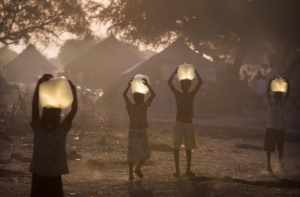 One of the world’s newest countries, South Sudan, celebrated its 16th anniversary of independence in July 2025. However, South Sudan is suffering from a crippling water crisis. Floods, drought and a lack of access to reliable and sanitized water have created an ongoing economic, medical and political turmoil. An inability to manage and provide water to most of its people has exacerbated ongoing poverty and security issues.
However, significant progress is being made with South Sudan’s water crisis. With cooperation with the United Nations (U.N.) and UNICEF, the South Sudanese government is working to meet this challenge by working with private on-the-ground organizations to create real change for South Sudanese people.
South Sudan’s Water Crisis
The roots of the issue lie in the civil war that followed South Sudan’s independence, which resulted in most of its water infrastructure being destroyed. Due to this destruction, South Sudan’s water crisis started to spiral. Around 59% of South Sudanese lack access to clean water and only 11% have access to basic sanitation. The lack of a reliable water resource management system has forced most South Sudanese to rely on unsanitary practices.
South Sudan relies heavily on the Nile River basin for its water supply. Poor management, combined with climate variability, has intensified water scarcity and contributed to alternating cycles of drought and flooding. This forces people to move from their homes, worsening the country’s already tense security situation. Additionally, this worsens food insecurity, creating another potential flash point for civil conflict, as more than 70% of the population depends on agriculture for their livelihood.
Government Efforts and Organizations Helping
In August 2024, the South Sudanese government announced plans to join the U.N. Water Convention. This step aims to help the country develop a cohesive strategy for stabilizing and managing its water systems. South Sudan’s Minister of Water Resources and Irrigation, Pal Mai Deng, stated that “being part of this global convention will open for us huge opportunities beyond measure.” The Convention would strengthen national water institutions and foster cooperation with neighboring countries to improve regional water management.
However, South Sudan’s water crisis isn’t just being solved by governmental organizations. Private groups like Water for South Sudan (WFSS) are helping local communities to tackle the ongoing emergency. WFSS trains local community members to create water committees to ensure these resources are sustainably managed. In 2023 alone, WFSS drilled 47 new wells and repaired 91 preexisting wells, benefiting more than 42,000 people.
In villages like Nyoric, water sources were once extremely far away. One resident, Nyibol, explained that reaching a working well could take up to three hours. Thanks to WFSS and its partners, the village has direct access to clean water.
Final Remarks
Much work remains to solve South Sudan’s water crisis. However, the country is a strong example of how a nation can begin recovering from the brink with support from private aid and the international community.
– Joseph Laughon
Joseph is based in Sacramento, CA, USA and focuses on Good News and Technology for The Borgen Project.
Photo: Flickr
