How Land Titles in Ecuador Help Rural Families Escape Poverty
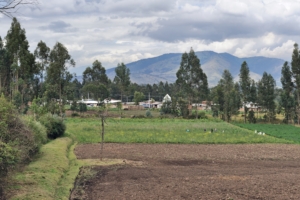 Ecuador is among the many nations that recognize how important bolstering land ownership is in reducing poverty. For those working in agriculture, secure land ownership encourages greater investment in their homes, farms, and businesses, leading to increased returns. A lack of title for lands also often means that families cannot access formal credit or defend their land legally. In developing countries, the lack of titles reinforces the cycle of rural poverty.
Ecuador has adopted the National System for Information and Management of Rural Lands and Technological Infrastructure (SigTierras), a program that increases the land titles in Ecuador.
The Problem: Land Insecurity in Ecuador
More than 60% of plots in Ecuador were informally held as of the early 2000s. This was particularly common in Indigenous and smallholder farming communities and with female landholders. This considerably harms families as they routinely face the risk of eviction and land disputes, as they have no legal protection. They can also not use their land as collateral, which prevents access to credit or farm loans. Their informal ownership and the risks that entail also discourage long-term investment and sustainable land practices.
Land insecurity often works predominantly against women and worsens gender inequality. This usually means that women have less decision-making power in the household, worsening the nutrition and general welfare of the household, as women tend to make decisions beneficial to the household. The lack of robust land titles in Ecuador ultimately reinforces poverty.
The Solution: Ecuador’s SigTierras Program
Ecuador launched SigTierras, a rural land-titling and cadastral mapping program in 2010 to address the issue of land insecurity. It received financial support ($90 million) from the Inter-American Development Bank (IDB). The program maps rural plots and digitizes land records. This helps resolve boundary disputes and issues legal titles, increasing the number of land titles in Ecuador.
The program focuses on the underserved rural areas with a high rate of informal landholding. It targets smallholder farmers, Indigenous communities, and impoverished rural families in these areas.
The Impact
Since its inception, SigTierras has helped formalize thousands of rural land parcels across Ecuador. By the end of its implementation period, the program had successfully issued 39,267 legal land titles, improving tenure security for many rural households. This process has contributed to increased agricultural income, better access to credit, expanded government services, and higher levels of farm investment.
The program also had a notable impact on women’s empowerment. Through joint land titling, SigTierras enhanced women’s legal standing and bargaining power within households and rural communities. This has led to better household food security and nutrition outcomes.
Conclusion
The success of increasing the number of land titles in Ecuador through SigTierras shows that land rights are essential to reducing poverty long-term and can transform lives, especially for women and rural families. It also provides a replicable and scalable model for other countries with high informal land use. The program indicates that with targeted public policy and international support, systemic poverty issues like land insecurity can be solved.
– Seun Adekunle
Seun is based in Scotch Plains, NJ, USA and focuses on Politics for The Borgen Project.
Photo: Wikimedia Commons
