Economic Partnership between the Gulf States and Africa
 In the last five years, an economic partnership between the Gulf States and Africa has emerged via the Gulf Cooperation Council (GCC). The GCC is a political and economic alliance between Saudi Arabia, Kuwait, the United Arab Emirates (UAE), Qatar, Bahrain and Oman. It was established in 1981 to promote greater cooperation and achieve shared objectives based on the similar political and cultural identities of Islamic culture.
An example of the growing economic partnership between the Gulf states and Africa is when, in 2023, companies within the GCC announced 73 foreign direct investment projects in various African countries worth more than $53 billion. Businesses and nations in the GCC look to Africa as an economic partnership expected to grow in value, mainly due to the new Africa Continental Free Trade Area signed in 2018.
The African Continental Free Trade Area
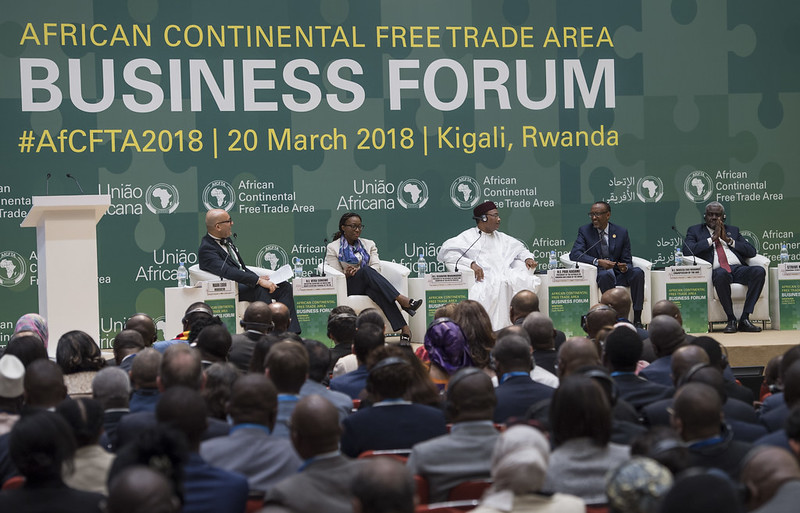
The African Continental Free Trade Area (AfCFTA) agreement is one of the largest free trade areas in the world, as measured by the number of participating countries. The pact connects 1.3 billion people across 55 countries, with a combined gross domestic product (GDP) valued at $3.4 trillion.
AfCFTA entices investment from the GCC because its free trade gives greater access to the African market, which has the potential to develop into a more lucrative market. This investment further ties countries in the GCC and Africa to an economic partnership driven by a mutual interest in diversification. For countries in the GCC, diversification is essential as these investments are ways to diversify their economy away from oil and other hydrocarbon exports into something more sustainable.
Examples of Investment Projects
Some of the GCC’s high-profile initiatives involve countries across the continent. One example is ACWA Power, based in Saudi Arabia, which has agreed to develop a green hydrogen project in Egypt’s Suez Canal Economic Zone and committed more than $4 billion. The first phase aims to produce 600,000 tonnes of green ammonia annually.
Similarly, AMEA Power, a different company based in Dubai, is planning to build a hydrogen project in Kenya, along with the Abu Dhabi National Energy Company, which has invested $1.6 billion in renewable energy projects in Morocco. These are not small investments and highlight the importance that companies and countries from the GCC give these projects in Africa.
What Does This Mean for the West?
This increasing investment into Africa from the GCC comes as many countries in the West have fallen behind in their commitment to invest in sustainable projects to help develop the continent. With countries in the West and even China generally decreasing their investment in Africa, countries in the GCC see an opening in the continent to increase their influence in these countries and benefit from any development into a fast-growing economy. An expanding middle class in Africa is desirable for investors and entrepreneurs as it could mean millions of new customers for products and services from the Middle East.
Building economic ties in Africa is easier logistically for countries in the GCC as they can capitalize on their geostrategic location to access Africa through ship and land trade routes. Expanding their economic influence in African states has provided GCC states with an essential source of leverage to advance their regional security and diplomatic goals, increasing their power projection worldwide. This means that countries in the West, especially the U.S. and countries in the GCC will have more significant influence across the continent. They may act more independently in ways that might not align with the interests of the U.S. or other Western countries in the region.
While nothing suggests that countries in the GCC will soon want to adjust the way the U.S. has approached the region or directly challenge U.S. interests, the fact is that the U.S. is currently ceding its influence, positive relations, opportunities for economic investment and diplomatic relationships in Africa to other powers like the countries in the GCC and China.
– Mathieu Pare
Mathieu is based in Toronto, Canada and focuses on Business and New Markets for The Borgen Project.
Photo: Flickr
