The Work of the FAO in Ethiopia
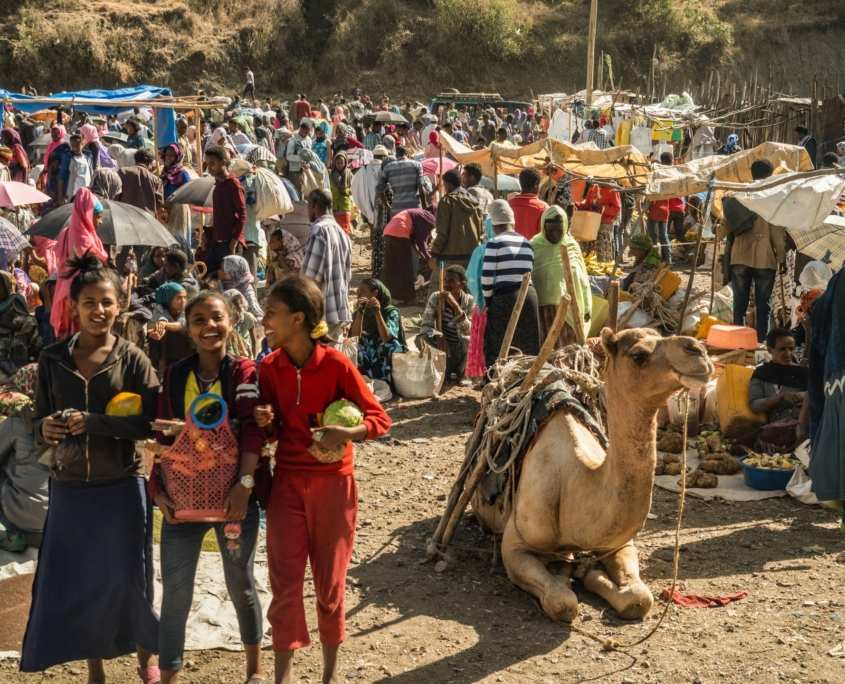 Ethiopia remains one of the poorest countries globally despite significant reductions in its poverty rates, from 44% in 2000 to 30% in 2011. However, the World Bank notes that Ethiopia’s economy has experienced some of the strongest growth rates in the region. With continued improvements planned by its government, Ethiopia aims to reach lower-middle-income status by 2025. The Food and Agriculture Organization (FAO) in Ethiopia supports these efforts.
Barriers to Economic Progress
To achieve lower-middle-income status by 2025, Ethiopia must overcome several challenges, according to the World Bank. These include recovering from the COVID-19 pandemic, which has left high urban unemployment and an overall increase in poverty levels. Additionally, environmental and natural crises, such as locust invasions and adverse weather conditions, have driven food price inflation. The World Bank also notes that the 2022 drought, the worst in half a decade, has contributed to severe food insecurity affecting an estimated 20 million people as of 2023.
Furthermore, expansion of the labor market, reducing learning poverty which remains high at 90% and preventing the impact of further conflict within the nation are crucial to the continued growth of its economy. To encourage these circumstances, overseas aid is of vital importance and one such provider is the Food and Agriculture Organization of the United Nations (U.N.) or the ‘FAO’.
The Country Programming Framework (CPF)
A subdivision of the FAO, the CPF has worked in Ethiopia providing the government with priority areas to focus on. The FAO’s website cites that the CPF was realized after a series of consultations with departments such as the Ministry of Agriculture and Natural Resources and the Ministry of Livestock and Fisheries Resources, among others. Together, these departments devised a four-year plan to take effect between 2022 and 2025. The priority areas to be focussed on during the plan are as follows:
- Innovation for sustainable agriculture production
- Nutrition for the most vulnerable and safe food for everyone
- Natural Resource management and agricultural production system
- Promotion of inclusive economic growth and reducing inequalities
- Addressing cross-sector issues
Sustainable Agricultural Practices
To address the first three priority areas, the CPF is promoting new agricultural methods to produce sustainable crops and encouraging the development of sustainable livestock and fishery approaches. In this way, it aims to create climate-resilient systems to strengthen and grow food security and improve overall nutrition. This includes continued research into how to utilize drylands and ensure better drought resilience. To address the fourth priority area, the CPF outlines its aim to provide support to households to develop alternative sources of income, such as eco-tourism and support small and medium-scale businesses such as milk, hides, skins and grain enterprises.
Success Stories from the FAO
The work of the FAO has had particular success in the agricultural sector of Ethiopia. Supporting programs such as fruit nurseries across the nation, its website highlights Aleje as a beneficiary of such initiatives. The nursery sought to increase local farmers’ stock by growing and distributing seedlings of highland fruit. The nursery received 20,844 Italian rootstocks and 24,160 grafted seedlings in total. Beyond this, the nursery also provides opportunities for local workers, with 437 farmers being trained on its practices like irrigation and sustainable planting methods.
Priest Habte Yiheyis was one such farmer. After participating in training given by the nursery, he received seedlings of apricots, plums, almonds and apples. Habte has since begun to harvest the yield, generating 7,500 Ethiopian Birr. The FAO notes that this gave him the opportunity to “cover all necessary expenses such as school stationary and uniform for his children, health care and other needs of his family.” He has since passed on his training and knowledge to an additional 35 local farmers, demonstrating the positive impact of the FAO in his case.
Looking Ahead
Ethiopia’s strategic partnership with the FAO and ongoing efforts in sustainable agriculture and economic diversification offer a promising pathway to achieving its lower-middle-income status by 2025. These initiatives continue to empower local communities and lay the foundation for a resilient, inclusive economy.
– Kayleigh O’Brien
Kayleigh is based in Leeds, UK and focuses on Good News and Technology and Solutions for The Borgen Project.
Photo: Unsplash
