Poverty on Sinking Islands
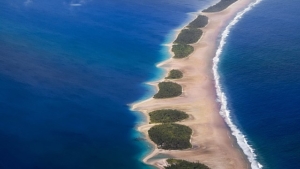 As the effects of climate change continue to manifest around the world, island nations bear the brunt of rising sea levels. Located in the Pacific Ocean, Tuvalu, Kiribati and the Marshall Islands are just a few of these “sinking islands.” Given their unique circumstances, these islands face distinctive challenges as they fight to fend for themselves. The following is an overview of the issue of poverty on sinking islands.
Tuvalu: Challenges
Tuvalu consists of nine islands, two of which are on the verge of submerging. Scientists predict that Tuvalu could become inhabitable in the next 50 to 100 years. Around three-quarters of the labor force operates in the informal economy, working in subsistence farming or fishing. Even so, Tuvalu’s salty soil renders the ground practically useless for agriculture, and the fish risk being affected by ciguatera poisoning, forcing locals to expend a large sum of money on imports. Furthermore, rising sea levels have contaminated underwater ground supplies, making Tuvalu entirely dependent on rainwater, which, coupled with the alarming frequency of droughts, is unreliable.
Kiribati: Challenges
The 33 islands of Kiribati are largely dependent on exports of copra and coconuts. However, a shortage of skilled workers and remoteness from international markets hinder its economic development. In 2019, 21.9% of the population lived below the national poverty line.
As one of the most isolated countries in the world, Kiribati is battling several climate-related threats: severe storms cause the sea to invade the land more frequently, destroying crops and inundating homes; malnutrition increases the spread of diseases such as tuberculosis; and the salinization of water makes it hard to grow food and heightens the risk of diarrhea and skin infections. Furthermore, insufficient planning leaves Kiribati especially vulnerable to rising sea levels.
Marshall Islands: Challenges
The Marshall Islands is a collection of 29 atolls and five islands. Subsistence agriculture is the country’s primary economic industry, with coconut and breadfruit being the most crucial commercial crops. Commercial fisheries and tourism also generate substantial income.
In 2018, a third of the nation fled for the United States (U.S.), seeking to escape impending climate hazards, including sea-level rise, droughts and tropical storms. A report by the Intergovernmental Panel on Climate Change predicts a one-meter rise in the sea level by 2030, meaning entire islands will disappear, and its capital city Maduro will be irreparably flooded. On average, tropical typhoons occur twice a year, causing major landslides and flooding.
Foreign Aid and Potential Solutions
Most of Tuvalu’s GDP comprises donations from the U.N. and nearby countries. The U.N. has been present in Tuvalu since 2000, with 18 agencies actively implementing programs. Moreover, Australia’s partnership with Tuvalu has provided essential medicine and supplies; maintained access to essential goods and services, including education; contributed to the Tuvalu Trust Fund to allow greater economic development; and ensured infrastructure can withstand stubbornly strong winds, coastal erosion and heat waves. Funded by the U.N. Development Program, the construction of a 170-meter-long concrete sea wall to protect the administrative center of the capital is currently in progress.
Foreign aid accounts for approximately 43% of Kiribati’s finances. The Revenue Equalization Reserve Fund (RERF) — Kiribati’s sovereign fund — holds investments in more than 20 currencies. In July 2023, a Chinese military-run hospital ship arrived in Kiribati, providing medical assistance to the island. In search of a realistic solution, the Kiribati government has purchased land in Fiji in hopes of growing crops and evacuating the whole island should the worst occur.
Since achieving independence in 1986, the Marshall Islands has operated under a Compact of Free Association with the U.S. The U.S. gives the Marshall Islands more than $80 million in assistance every year, aiding in sectors like education and infrastructure. The country has additionally received aid from Australia, Japan, Taiwan, the U.A.E., Thailand and the E.U. In 2022, the World Bank approved a $30 million project to improve the climate resilience of urban areas in the Marshall Islands.
Furthering these actions — strengthening infrastructure, building sea walls and buying foreign land — are all potential ways to combat rising sea levels.
– Lauren Liu
Photo: Wikimedia

.jpg)