Senegal’s MADIBA Vaccine Facility
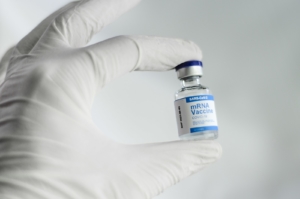 The true scope of vaccine inequality in Africa proved evident during the COVID-19 pandemic. By the end of 2021, more than 92% of Africa’s 1.2 billion residents had not received full vaccinations against COVID-19. Furthermore, in 2021, low-income and developing nations received less than 2% of COVID-19 vaccines created by Moderna, Pfizer and BioNTech. Low vaccination rates have had far-reaching impacts, such as drops in school attendance. By May 2021, almost 750,000 children stopped attending school in South Africa alone. The establishment of the MADIBA vaccine facility in Senegal brings hope to Africa in terms of vaccine access.
As of 2020, 39% of Senegal’s population lives in poverty and 60% of the population is younger than 25 years old, according to the World Food Programme. Only 25% of families in Senegal do not suffer from chronic poverty. The MADIBA vaccine facility project offers a brighter future for Senegal’s younger generation and hope for those in need of vaccines throughout Africa.
MADIBA Vaccine Facility and Poverty
On June 2, 2022, the hope for higher vaccination rates in the future became a reality. The Institut Pasteur de Dakar is a “nonprofit association of public utility” in West Africa committed to improving public health and fighting deadly diseases. The Institut Pasteur de Dakar and the European Investment Bank (EIB) announced the close of a €75 million agreement to construct a vaccine manufacturing facility in Senegal.
The Manufacturing in Africa for Disease Immunisation and Building Autonomy project (MADIBA) aims to decentralize vaccine production and provide vaccines domestically to residents. With the production of vaccines in Africa, the Institut Pasteur de Dakar plans to distribute essential vaccines and improve public health in Senegal and other African countries in need.
Vaccine Production and Imports
Africa currently relies on imports for vital vaccines needed to combat endemic diseases. In fact, Africa imports 99% of its vaccines from other continents. Aspen, a South African vaccine manufacturer announced in May 2022 that it would pause its production of Johnson & Johnson COVID-19 vaccines after producing 180 million doses. The MADIBA vaccine facility has the ability to produce 300 million doses of COVID-19 vaccines (or other vaccines) a year.
The MADIBA vaccine facility stands as the “first full-service vaccine production facility” in Africa. While Africa has vaccine plants in various countries, most are limited to packaging vaccines. Producing doses of vaccines in Africa would reduce the need for imports and create a new market for future generations.
Construction and Vaccine Production
On March 29, 2022, the creators of the vaccine manufacturing facility shipped it to Senegal. KeyPlants created and assembled the facility in Sweden, then disassembled it for shipment. The process took less than eight months. KeyPlants, a Swedish company, designs modular, “innovative life science facilities.” The facility is portable and can be scaled over time to meet the demand for production. The facility expects to begin the production of vaccines in Africa at the end of 2022.
In light of the COVID-19 pandemic, the MADIBA vaccine facility will produce mRNA vaccines along with other life-saving vaccines, including yellow fever vaccines. Yellow fever is endemic in tropical locations of Africa and death rates range from 29,000 to 60,000 deaths each year in Africa. Along with standard vials of vaccines, the MADIBA vaccine facility will produce pouches of vaccines at the new facility. The facility can store each pouch, containing 200 doses each, in a refrigerator for about six days.
Looking Forward
The MADIBA vaccine facility project will continue to fight the imbalance of vaccines in Africa. To combat childhood deaths, the facility hopes to produce vaccines for polio, rubella and measles in the future. In sub-Saharan Africa, “pregnant women who were hospitalized with COVID-19 had double the risk of death compared to nonpregnant women with similarly severe cases” and five times the risk of expectant mothers without COVID-19.
With the MADIBA vaccine facility, more pregnant women would have access to vaccines, reducing the risk of death for themselves and their children. With these protections, maternal and child mortality rates in sub-Saharan Africa would lower.
The facility will also offer job opportunities to young Africans, which will lower unemployment rates in Senegal and lead to economic growth. With increased access to vaccines, combating deadly but preventable diseases in Africa can become a reality without the need for imports.
– Sara Sweitzer
Photo: WikiCommons
