Examining the Gender Wage Gap in Germany
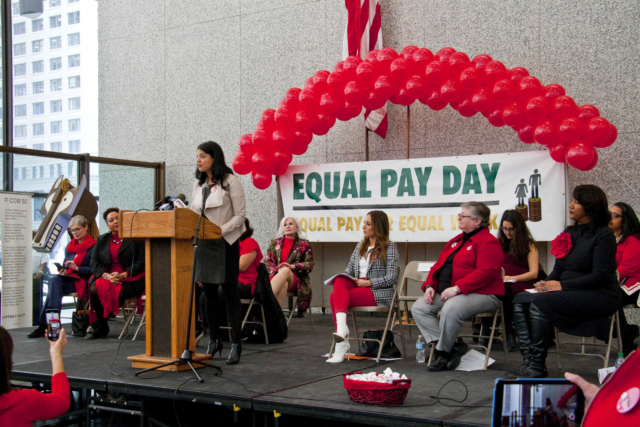 Data from May 2019 indicates that German women receive an average of 21% less wages than German men. Germany holds one of the largest gender pay gaps in the European Union, a gap that has since widened due to COVID-19. As a consequence of the gender wage gap in Germany, German women endure poverty at a higher rate than German men. However, recent policies, lawmaking proposals and continued strong stimulus provide hope and solutions for a future of gender equality within Germany’s workforce.
The Gender Wage Gap in Germany
Despite the presence of Germany’s long-standing female chancellor, Angela Merkel, and the country’s overall reputation of upholding socially progressive policies, Germany holds the third-largest pay gap in the European Union as of 2017, ranking just behind Estonia and the Czech Republic. As of March 15, 2019, for every two lawmakers in Germany’s parliament, there exists only one female.
These pay gap inequalities force German women into poverty at a rate disproportional to men in Germany, much like the rest of the world. According to the European Union’s statistics office, 7.1 million German women faced poverty in 2017 compared to 6.1 million men. Furthermore, German women face a 16.6% risk of falling into poverty compared to a 15.2% risk for men, according to a 2021 report.
The correlation of a gender pay gap and poverty exists on an international scale as well. On September 14, 2020, the U.N. reported a global gender pay gap of 16%, meaning that female employees earn 84% of the amount their male equivalents earn globally. The global gender wage gap is especially divisive for women of color, immigrant women and mothers.
COVID-19 and Pay Inequality
According to a U.N. estimate on September 2, 2020, the U.N. expects the poverty rate for women to increase by 9.1% due to COVID-19. Germany is no exception to this global prediction. According to a Reuters report from May 14, 2020, 27% of women in Germany have had to reduce their working hours for child care purposes. In contrast, this percentage is more than the reported 16% of men (in households with at least one child younger than 14) who had to cut their working hours.
In addition, Reuters reports that this disparity is more likely in households with low or medium incomes rather than higher incomes. According to a BBC poll, German women reported facing higher financial impacts of COVID-19 than men. Roughly 32% of German women reported experiencing financial impacts of the novel coronavirus compared with 24% of men.
Closing the Gap
As the gender wage gap increases with the effects of COVID-19 both across the world and throughout Germany, hope comes in the form of advocacy, legislation and awareness. On March 4, 2021, the European Union proposed a law to compel companies to close gender pay gaps. The law also allows candidates access to salary information during interviews.
The law goes as far as imposing possible sanctions on companies that fail to comply. Under this proposed law, women employees can challenge employers when not equally compensated. The challenges then go through independent monitors with the goal to seek proper payment or treatment of all female employees.
Germany’s Successes
Additionally, Germany’s consistent social stimulus throughout 2020 and into 2021 provided great economic protections for the country as a whole. Germany excels in stimulus protections and aid when compared to the majority of the world. According to The New York Times, when the primary jobholder in a family of two parents and two children loses a job in the United States, the family retains 28% of their previous income. Contrastingly, the same family would maintain 75% of their income in Germany. The New York Times describes this as a “reflection of the country’s far more generous social safety net,” listing this outcome as one of the many benefits of strong, continued economic stimulus.
Overall, while Germany continues to combat the gender pay gap as an increasing number of women and girls enter poverty due to COVID-19, recent policies surrounding transparency, accountability and fiscal stimulus in the workforce provide much hope for the future.
– Lillian Ellis
Photo: Flickr
