Tools to Maximize Crop Yields
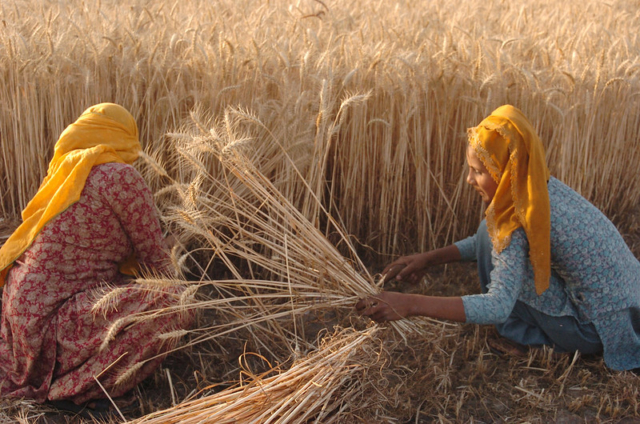 One’s local grocery store may be packed with fresh fruits, vegetables and other necessary foods, however, it is highly likely that these goods represent only a fraction of a farmer’s planted crop. In the U.S. alone, around 20 billion pounds of food crops are discarded or unused annually. This is a considerably high number given the country’s large population. In lower-income countries, the average percentage of wasted food crops is between 40% and 50% of the total crop planted. In this way, finding tools and technology to help maximize crop yields in both developing and developed countries will contribute to decreasing poverty-related global hunger by providing methods that decrease the time and cost of cultivating crops.
Precision Farming
Precision farming is the newest agricultural method maximizing crop yields. It minimizes the time, cost and labor involved in cultivation. Precision farming uses technology to closely observe and care for crops. It cuts down on the time-consuming practice and does not require a large labor force.
The Scientific American article states, “precision farming, by contrast, combines sensors, robots, GPS, mapping tools and data-analytics software to customize the care that plants receive without increasing labor. Farmers receive the feedback in real-time and then deliver water, pesticide or fertilizer in calibrated doses to only the areas that need it. The technology can also help farmers decide when to plant and harvest crops.” Using precision farming techniques allows farmers to be more attentive to their respective crops. In addition, farmers save more energy, time and resources while increasing the proportion of the harvested crops.
Irrigation is also a vital element of cultivating crops. Automatic monitoring and control systems that water crops base their specific watering needs on climate conditions. Precision farming optimizes the condition of crops’ care. Moreover, these automatic irrigation systems ensure that crops get the right amount of water they need to thrive in their climate. This minimizes water waste that oftentimes accompanies manual water systems on farms. Additionally, farmers can divert their attention to other crop-yielding tasks rather than closely monitoring crops.
Fungicides are the New Pesticides
Crop loss is largely attributed to pests and other vermin that attack food crops. Pesticides are often used to maximize food crops and protect yields. However, pesticides can oftentimes be expensive and are inaccessible for farmers in rural regions of developing countries. Furthermore, pesticides can be harmful to crops such as fruits and vegetables, decreasing the portion of crops harvested. On the other hand, fungicides are less expensive and less harmful alternatives to pesticides.
Maximizing the portion of food crops harvested helps decrease hunger-related poverty, providing more food options to individuals. Additionally, ensuring that crop yields are large stabilizes the price of food and provides enough supply for the demand. In this way, tools and technological advancements such as precision farming, automatic irrigation and fungicides help maximize crop yields and limit poverty-related hunger.
– Kristen Quinonez
Photo: Flickr
