Education in Guatemala: Teaching from a Tricycle during COVID-19
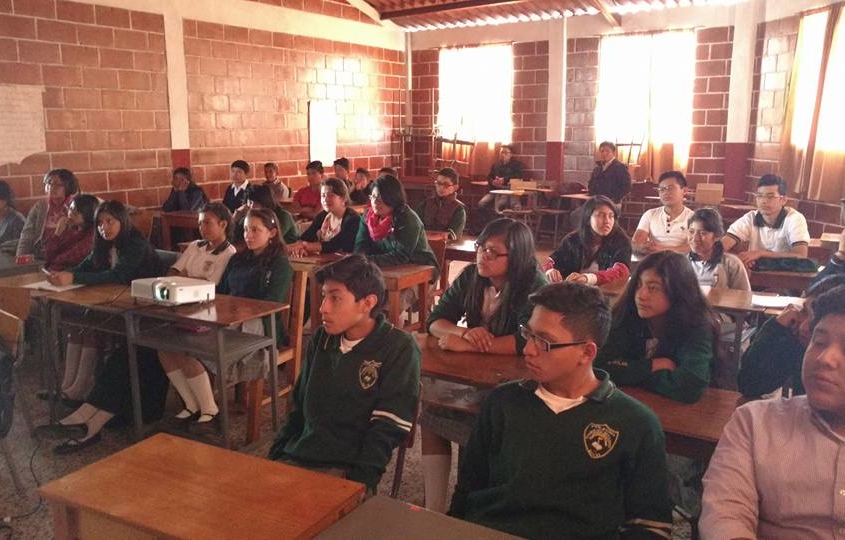
Guatemala is a country in Latin America with one of the highest illiteracy rates. Furthermore, 79% of indigenous Guatemalans live in poverty. Education in Guatemala lacks government funding and has further limitations, especially in rural areas. Educators face inadequate or non-existent supplies, no training and no desks or tables in more rural areas. With remote learning emerging worldwide during the pandemic, many students in Guatemala lost their access to education due to missing technological equipment. Gerardo Ixcoy, a 27-year-old teacher in the small farming community of Santa Cruz de Quiche, is bringing the classroom to his students to ensure they keep learning.
Guatemalan Students Face More Than COVID-19
Unlike most western countries, only the first six years of school are free in Guatemala. Junior high and high schools require entrance fees, uniforms and supplies. Since 75% of the population lives below the poverty line, only around one-third of students continue with secondary education. Many families struggle to regularly put food on the table, making education in Guatemala a luxury rather than a necessity. Only a mere 10% attend high school.
Children who cannot afford schooling often end up working for a low wage and cannot pursue higher education even as adults. Illiteracy is common, with rates of up to 25% in adults and young adults over 15. Indigenous children thereby face the most problems. Language barriers and lack of schools physically existing near their rural communities have failed to integrate Guatemala’s indigenous children into the school system.
A Hero on Three Wheels
As shutdowns across the world spread due to COVID-19, Guatemala is no exception. When schools closed in the middle of March 2020, Gerardo Ixcoy purchased a used adult tricycle with his savings. At first, Ixcoy attempted the normal distance learning route via internet apps such as WhatsApp to give children their worksheets, but less than 15% of homes have internet in the farming community. Many could not afford the necessary data packages to utilize online learning either. Education in Guatemala, especially in rural areas, is vital to keep children from working on the streets. Over 40% of the population in Santa Cruz de Quiche is illiterate and children run the risk of becoming part of that statistic due to the pandemic. Thus, Ixcoy took action.
Ixcoy turned a simple second-hand tricycle into a mobile, pandemic-safe classroom. Plastic barriers adorn the sides serve as protection measures and he installed a whiteboard to show examples while teaching. The mobile classroom even has a solar panel for the stereo that is used for certain lessons. He maintains six feet of distance, often teaching children just outside their doorways. Every day, Ixcoy pedals to each student to teach them math, reading, science and art.
After weeks of quarantine, the children have something to look forward to. Both the children and Ixcoy wear face masks to avoid spreading the virus but continue lessons as normal as possible. Oscar Rojas, an 11-year-old student of Ixcoy says, “because now I’m not receiving normal classes, Teacher Lalito only comes for a little while to teach me, but I learn a lot.”
Ixcoy’s dedication to his student’s academic success is not only incredibly moving, but may also be a potential solution to the lack of educational access in Guatemala.
– Amanda Rogers
Photo: Flickr
