Poverty in Bangladesh and Economic Growth
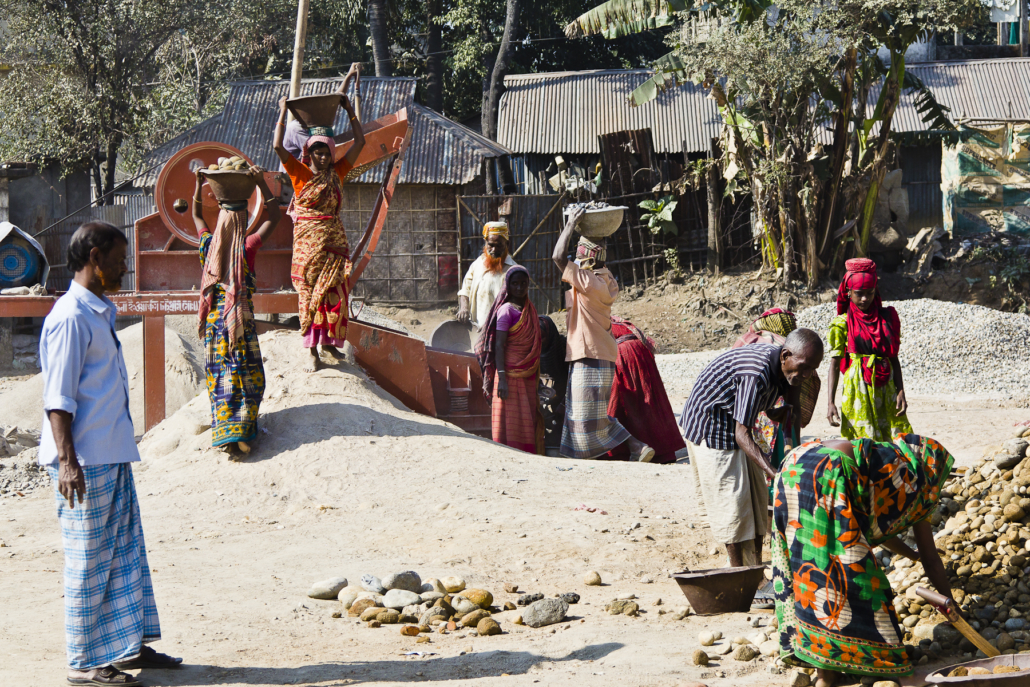
Bangladesh is a small country in South Asia bordered by India and Myanmar. With a population of 161 million, the country had a poverty rate of 21.8% in 2018. Since its inception in 1971, Bangladesh has faced a myriad of issues. In 1971, the annual GDP was -14%, the country was plagued by famine and floods and there were high rates of political instability. In recent years, the government has been actively working to reduce poverty in Bangladesh by addressing concerns across a variety of sectors. According to the Asian Development Bank, Bangladesh currently has the fastest growing economy in the region.
Involvement of NGOs
Several NGOs have been involved in Bangladesh’s economic success. These NGOs include Practical Action Bangladesh (PAB) and Proshika. These two NGOs have worked to implement policies that have allowed Bangladesh to better support its working population, namely by focusing on entrepreneurship.
Proshika is a Bangladesh-based NGO concerned with skills training and employee management. The NGO is responsible for starting the Small Economic Enterprise Development (SEED) program, which was created to help impoverished people and reduce poverty in Bangladesh. This program provides microloans, employee training, technology help, business consultation and more.
PAB has worked on a similar initiative in the form of the Markets and Livelihoods Programme (MLP), which provides training, technology help and more. These programs were studied in relation to the smith communities (blacksmiths, goldsmiths, etc.) in Bangladesh. The smith communities are some of the most impoverished in the country. In a 2015 paper published by Rezaul Islam at the University of Dhaka, Islam found that these programs were essential to allow these communities to prosper and create financial growth by encouraging entrepreneurship.
Diversifying Exports
Bangladesh has emerged in recent years as a major export provider for a variety of goods. In 2018, Bangladesh’s exports increased by 4.5%, increasing an additional 10.1% in 2019. Bangladesh is a significant producer of rice, jute, mangoes, vegetables and inland fish. Recently, Bangladesh has also been exporting technology, exporting four ships to India and 12 robots to South Korea.
Investing in Education
Bangladesh has also taken great strides to invest in the education of its young workforce. Every year, Bangladesh is seeing 500,000 students graduate from college, of which 65,000 receive IT training. This has transitioned Bangladesh’s economy from rural-based agriculture to a more urban and modern economy.
Bangladesh has also been working hard to address the gender disparity gaps in education. In 2015, Bangladesh was one of a handful of countries that managed to achieve an equal amount of school enrollment across genders and had more girls than boys enrolled in secondary education.
Developing the IT Sector
Bangladesh has developed the information technology (IT) sector of its economy, which now totals to a little more than 50% of the country’s GDP. The country has established around 8,000 digital centers across the nation and scaled up internet and phone coverage.
Annually, Bangladesh’s technology products exports total about $1 billion. The government hopes to increase this number to 5 billion USD by the end of 2021. The country also boasts about 600,000 IT freelancers.
Increases in Foreign Investment
All of Bangladesh’s economic growth has yielded another benefit: increased foreign investment. Investors from around the world have chosen to invest heavily in Bangladesh’s economy, demonstrating the strong growth potential of Bangladesh. In 2019, foreign investment increased by 42.9%. HSBC bank has predicted that Bangladesh can achieve a spot in the top 30 economies of the world by 2030.
Bangladesh demonstrates how growing the economy can help fight poverty. Increases in job opportunities, employee training, education and more benefit the impoverished in the country. Moving forward, it is essential that efforts to reduce poverty in Bangladesh continue.
– Anushka Somani
Photo: Flickr
