10 Facts About Human Trafficking in Brazil
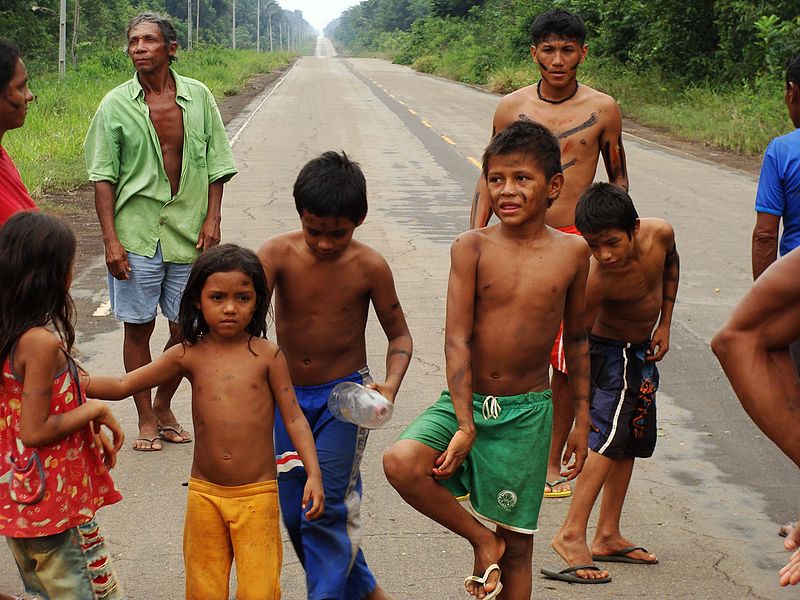
Brazil is known as the most developed country in Latin America. The country’s rapid economic growth, coupled with urbanization, is attracting more businesses to invest in Brazil. On top of this, Brazil’s strong tourism industry further bolsters the country’s positive image. However, the presence of human trafficking in Brazil is also a well-known fact throughout the international community. Here are 10 facts about human trafficking in Brazil.
10 Facts About Human Trafficking in Brazil
- Human trafficking in Brazil is linked to forced labor. The recent economic growth and accelerating urbanization in Brazil resulted in labor abuse of migrant workers. Textile, construction and sex industries are especially well known for abusing smuggled migrant workers. In 2013, the Brazilian police identified a Brazilian gang that specialized in trafficking Bangladeshi nationals into Brazil. These smuggled Bangladeshi workers lived in slavery-like conditions in order to pay off nearly $10,000 to their smugglers.
- The U.S. Department of State (USDOS) ranked Brazil as a “Tier 2” country. This signifies that the Brazilian government does not fully meet the minimum standards to eliminate human trafficking. USDOS does note, however, that the Brazilian government is making significant efforts to remedy the state of human trafficking in Brazil.
- Law 13.344 helps to protect and support victims of human trafficking in Brazil. The Ministry of Justice and Public Security (MJSP) maintained 12 posts at airports and bus stations known as transit points to identify cases. In addition, 17 out of 27 state governments operate anti-trafficking offices that introduce victims to social assistance centers.
- The Brazilian government’s definition of human trafficking needs to be improved. While Brazil’s Law 13.344/16 criminalizes all forms of human trafficking with harsh penalties for perpetrators, human trafficking in Brazil is defined as a movement-based crime. This is a limited definition compared to the U.N.’s definition, which states other forms of coercion or monetary persuasion as different forms of human trafficking
- The recent crisis in Venezuela leaves many Venezuelan migrants in danger of human trafficking in Brazil.
The 2010 crisis in Venezuela created a massive exodus of migrants from Venezuela. These Venezuelan migrants in border cities and other parts of Brazil are especially vulnerable to sex trafficking and forced labor. Traffickers recruited these migrants in Brazil by offering them fraudulent job opportunities. - Child sex tourism is still a major issue. When Brazil hosted the World Cup in 2014, many authorities worried that this would worsen the country’s already present child sex industry. The influx of construction workers before the World Cup and an estimated 600,000 foreign visitors unintentionally creates a big market and demand for sex tourism in Brazil. Child sex workers are trafficked both domestically and internationally. In 2016, for example, the Brazilian police rescued eight children from the sex trafficking ring at the beaches near the main Olympic hub.
- In March 2019, the Brazilian police took down a trafficking ring that targeted transgender women. The Brazilian police rescued at least 38 transgender women from brothels in Ribeirao Preto, a city in the state of Sao Paulo. The traffickers lured these women in with a promise of paying for their transition surgeries. After the surgery, these women were forced into prostitution in order to pay back their traffickers.
- The US law enforcement collaborated with the Brazilian police to capture human traffickers in 2019. The U.S. Department of Justice (DOJ), as part of its Extraterritorial Criminal Travel Strike Force (ECT) program, cooperated with the Brazilian Federal Police (DOP) to capture three smugglers based in Brazil. The smugglers arranged travel for individuals through a network of smugglers operating in Brazil, Peru, Ecuador, Guatemala, Mexico and many other Latin American countries.
- The Brazilian Ministry of Labor (MTE) updated the “lista suja” in 2018 to combat human trafficking in Brazil. Lista suja, meaning “dirty list”, is a document that lists the names of companies that utilize labor that came from human trafficking. In 2018, the Brazilian government added 78 new employers to the list. The companies on the list cannot access credit by public and private financial institutions.
- The Brazilian Department of Labor is fighting forced labor through a special task force. Named
Special Mobile Inspection Group (GEFM), the group was initiated in 1995. GEFM consists of labor inspectors and prosecutors. The group conducts unannounced inspections of factories, farms and firms. The Ministry of Labor reported that, through more than 600 inspections, the task force rescued more than 5000 workers from forced labor between 2013 and 2016.
Human trafficking in Brazil has many faces. Forced labor and prostitution are the main concerns of the Brazilian government when it is dealing with human trafficking in the country. It is clear that the Brazilian
government is striving to remedy the current situation. Laws such as the 13.344/16 help to protect and assist the victims of human trafficking while MTE’s Lista Suja aims to dissuade businesses from utilizing human trafficked labor. With these kinds of continued efforts, human trafficking in Brazil is sure to decrease.
– YongJin Yi
Photo: Wikimedia Commons
