Global Health Equity
 There have been many advances in healthcare from the discovery of germs and the invention of vaccines to high-tech solutions like telesurgery and gene editing. Yet, with all of the advanced healthcare systems in the world, some people still lack access to even basic services. According to a study from the World Health Organization and the World Bank, more than half of the population lacks access to healthcare.
Global Healthcare Access
If a random person were selected on the street, it would be more likely that they wouldn’t have access to essential healthcare services. And for people who have access to healthcare, it can be prohibitively expensive. The study also found that an additional 100 million people spent so much on healthcare that it forced them into extreme poverty.
When the study was released in December 2017, WHO Director-General Dr. Tedros Adhanom Ghebreyesus was disturbed by the fact that so many people still didn’t have access to basic health services. He believes “A solution exists: universal health coverage allows everyone to obtain the health services they need, when and where they need them, without facing financial hardship.” One path to improving healthcare is by increasing the number of qualified healthcare professionals.
University of Global Health Equity
The fight to get everyone in the world access to healthcare is called global health equity. In 2004, a medical journal defined global health equity as an approach to medicine that centers on the issue of the extreme lack of access to healthcare. They wrote, “[r]egardless of their origins, social and economic inequalities are reflected epidemiologically: disparities of outcome in and between countries are now major challenges in medicine and public health.”
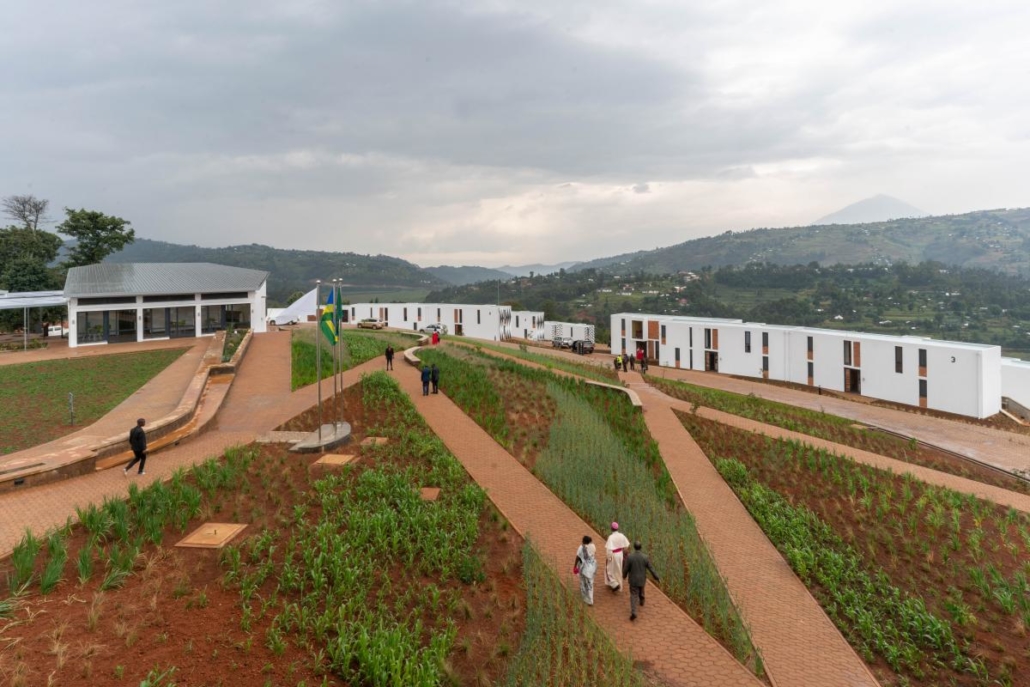
One recent initiative aiming to tackle these challenges is the University of Global Health Equity in Kigali, Rwanda. The initiative formally began in 2014. The campus opened last year. The university is a collaboration between the government of Rwanda and the U.S.-based nonprofit Partners in Health (PIH). PIH helped build primary healthcare facilities in 10 different countries, including Rwanda. Additionally, it has also helped establish health equity-focused programs in U.S. medical schools.
The purpose of this university is to bring equity-focused medical education to a place directly affected by health inequity. The founders write that the university “stands alone in both its focus on equity and its proximity to health systems that face the very challenges that students will grapple with in the classroom.” Gary Gottlieb, CEO of PIH says that “[t]he vision of…being able to create that educational pipeline is the foundation of the University of Global Health Equity.”
Making Medical School More Accessible
Another part of the problem that the university is trying to solve is the “brain drain.” This is when medical graduates from impoverished countries cannot find well-paying jobs in their home countries, so they travel to more economically stable countries instead. As a result, impoverished countries frequently do not have enough medical professionals even when they have enough medical schools.
The University of Global Health Equity aims to help its students find job opportunities that focus on health inequity. It also has a blind admissions process, so it can admit all qualified students regardless of their ability to pay. Dr. Abebe Bekele, Dean of Health Sciences at the university believes that neither sex nor economic background should get in the way of someone realizing their dream of becoming a doctor.
On average, students have 91 percent of their tuition funded by scholarships. So far, 37 students have graduated. Furthermore, 88.5 percent of them work in nonprofits or the public sector in accordance with the university’s mission of an equity-based approach to healthcare. This is an important step in global health equity that will help create more jobs in the medical field around the world.
-Sean Ericson
Photo: Mass Design Group
