• Link to X
  • Link to Facebook
  • Link to Instagram
  • Link to TikTok
  • Link to Youtube
  • About
    • About Us
      • President
      • Board of Directors
      • Board of Advisors
      • Financials
      • Our Methodology
      • Success Tracker
      • Contact
  • Act Now
    • 30 Ways to Help
      • Email Congress
      • Call Congress
      • Volunteer
      • Courses & Certificates
      • Be a Donor
    • Internships
      • In-Office Internships
      • Remote Internships
    • Legislation
      • Politics 101
  • The Blog
  • The Podcast
  • Magazine
  • Donate
  • Click to open the search input field Click to open the search input field Search
  • Menu Menu
Blog - Latest News
Global Poverty

Grasshoppers are the Food of the Future
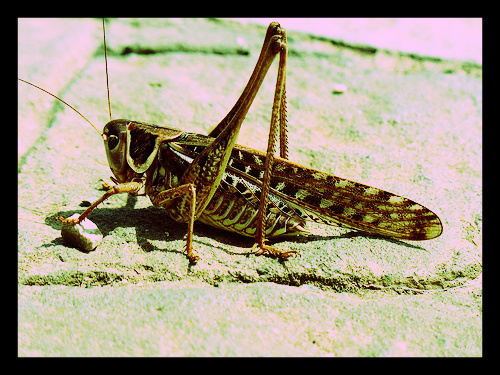
Grasshoppers are the Food of the FutureCould this be your next meal? It may have to be; grasshoppers are the food of the future.

Overpopulation is a real concern for the planet and for “quality of life standards” for every person on the planet. It is estimated that the global population will reach 8 to 10 billion in the next few decades, and with this, a whole new way of life will have to be adopted to meet our needs.

A major transition will have to occur in regards to the food we eat and how food is grown, managed and distributed. Current habits will not be able to keep pace with growing demands. One thing that will have to be downsized is the cattle industry. It is simply not sustainable and efficient for feeding beef to more and more people, and its environmental effects will become even more of a liability.

The solution? Farming and harvesting insects. It takes very little water and transport fuel compared to livestock, grains and even vegetables. It is also far more efficient than raising cattle. One hundred pounds of feed produces 10 pounds of beef. The same amount of feed would produce more than four times that amount in crickets. They are high in protein, iron and calcium, making them a logical food choice; it is already utilized in many regions of the world.

– Mary Purcell

Source: The Borgen Project, howstuffworks.com
Photo Source: thejackieblog.com


March 4, 2013
Share this entry
  • Share on Facebook
  • Share on X
  • Share on WhatsApp
  • Share on Pinterest
  • Share on LinkedIn
  • Share on Tumblr
  • Share on Vk
  • Share on Reddit
  • Share by Mail
https://borgenproject.org/wp-content/uploads/borgen-project-logo.svg 0 0 Borgen Project https://borgenproject.org/wp-content/uploads/borgen-project-logo.svg Borgen Project2013-03-04 13:26:492020-05-17 21:33:02Grasshoppers are the Food of the Future

Get Smarter

  • Global Poverty 101
  • Global Poverty… The Good News
  • Global Poverty & U.S. Jobs
  • Global Poverty and National Security
  • Innovative Solutions to Poverty
  • Global Poverty & Aid FAQ’s
Search Search

Take Action

  • Call Congress
  • Email Congress
  • Donate
  • 30 Ways to Help
  • Volunteer Ops
  • Internships
  • Courses & Certificates
  • The Podcast
Borgen Project

“The Borgen Project is an incredible nonprofit organization that is addressing poverty and hunger and working towards ending them.”

-The Huffington Post

Inside The Borgen Project

  • Contact
  • About
  • Financials
  • President
  • Board of Directors
  • Board of Advisors

International Links

  • UK Email Parliament
  • UK Donate
  • Canada Email Parliament

Get Smarter

  • Global Poverty 101
  • Global Poverty… The Good News
  • Global Poverty & U.S. Jobs
  • Global Poverty and National Security
  • Innovative Solutions to Poverty
  • Global Poverty & Aid FAQ’s

Ways to Help

  • Call Congress
  • Email Congress
  • Donate
  • 30 Ways to Help
  • Volunteer Ops
  • Internships
  • Courses & Certificates
  • The Podcast
Link to: What Would an HIV Cure Mean for the World’s Poor? Link to: What Would an HIV Cure Mean for the World’s Poor? What Would an HIV Cure Mean for the World’s Poor? Link to: Aid to Haiti: What Lessons Can We Learn? Link to: Aid to Haiti: What Lessons Can We Learn? Aid to Haiti: What Lessons Can We Learn?
Scroll to top Scroll to top Scroll to top