Education in the Nunavik
The Nunavik is a region located at the north of the Quebec region in Canada. With an area of 507,000 km2, it is home primarily to Aboriginal population, especially the Inuit. With struggles for land rights still occurring in this area, problems of large inequalities in health care and, in particular, education, persist. Inequity in education in the Nunavik is an important issue impacting many young lives and future livelihoods.
Country Overview
According to the OECD, Canada is the most educated country in the world with 56.2 percent of adults completing two-year, four-year or vocational program. In 2010, Canada had a graduation rate of 78.3 percent, making many think that almost everyone can get a diploma. While this national graduation rate may be high, the graduation rate for the Aboriginal youth population in 2011 was only about 24 percent. In comparison, the graduation rate for non-Aboriginal youths in the country was almost 87 percent. There is a huge disparity it the educational attainment in indigenous population, in this case, the Inuit, and in non-indigenous population.
Problems at Different Levels
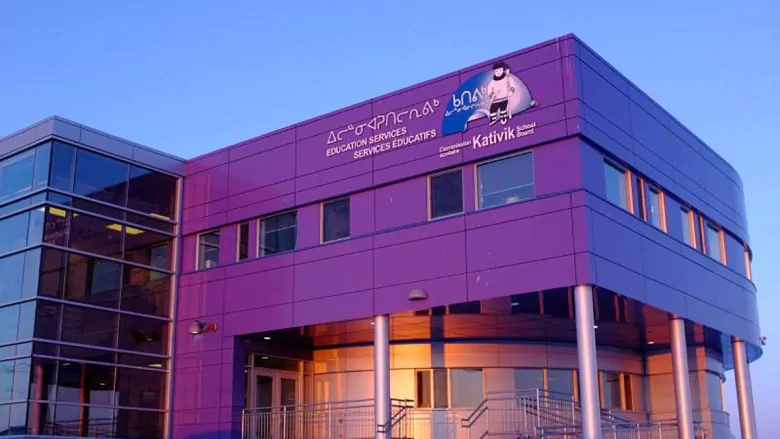
The question, of course, is why this difference exists? Many failures can be linked to the ineffectiveness of policy initiatives created by officials at the local (Nunavik), regional (Quebec) and national (Canada) level. One example of the inefficiencies happened in 2015 when former Nunavik students learned that their high school diplomas were not in fact real diplomas, but certificates that indicate the “attestation of equivalence of secondary studies.”
While the school board apologized, nothing could be done for the students who worked hard with the resources that they had for their achievements. While this is a problem that came about at a local level, the provincial and national governments did not aide the local government either. The school board that oversees Nunavik education has also placed responsibility on the provincial Minister of Education for not providing more funds and help to the schools.
Alleviating the Problem of Education in the Nunavik
Improving education in the Nunavik is a key component to alleviating poverty and improving livelihoods of the citizens of the region. The first step to solving this education crisis is by recognizing the problem, and this is being done both by the Canadian government and by various nongovernmental organizations. The 2018 Canadian budget dedicated almost $12 billion for investment in indigenous populations through various education endeavors, housing programs and health initiatives.
One nongovernmental organization that is doing incredible work for the Inuit population in Canada is Pauktuutit Inuit Women of Canada. This a national organization that has a goal to represent all Inuit women in Canada, giving them a voice and better access to educational opportunities. This group works with policymakers, other organizations and community leaders to develop ideas and solutions that are most beneficial to the Inuit population.
Another incredibly important nongovernmental organization is Indspire, a cross-national Indigenous-led charity that invests in Indigenous education all across Canada. Indspire has a virtual learning center called the K-12 Institute that helps policymakers, educators and community members best educate the Indigenous population. It also has awarded over $14 million for 2018 school year through about 4,900 scholarships to Indigenous students to advance their studies. This is an incredible organization because it is run by people who understand the struggles of educational attainment in Indigenous communities.
Disparities between indigenous and non-indigenous population have a long history in Canada, but these disparities will decrease with the work of nongovernmental organization such as Indspire and Paktuutit Inuit Women of Canada, along with the country’s government actions. By educating as many people as possible about the inequality, individuals and the government can continue to work hard to close the gap of education in the Nunavik and in whole Canada as well.
– Isabella Niemeyer
Photo: Flickr
