Electricity Coverage Rising in Africa
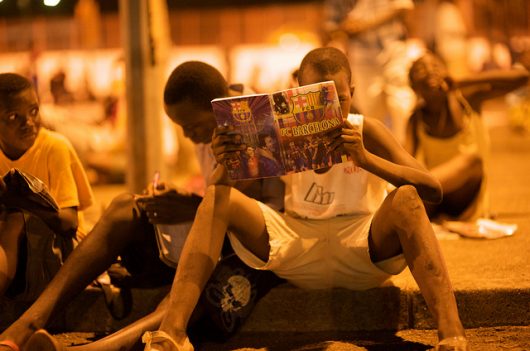
It is hard to imagine life without electricity. In the American standard of living, electricity pervades every aspect of a person’s life, from food storage to entertainment and everything in between. In Africa, however, only 30 percent of people have access to electricity.
Power Africa
Power Africa is a USAID agency that aims to provide people in Africa with access to electricity. They plan to make 60 new electricity connections and generate 30,000 more megawatts (MW) of electricity across the continent by 2030. The goal is to do this by harnessing the sun, wind, lake water, and natural gas to power rural areas that do not have access to electricity.
Power Africa tracks its progress on various projects by tracking business transactions with African power companies. For example, in 2016, they made a deal with the U.S.-Africa Clean Energy Finance Initiative (ACEF), the Overseas Private Investment Corporation (OPIC), and the U.S. Department of State to provide $30 million worth of financing of 32 renewable energy projects in 10 countries in Africa. With Power Africa’s help, 90 business transactions have been completed and 25 of Africa’s 55 countries now have access to some form of electricity. Examples from Power Africa actions are described in a text below.
Mali
Although the demand for electricity in Mali is currently greater than the supply, that does not mean that there is no supply at all. Electricity in Mali currently comes from mostly hydraulic and thermal energy (55 and 44 percent, respectively). Power Africa plans to help Mali produce an additional 80 MW of hydroelectric energy, more than 300 MW from biomass, and unlimited MW from the sun.
Electricity usage has already gone up in Mali. Major mining companies increased their energy consumption by 136 MW (189 percent) between 2008 and 2011. In 2016, the government passed a law mandating partnerships between public and private electric companies in order to increase MW production. The ultimate goal is to make an additional 20,000 MW of energy and distribute it to 50 million people by 2020.
Namibia
Currently, Namibia gets most of its electricity from power grids in South Africa, Zimbabwe, and other nearby countries. However, electricity demand in these countries is way higher than supply, forcing Namibia to find ways to generate its own electricity. As of 2008, Namibia can only generate 393 MW from 3 stations, while the national demand is 533 MW.
One of these stations, the Ruacana power station, is dependent on the flow of water from the Kunene River, which flows out of Angola. Another station, the coal-run Eck power station, is costly to operate and maintain. Eck, along with the oil-based Paratus power station, is only used for short-term peaks in electricity demand.
For the time being, Namibia still needs to have its electricity needs met by its neighbors. The Caprivi link is a transmission line that connects Namibia’s power grid to those in Zambia and Zimbabwe. This provides the country with an additional 600 MW, fulfilling Namibia’s electricity needs. In 2007, Namibia consumed 3.6 TWh of electricity.
Tanzania
Most of Tanzania’s electricity (90 percent) comes from biomass. This has resulted in mass deforestation and, thus, is far from ideal for the ecosystem. Only 18.4 percent of Tanzanian citizens have access to electricity in any form. Currently, the country is financially incapable of extending the power grid into all rural areas.
In 1975, the government founded the Tanzania Electric Supply Company Ltd (TANESCO). TANESCO has a nationwide monopoly on electricity production and distribution. However, the Ministry of Energy and Minerals (MEM) is trying to end this monopoly by allowing companies to get licenses to generate, transmit and distribute electricity. The Rural Energy Agency (REA) is slowly getting electricity into rural areas. With these services, the government aims to make electricity available to everyone in Tanzania, and one can see electricity coverage rising from their efforts.
Conclusion
In the modern day, electricity seems like a basic ingredient for life that it seems like everyone should have it. The people in Power Africa agree and we can see electricity coverage rising in Africa as a result of their efforts. Mali is making more energy from more sources than ever, Namibia is starting to make its own electricity, and Tanzania is spreading electricity out as far as it can. Africa is becoming more and more electrified, reaching the ultimate goal- provide access to electricity for everyone on the continent.
– Cassie Parvaz
Photo: Flickr
