Solar Power to Help Eliminate Poverty in Developing Countries
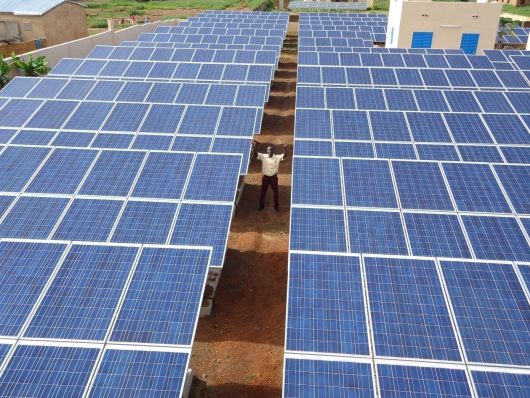 When extreme poverty is closely examined, a lack of resources is often found as the underlying catalyst. According to the International Energy Agency, 1.2 billion people worldwide lack access to a power grid. In developing countries, finding and utilizing renewable resources is essential.
By using solar power to help eliminate poverty, developing countries inch closer to a sustainable solution. By expanding the number of people who have access to power, fewer cases of water deprivation, disease outbreaks and even education deprivation would result.
Refrigerators in South Sudan
South Sudan, the least electrified country in the world, has endured constant conflict and disease outbreaks for more than four years, according to UNICEF. With rampant malnutrition and a lack of immunizations in the war-torn nation, diseases like measles, polio and tetanus have contributed to about one in 17 children dying from a preventable cause before their first birthday.
UNICEF has begun to use solar power to help eliminate poverty through its distribution of solar-powered refrigerators. Manufactured in Germany and transported via airlift, the refrigerators are used to keep vaccines at a safe temperature while being transported to isolated locations. The funding for the transportation and installation of the solar-powered refrigerators was provided by organizations like ECHO, the World Bank, GAVI and CERF.
By using solar power to maintain vaccines, UNICEF began immunizing South Sudanese who previously had no access to electricity. According to UNICEF, approximately 1.7 million children were vaccinated for measles.
Water Pump in Malawi
A scarcity of clean drinking water in Malawi villages impacts all aspects of everyday life for Malawi villagers. According to UNICEF, 13-year-old Lucy Chalire has been affected by the lack of clean water in multiple areas of her life. Chalire often suffered from diarrhea because of dirty drinking water. She also walked about five kilometers to collect the nearest water, leaving her exhausted and creating another roadblock to her education.
“I had diarrhea so many times. I would stay at home for around two weeks until I got better,” Chalire told UNICEF. “I missed a lot of lessons, but I always tried to catch up by copying notes from my friends.”
After installing a solar-powered water pump in Chalire’s village, people were able to access nearby water that hand-powered pumps could not reach. The solar power alternative not only increases the amount of clean water available, it provides water during the drought season, allowing farmers to increase their crop yield.
UNICEF Malawi’s Chief of Water Sanitation and Hygiene Paulos Workneh said, “It’s low maintenance and should last for at least 10 years. And solar power is cheaper, environment-friendly and more sustainable than relying on expensive diesel generators.”
By using solar power to help eliminate poverty, Malawi is taking steps toward a sustainable future.
Education in the Solomon Islands
The Solar Power Pilot Project in the Solomon Islands aimed to improve the current situation in the average classroom, which has led to only about 17 percent of adults being literate. Today, students in the Solomon Islands lack lights, air conditioning and even fans. With classrooms reaching high temperatures, students’ ability to learn can be hindered, according to UNICEF.
The Solar Power Pilot Project supplied classrooms with fans, and electric lights by installing solar panels in schools. In UNICEF’s review of the project, it was decided that a more effective way to use solar power is the installation at the homes of students. Since students live far from their school, afterschool activities are nonexistent and solar energy is not used to its full potential.
Using solar power to help eliminate poverty around the world is a reliable and renewable option that grants people never before seen resources.
– Austin Stoltzfus
Photo: Flickr
