The Development of Sustainable Agriculture in Algeria
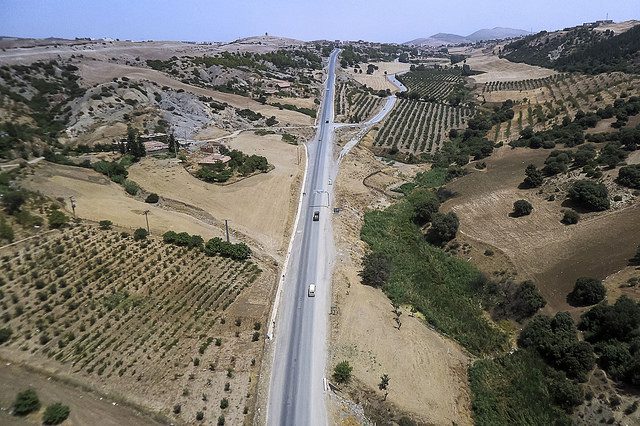
Sustainable agriculture attempts to meet society’s current food and textile needs without affecting the ability of future generations to meet their own needs. Agriculture is a major component in Algeria’s rural development and represents 14 percent of the labor force.
Algeria has approximately 8.4 million hectares (ha) of arable land, which is 3.5 percent of the country’s entire surface area. However, only 12 percent of Algeria’s arable land is irrigated because most of the sustainable agriculture in Algeria is rain-fed, and consequently suffers from frequent droughts. Just over half of the country’s total arable land is dedicated to field crops such as cereals and pulses, with six percent of land to arboriculture and three percent to industrial crops.
Algeria’s agricultural productivity has improved in recent years due to the Agriculture Development Plan implemented in 2000 by the Ministry of Agriculture. The plan focuses on boosting agriculture development and production.
In 2008, the agriculture development strategy was re-oriented to portray new policy priorities: enhanced agricultural production, revitalization of natural resources, appropriate consumption of water resources and food safety initiatives. Algeria’s government intends to orient agriculture toward models in the grain sector and establish modern complexes to facilitate the use of public agricultural land. This would increase Algeria’s arable land to nine million ha by 2020.
Despite the Agricultural Development Plan, Algeria remains one of the world’s largest importers of wheat, amounting to $2.39 billion. Algeria’s exports to the United States total less than $1 million.
Several factors impede Algeria’s development:
- Land ownership and marketing channel constraints
- Investment deficiency
- Insufficient input access
- Lack of water availability
- Low levels of agriculture training and education
- Slow grant agreement process
The Food and Agriculture Organization (FAO) of the United Nations and Algeria have formed a cooperation with three main objectives. These goals include working for sustainable improvements in economic, social and technical performance for agriculture production and food security, bettering natural resource management and building capacity and institutional development to secure effective policies for food security and resource management
To ensure sustainable agriculture in Algeria, priority should be given to improving the regulatory framework of resources and incentive system, further cooperation and policy development, implementing an effective finance system and encouraging a transparent and secure land market. Sustainable agriculture in Algeria is possible if development approaches are adaptable, long-term and rational.
– Carolyn Gibson
Photo: Flickr
