Assessing Women’s Empowerment in Bhutan
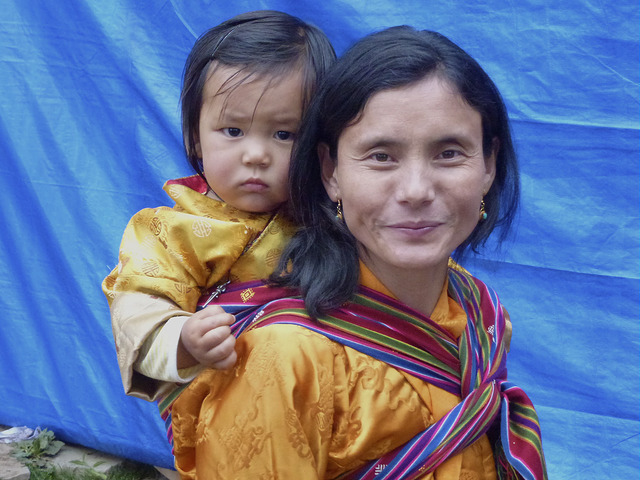 Happiness and wellbeing have always been a part of the Bhutanese political psyche. The fourth Druk Gyalpo, His Majesty Jigme Singye Wangchuck introduced Gross National Happiness (GNH) into both international indexes and Bhutan’s policies to define an official development paradigm for the country. When the constitution went into effect in 2008, the kingdoms’ leaders were directed to consult the four pillars of Gross National Happiness: good governance, sustainable socio-economic development, preservation and promotion of culture, and environmental conservation.
While Bhutan regularly ranks among the top happiest countries in all of Asia, happiness is not equally distributed among its residents: it is found that while 49 percent of men are happy, only one-third of women are happy.
In the past few decades, Bhutan has seen major socio-economic transformation and a rapidly growing per capita income. Yet despite progress in achieving gender equality in education and participation in the labor force, cultural restrictions have not allowed women to fully bridge the gap. The 2010 GNH survey findings have shown that the gender differences are greatest in negative emotions, work, leisure time, schooling, literacy, political participation, safety from human harm and wildlife damage, all to the disadvantage of Bhutanese women.
Due to matrilineal inheritance practiced in Bhutan, nearly 60 percent of rural women and about 45 percent of urban women have land and property titles registered in their name. However, these titles do not translate into economic advantages for these women. Land cannot be used as collateral for access to finance. Additionally, land-ownership makes it difficult for women to migrate and acquire better opportunities for work and acquire skills.
A report prepared by the World Bank in collaboration with the National Commission for Women and Children recognized the need for closing the gender gap in happiness in Bhutan. The report maintains that a greater voice for women in the management of land and access to an effective secondary as well as higher education, along with training in practical skills can help address this gap. Most importantly though, underlying social norms about gender roles in households should be addressed. Men should offer a greater role in sharing housework and raising children. Additionally, basic literacy among women should be improved to encourage more accepting attitudes and achieve great participation within the community.
While Bhutan still must work toward closing the gender gap in happiness, it has continued to improve in recent years. The country has the potential to become a leading nation in regards to gender equality.
– Richa Bijlani
Photo: Flickr
