How Conflict Affects Education in Cote D’Ivoire
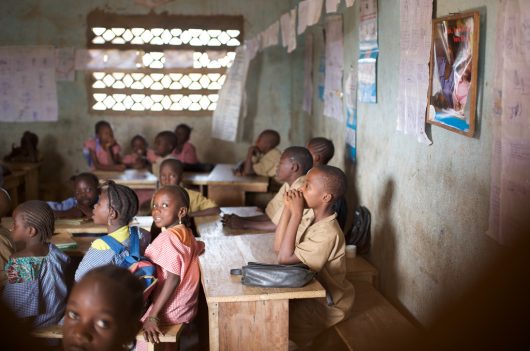
Primary education in Cote D’Ivoire, from ages 6 to 11, has slowly improved over the past decade. In 2014, enrollment rates were at 96% for boys and 84% for girls, almost 20% higher than in 2006. This positive trend is good news, but secondary education enrollment is under 50% for both sexes. Schools suffer from a shortage of trained teachers, and, while primary education is free, students cannot always afford materials. Two civil conflicts in the twenty-first century introduced additional complications.
After measures to fragment and exclude northerners from politics, ethnic and religious tensions escalated. A civil war broke out from 2002 to 2004 between the government-controlled south and the north. In 2010, a second conflict exploded after the southern government blocked the northern winner from taking office. With international support, the winner Alassane Ouattara took office, but not before 3,000 deaths.
Ouattara was re-elected in 2015 without violence. While Cote D’Ivoire is more stabilized, tensions still lead to skirmishes. These conflicts caused the displacement of almost 400,000 people, a quarter of whom have left the country as refugees.
Educate a Child explains the vulnerable situation of these children, “They become increasingly at risk of forced labor, forced early marriage, domestic violence, sexual exploitation, and recruitment into armed groups.” Combined with areas unable to handle the influx of people, displaced children are often excluded from education. Non-displaced children can also fall victim to these factors. Education in Cote D’Ivoire has a significant gender gap: primary education enrollment is 10% lower and literacy rates are almost 20% lower for girls.
Thirty-five percent of girls marry before 18 and women having an average of five kids are factors blocking girls from continuing education. All children, especially from rural or poor families, can be recruited into labor or armed conflict. Lack of quality education and opportunities can make these appear to be the
only options.
Many of the education and periphery struggles are aggravated by a lack of compulsory education and quality schools. Literacy for 15 to 24-year-olds is shockingly low; last year, boys’ rates were at 60% while girls’ rates were only at 40%. Poor facilities and unqualified teachers do not provide adequate support for children, especially in extreme situations.
This problem has not gone unnoticed. UNICEF was extremely active during the conflicts to keep as many schools operational as possible. Educate a Child and their partners have created three projects to leap the hurdles. Bridging Tomorrow works to reintegrate out of school children, Building a Future targets areas most affected by conflict to rebuild infrastructure and Education First is training teachers and building schools in areas with high displacement and poverty.
There is much to be done for communities and education in Cote D’Ivoire. The recent stability is optimistic, but children must be protected and educated.
– Jeanette I. Burke
Photo: Flickr
