Heat Relief in Bangladesh: Cost-Effective Solutions
 Ashis Paul overheard his daughter’s physics tutor explain how gas cools when it quickly expands, and the idea for the Eco-Cooler was born. During the hot seasons in Bangladesh, the temperatures rise up to 45 degrees Celsius, or about 113 degrees Fahrenheit.
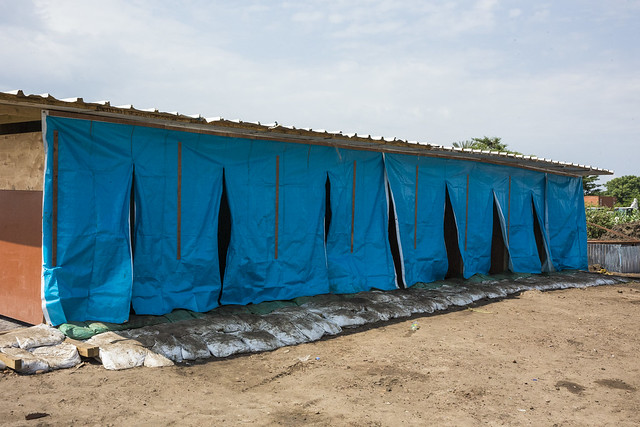
70% of the Bangladeshi population lives in huts with corrugated tin roofs, which greatly amplify the heat. Eco-Coolers, built with accessible materials such as plastic bottles, provide heat relief in Bangladesh to improve the lives of those living without power or air conditioning.
Paul works as a creative supervisor at an advertising company called Grey Group, which sponsors several pro-bono projects, including Eco-Cooler. To spread the knowledge on how to build an Eco-Cooler, Grey Group partnered with Grameen International Social Business Ltd., which works in many Bangladeshi villages.
Volunteers teach locals to build the Eco-Coolers from easily found materials and encourage them to teach others how to make them as well. Detailed, step-by-step instructions are also available on Grey’s website.
The materials to make an Eco-Cooler include a board cut to fit a window and plastic bottles with the bottom halves cut off. Due to a litter problem, plastic bottles are easy to find in rural villages. Repurposing waste for its construction and requiring no electricity to run, the Eco-Cooler serves as an environmentally-friendly and cost-effective cooling unit.
Extreme heat can decrease productivity, increase dehydration and the number of cases of heat stroke.
Considering the heat coupled with the tin-corrugated roofs, Jaiyyanul Huq, a creative director with Grey Group told The Observers, “I’ve been in these huts. It’s like being in a sauna in the Sahara.” Generally, the Eco-Cooler cools homes up to 5 degrees Celsius, or 9 degrees Fahrenheit, improving the quality of conditions for those living in homes with tin-corrugated roofs.
“The beauty of it is how easy these units are to make,” Huq told The Observers. Eco-Cooler has already impacted 25,000 homes, with more to come, providing environmentally-conscious, cost-efficient heat relief in Bangladesh.
– Laura Isaza
Photo: Flickr
