9 Facts About Poverty in Swaziland
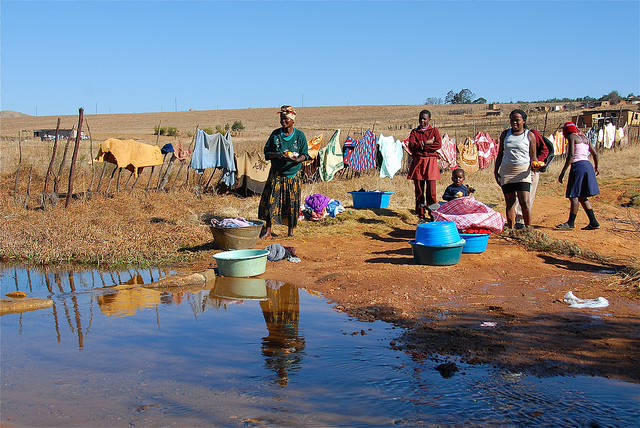 In conjunction with its quickly growing population, Swaziland has experienced continuous economic difficulties, especially in its rural areas. Here are nine interesting facts about poverty in Swaziland.
9 Facts About Poverty in Swaziland
- Ten percent of the population is responsible for about half of the nation’s consumption, while 84 percent of those living in poverty in Swaziland reside in rural areas. These figures point to a disproportion in the flow of resources between urban and rural areas in Swaziland.
- According to the Rural Poverty Portal, roughly 47 percent of the population is less than 15 years old. The unemployment rate of Swaziland is expected to rise unless working opportunities are found for these children.
- Life expectancy has actually dropped from a peak of 59 years in 1990 to 49 years in 2014.
- In 2013, Swaziland had the highest rate of HIV in the world, at 27 percent according to AVERT. During 2013, 11,000 people contracted HIV, and 4,500 people died as a result of HIV.
- The data shared by AVERT shows that 31 percent of women have HIV as opposed to only 20 percent of men. This difference is likely tied to gender inequality in Swaziland, as women are often not in control of their own reproductive and sexual health.
- Nevertheless, Swaziland has seen improvements in its HIV problem during the 2000s through increased rates of antiretroviral treatment and investments in HIV response. AVERT’s statistics demonstrate such improvement. In 2012, only three percent of children born to HIV-positive mothers were HIV positive, as opposed to 12 percent in the prior year.
- Drought has been a major factor in restricting growth and contributing to poverty in Swaziland. According to All Africa, a drought last year was partially responsible for a 31 percent decline in maize production in 2015 and left 300,000 people (one-quarter of the population) targeted for aid.
- Other impacts of drought are seen in education, where water is needed for plumbing. The lack of water also increases the potential for water contamination, with 197,157 students, teachers, and workers being put at risk of water-borne disease.
- Since 2000, the Kingdom of Swaziland has been implementing a plan to reduce poverty. Some goals include providing all rural households with access to water as well as giving women the same rights over their land that men have.
Foreign support in dealing with problems such as HIV and water shortage would certainly help improve the economic disparity found in Swaziland, in conjunction with the nation’s own efforts.
– Edmond Kim
Photo: Flickr
