Oral Health Care in Poor Countries
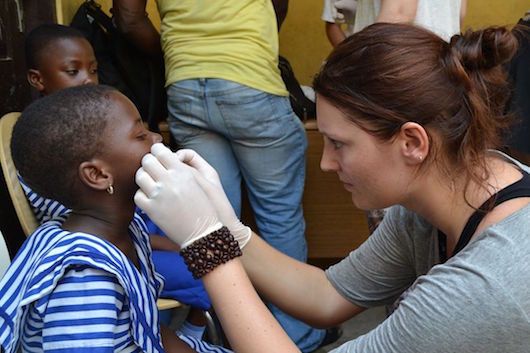 Oral health care is an indicator of a body’s overall health, but for many of the world’s poor, oral health care is one of the most neglected areas of medical care available. Thankfully though, in some regions, oral health care is improving.
The World Health Organization (WHO) says that “worldwide, 60-90 percent of school children and nearly 100 percent of adults have dental cavities.” Oral health care also includes, in part, gum care, mouth pain, oral infections and tooth loss.
What is even worse, is that “oral disease in children and adults is higher among poor and disadvantaged population groups” (WHO).
In parts of the world, access to dental care can be completely lacking. The American Dental Association (ADA) has given a warning for U.S. travelers: “If you are planning a trip out of the country it may be helpful to schedule a dental checkup before you leave, especially if you’ll be traveling in developing countries or remote areas without access to good dental care.”
Such a warning for U. S. citizens shows a need for better universal access to oral health professionals in developing countries. This is especially true for those living in poverty.
There are two studies in particular that highlight the connection between poverty and poor dental health. One comes from an Argentinian study that looked at parental income and education, as well as access to oral health care. The study found that there is a direct correlation between higher dental care and higher poverty indicators.
In another study, WHO reports that in Mexico, 60-70 percent of elderly people have few to no teeth. The report also finds that upwards to 90 percent of Mexicans have untreated cavities. As with the Argentinian study, the higher the poverty the worse oral care was. Their findings are similar to those in poverty all around the world.
What can be done? The situation seems dire and difficult.
One of the best ways to help fight cavities, and other noncommunicable oral diseases, is to promote proper dental care. Schools in the Philippines have made hand washing and tooth brushing part of their everyday curriculum. Dental care has been a consistent reason for children to miss school, but UNICEF has found that for the school children, “tooth-brushing can result in reductions of up to 27 per cent in absenteeism.”
The WHO Global Oral Health Programme is also working to reduce diseases caused by poor oral health care. The focus is not only on proper tooth brushing but also on proper diet, the reduction of tobacco and excessive alcohol use. All areas need to be looked at to help prevent tooth loss, gum disease and some forms of oral cancers.
Much still needs to be done to help maintain proper oral health, especially for those people living in poverty. Access to proper dental care when cavities or oral infections do occur is still lacking.
Thankfully there are programs in place that are thriving, such as the ones in the Philippine schools that are proving to be successful. Hopefully, their model will be used in other regions so that oral health care will improve the world over.
– Megan Ivy
Sources: Mouth Healthy, National Center for Biotechnology Information, UNICEF, WHO 1, WHO 2, WHO 3
Photo: Projects Abroad
