Hunger in Guinea-Bissau
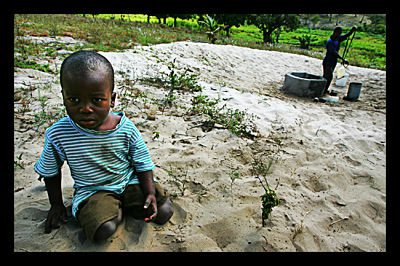
Hunger and malnutrition are significant concerns in the country of Guinea-Bissau that can be attributed to several factors including food insecurity, poor health and sanitation, limited access to water and low literacy rates.
According to a report released by the World Food Programme, only seven percent of people living in Guinea-Bissau are food secure. The report also revealed that 93 percent of the rural population in the country is food insecure as a result of cashew prices. In addition, an estimated 15,000 children suffer from malnutrition across Guinea-Bissau.
Due to Guinea-Bissau’s political instability and socioeconomic uncertainty, the country’s food security remains compromised. Poverty rates have increased from 65 percent in previous years to 75 percent and although the country has ample natural resources, a substantial amount of rainfall and good soil, Guinea-Bissau is still dealing with the political disruption that makes it susceptible to poverty.
A large aspect of the country’s economy can be found in the agricultural sector, which 85 percent of the population relies upon. The population of 1.6 million not only relies on agriculture as a main source of income but also as a main source of nutrition. Cashews account for 98 percent of the country’s revenues, while other crops such as rice are grown for sustenance.
In the past several years alone, food insecurity in Guinea-Bissau has increased as a result of strikes and political upheaval, both have devastated the cashew nut season and compromised the country’s main source of income. This disruption not only affected revenues, but it also limited access to food and further burdened households in rural areas.
In past years Guinea-Bissau had not been making a political commitment to combating hunger in the country; however, recently the country along with several other organizations including WFP have partnered up in an effort to reduce hunger.
“Thanks to the work we do with our partners on emergency preparedness, support to family farmers, nutritional assistance – particularly in a child’s first 1,000 days – and building the resilience of communities to withstand shocks, millions of people are now better able to focus on building a future free of hunger for themselves and the next generation,” said WFP Executive Ertharin Cousin.
WFP and the government of Guinea-Bissau have launched several initiatives in hopes of alleviating hunger and combating malnutrition in the country. The initiatives aim to provide immediate food aid, operate school meal programs and aid small-scale farmers. WFP is currently providing meals to 86,000 schoolchildren and handing out rations as a means to increase attendance among girls. As part of the initiative, an estimated 36,000 women and children have received resources to combat malnutrition.
“Every year, we witness hunger’s devastating effect on families, communities and whole economies,” Cousin says. “But despite horrific crises engulfing entire regions, we are making real progress in the fight to sustainably and durably end hunger and chronic malnutrition.”
– Nada Sewidan
Sources: World Food Programme, International Food Policy Research Institute
Photo: DNS Tvind
