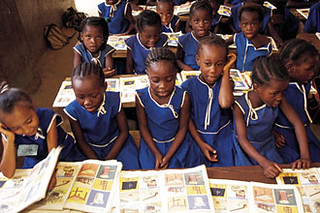
The devastation of the civil war (1991–2002) left a significant mark on the education system of Sierra Leone, with over 1,200 primary schools destroyed and 67% of school-age children out of school by 2001. While the country has steadily recovered, the road remains long. Encouragingly, the youth literacy rate (ages 15-24) rose to 73.46% in 2022 from around 72.99% in 2019. This indicates that more young people can read and write than ever before, offering a foundation for future learning and development. However, for many children, the challenge isn’t just attending school, it’s being able to learn effectively and move on to the next level.
Enrollment, Dropouts and System Stress
In Sierra Leone the formal structure of schooling includes six years of primary education, followed by junior secondary and then senior secondary school. According to the United Nations Children’s Fund (UNICEF), the completion rate in 2021 was 97% for primary boys and 100% for primary girls, an incredible improvement. Unfortunately, the transition to junior and senior secondary is lagging behind: the lower secondary completion rate in 2021 stood at only 46% for boys and 67% for girls, while upper secondary is even lower. These statistics are proof of the “access vs. completion” dilemma: getting children into school is no longer the only blocker, keeping them there and helping them succeed is now critical.
Regional disparities are stark, and rural locations continue to suffer major shortages of infrastructure, trained teachers, and learning materials. In 2016, the adjusted net enrollment rate at primary level was approximately 99%, showing impressive coverage but also hiding the deeper issues of quality and retention.
Emerging Reforms, Interventions and Looking Ahead
The government has boosted education spending to about 6.79% of GDP in 2023, a striking figure given the country’s limited resources. Major reforms now focus on strengthening foundational literacy, expanding school infrastructure and improving teacher training. Under the guidance of the Global Partnership for Education (GPE), Sierra Leone experienced a surge in student enrollment from under 2 million in 2018 to over 3 million by 2021. One principal in Kenema district reflected on the shift: “When we started using new reading materials and coaches visited regularly, even children who struggled before began asking to read out aloud.” In another outcome, gender-related reforms, including recent legislation against child marriage, are expected to improve girls’ participation in schooling, eliminating a major barrier to retention and learning.
Despite clear progress, several hurdles persist. The adult literacy rate remains low at 48.64% in 2022 – with just 41.3% of adult women literate and 56.0% of adult men. Crowded classrooms and rural isolation continue to suppress learning outcomes. According to reports, large numbers of older children are locked out of school or in under-resourced community schools lacking formal supervision. Most importantly, the emerging reforms must translate into learning gains, not just enrollment. As one national education analyst put it: “We have built the schools; now our task is to build the children’s skills.” Scaling reading recovery programs, ensuring teacher support, and closing the rural-urban gap will be crucial for the next phase.
Sierra Leone’s educational journey is moving from post-conflict restoration towards transformation. With over 70% youth literacy, rising completion rates and increased budgetary commitment, a solid foundation is in place. The focus now is on delivering inclusive quality education: ensuring children stay in school and providing them with meaningful opportunities. If these reforms hold, education may finally become the path out of poverty rather than a reminder of it.
– Jeff Zhou
Photo: Flickr
