Fighting Poverty through Traditional Art in India
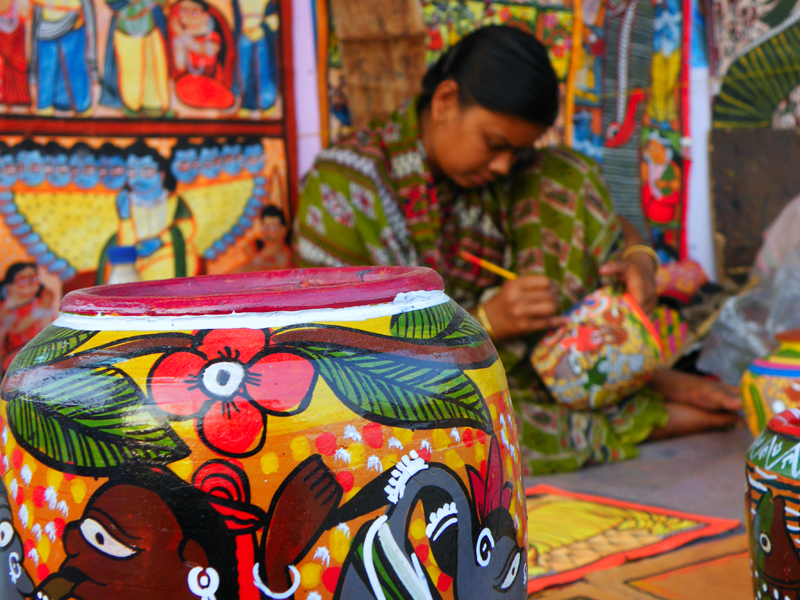
For many communities, art serves as the basis of culture. Unfortunately, though, traditional art forms commonly disappear during industrialization as cheap, mass-produced traditional-looking art reaches tourist vendors much quicker than authentic, quality traditional art. India has experienced this especially hard, almost completely losing multiple forms of art. Fortunately, multiple NGOs, in partnership with the Indian government and UNESCO, are stepping up to defend traditional art in India while also fighting poverty through traditional art.
Banglanatak’s Art For Life’s Focus on Community
Banglanatak’s Art for Life program serves as one of the biggest art-focused NGOs in West Bengal, a region in India bordering Bangladesh. For nearly 17 years, Art for Life has focused on fighting poverty through traditional art, especially in rural areas. The program focuses on three key aspects to improve the situation of traditional artists: artistry education, connections to markets and exchange collaboration. In collaboration with the government of West Bengal, the Art for Life program has built craft hubs for artists to sell their products and performers to host shows in 15 West Bengal provinces, reaching nearly 12,000 beneficiaries.
Art for Life has made a major contribution to fighting poverty through traditional art in India. Nearly 10,000 artists have risen out of poverty through the program, a stunning success rate. When participating, artists have seen a two and a half times increase in their income, with many buying houses and dramatically increasing their living standards. The communities around these craft hubs have developed into major tourist destinations as well. This allows these communities to keep their traditional cultural heritage alive while bringing in tourists, a rare combination. Women artists especially benefit from this program, with communities with craft hubs seeing a doubling in the number of female artists.
As part of its program, Art for Life also supports cultural exchanges so traditional artists worldwide can interact and spread awareness about their practices in artistic communities. Recently, Art for Life participated in an exchange in the Czech Republic where Indian and Czech artists exchanged playing styles and appreciation for their respective cultures.
Saturday Art Class: Starting Artists Young
Another NGO focuses on young children in its drive to fight poverty through traditional art. Saturday Art Class fills the gaps in primary school where art class commonly does not receive funds or schools discard it in favor of maths and sciences. Including art in the primary school curriculum can have many positive effects in reducing poverty. Children become more creative, engaged and keener problem solvers when they learned this crucial subject in school. This can help children develop skills critical to reducing poverty, including entrepreneurial spirit and creativity.
Saturday Art Class has reached more than 5,500 schoolchildren across 46 partnerships since its founding in 2017. By supplementing the skills taught by public schools with the critical Social Emotional Learning brought by art, Saturday Art Class helps lift children out of poverty by giving them the soft skills they need to succeed. Additionally, by exposing children to art at a young age, some will choose to go into the traditional craft sectors that Art for Life promotes, ensuring a generation of traditional artists to come.
Both of these initiatives have made great strides in fighting poverty through traditional art in India. While Saturday Art Class focuses on the development of children’s artistic skills, Art for Life focuses on training and equipping current artists. By fighting poverty through traditional art, these initiatives are preserving India’s rich cultural and artistic heritage for generations to come.
– Justin Morgan
Photo: Wikimedia Commons
