Brazil’s Sound: Samba Music and Social Justice
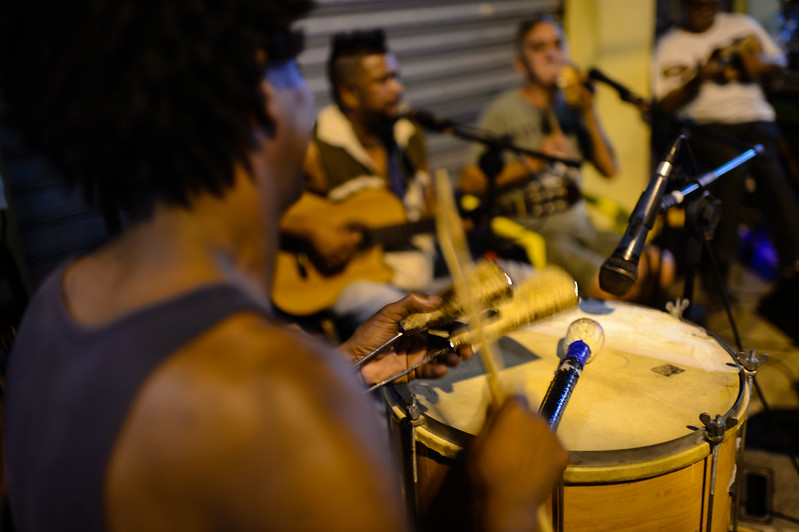 Samba music is a staple of Brazil’s urban culture, from influences found in African drum patterns brought over by enslaved people to the now world-famous Brazilian carnival. This style of music provides communities with opportunities for bonding and culture away from poverty. In recent years, communities brought together by Samba music have also become advocates for social justice. Amid Brazil’s political turmoil during the Bolsonaro years, jam sessions became both moments of release and powerful meeting points in favor of social justice.
A Brief History of Samba Music
Samba Music originates from drum patterns transported across the Atlantic by enslaved people taken from their homeland to work on the Brazilian plantations. Originally, the word Samba is thought to derive from the Kimbundu term “Semba” loosely translatable as “invitation to dance” or designating the informal parties held by slaves in Rio’s rural areas. In the early 20th century, following the abolition of slavery in 1888, Samba grew in popularity and enriched its tradition through exposure to other genres of popular music also brought to Brazil by immigration. German polka or Cuban Habanera brought song structure and lyrics to the rhythmic form leading to an early style of Samba popular among Brazil’s aristocracy, pairing slower tempos with melancholic and romantic lyrics.
However, it was during the ’50s in the favelas that Samba took on its most popular shape. In these poor urban areas, faster rhythms were oriented toward communal events like the Carnival, where bands of musicians would rehearse all year round to perform at the event. During the 50s, Brazil saw its music export grow considerably, with the likes of Gilberto and Jobin popularising Bossa Nova in cooperation with American jazz musicians. With the now world-renowned fame of the genre, urban populations have incorporated other styles of music into Samba, such as jungle drum patterns. Its strong association with the Carnival and urban popular culture pairs samba music and social justice deep within its roots.
Samba Music and Social Justice
As a style of music popular at its chore, the popularity of Samba intertwined its development with social justice struggles in the country. In the ’30s, during the dictatorship of General Getulio, Samba music offered a rallying crowd where protesters could mask socially engaged lyrics within the music and avoid censorship. This trend continued during the military dictatorship of the ’60s and ’70s. Carnivals offered moments of reversals of social structures, allowing a release for much of the grievances built out of social inequality and income disparity.
The music also grew as a tool for affirmation and protestation against racial injustices plaguing the country. The 1988 Carnival theme “One Hundred Years of Freedom: Reality or Illusion” asked burning questions amid the celebration of the 100 years of slavery’s abolition. The harsh conditions in urban slums were highlighted, pegging the question of true social evolution since the abolition of slavery.
Samba Music and Social Justice Today
Today, much of Brazil’s poverty remains urban. The United Nations (U.N.) reports that 72% of the country’s poor live in urban areas, with rates of informal settlements climbing as high as 22.15% in Rio de Janeiro and 54.47% in Belèm. Those tough circumstances are further reinforced by high rates of criminality in poor urban areas and high rates of inequalities across the country; Brazil clocks in as one of the most unequal countries in the world. Samba music in these underprivileged areas offers moments of community cohesion and peace.
Different institutions, such as the Renaissance Club in Rio de Janeiro, became a stronghold for social justice protests and community-led actions. Upholding, at its root, both the Afro-Brazilian roots of the music style and the historically underprivileged positions occupied in society as part of the same fight. Amid the COVID-19 crisis and the high death toll that struck poor urban communities hard, the Renaissance Club was a place in which the grievances of the community could be expressed through music and raise voices of social equality across race and economic backgrounds. The Club shows that samba music and social justice are still interlinked both by their heritage and current issues.
– Felix Stephens
Felix is based in London, UK and focuses on Business and New Markets and Politics for The Borgen Project.
Photo: Flickr
