Sex Trafficking in Bangladesh
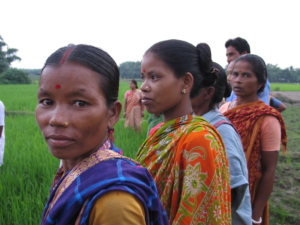 Research from 2016 estimated that between 10,000 and 20,000 women and children were trafficked for sex in Bangladesh. Victims were either exploited within the country or trafficked to other parts of South Asia and the Middle East. The Bangladeshi government has made limited progress in combating trafficking.
Sex Trafficking in Bangladesh
Bangladesh is a South Asian country bordered by India, Myanmar and the Bay of Bengal. It is a densely populated country with a population of roughly 174 million people. Poverty in Bangladesh stands at a rate of 18.7%, with women suffering the most. In 2022, Concern Worldwide reported that the unemployment rate for women in Bangladesh was double that of men, with 6.7% of women unemployed compared to 3.3% of men. Despite this disparity, Bangladesh ranked among the top South Asian countries advancing toward gender equality.
One form of work women in Bangladesh can find rather easily and often involuntarily is sex work. Research from 2016 conducted by Asad Islam and Russell Smyth suggests that there are currently between 150,000 and 200,000 female sex workers in Bangladesh. Many of them started working as teenagers. In a poll conducted by the pair, 283 sex workers were interviewed and less than 10% reported entering sex work by choice. Many of them were driven into the profession due to poverty in Bangladesh. With 14 official brothels and 18 red-light districts, if the survey is representative of the broader population, it suggests a significant number of women and children are subjected to forced sexual labor.
Bangladesh’s Red-Light Districts
Daulatdia is one of Bangladesh’s largest brothels, resembling the size of a village. It houses more than 2,000 sex workers in 2,300 single-story rooms and serves nearly 3,000 customers daily. Children are also exposed to this environment, with almost 300 living in the brothel with their mothers. Across Bangladesh, close to 20,000 children reside in brothels and red-light districts, many of whom are groomed to take on the same roles as their mothers eventually. The conditions in Bangladesh’s brothels and red-light districts are dire. The Guardian reported that poverty is rampant in these areas. In the article “The Living Hell of Young Girls Living in Bangladesh’s Brothels,” one woman shared her experience of living in a room with four other girls, where only small sheets separated them from one another.
Efforts and Aid
The United States Department of State has reported that Bangladesh remains lax in its efforts to eliminate trafficking. However, efforts to combat the issue have increased, particularly in law enforcement. Despite these efforts, the involvement of police in trafficking has not been adequately addressed. Convictions and prosecutions of traffickers increased, but most of the time, the courts would sentence offenders to fines instead of jail time. This has resulted in a weakened deterrence from the crime, thus allowing it to continue. Protection of victims also remains insufficient, housing and shelter services remain unstable and government aid to victims remains low.
There are positive developments, particularly in the attitude toward girls’ education. According to the Asian Development Bank, in 2004, an equal number of girls and boys were enrolled in primary school. By 2022, it was reported that 77% of girls were enrolled in school. Another positive news is that in September 2024, the U.S. voted to provide Bangladesh with $202 million in aid. This funding is part of the U.S.’s ongoing support for the Rohingya refugee crisis and efforts to uplift the country and alleviate poverty in Bangladesh.
Final Remark
Efforts to stop sex trafficking in Bangladesh are increasing. According to the United Nations (U.N.), in 2006, the poverty rate in Bangladesh stood at 41.5%; the number has significantly decreased to just 18.7% in 2022. Poverty in Bangladesh has been on the decline in the last 20 years. The trend only continues.
– Maya Renfro
Maya is based in Chicago, IL, USA and focuses on Good News for The Borgen Project.
Photo: Flickr
