Updates on SDG 2 in Sudan: The Battle Against Hunger
 In 2015, all U.N. member states adopted the 2030 Agenda for Sustainable Development. The agenda revolved around commitment to 17 Sustainable Development Goals (SDGs), a call to action for all developed and developing countries to commit to a unified approach to ending poverty and other global deprivations, with the U.N. Secretary General presenting annual SDG Progress Reports.
António Guterres presented the latest SDG Progress Report this year, which noted that global hunger and food, while having declined in recent history, are still above the figures from before the COVID-19 pandemic. With SDG 2 being the goal to attain levels of zero hunger, here are all the updates on SDG 2 in Sudan, including both the situation on the ground as well as the progress that is underway to combat rampant hunger in Sudan, as the African nation currently experiences a catastrophic famine.
Violence and Its Impact on Hunger
After three years of violence due to the conflict between the Rapid Support Forces (RSF) and the Sudanese Military, UNICEF reports that the conflict has affected 30 million people — half of them children — with violence such as summary executions, starvation, rape and bombardment displacing at least 10 million, which U.N. reports claim fit the 2008 U.N. Security Council definition for war crimes, crimes against humanity and genocide.
The Food and Agriculture Organization of the United Nations (FAO) estimates that 21.2 million people — nearly half of the population — are experiencing high levels of acute food insecurity, as conflict areas such as El Fasher and Kadugli have confirmed famine conditions. Restricted access due to violent conflict, as well as inflated food prices, strenuous journeys to receive aid, starving mothers’ reduced ability to breastfeed and funding cuts for said aid have driven the country to experience high levels of food insecurity.
UNICEF also reports that in the state of South Kordofan, where Kadugli is the capital, 10,000 children are suffering from severe acute malnutrition, while more than 70% of hospitals in areas experiencing violence are non-operational. Hospitals in safer areas are overwhelmed with limited resources and staff not receiving pay, severely limiting any safety net for families caught in a cycle of malnutrition.
Efforts on the Ground
As previously mentioned, funding cuts for relief organizations have limited the on-the-ground support for SDG 2 in Sudan. However, the latest Integrated Food Security Phase Classification (IPC) Special Snapshot reveals that as of September 2025, acute food insecurity had slightly improved with an estimated 3.4 million people no longer falling into the same category level of hunger, being IPC phase 3 or above, that they had from December 2024 to May 2035, the previous period of analysis. Furthermore, the IPC states that it expects food security conditions to improve between October 2025 and January 2026 with the arrival of the harvest season, though these harvest gains will be limited in some violence-ridden regions.
These incremental gains for SDG 2 in Sudan reflect the persistence of agencies like FAO, UNICEF and the World Food Programme (WFP).
- FAO is focusing on providing emergency livestock, fishery supplies and veterinary services for animals deemed vital sources of protein and nutrition to strengthen local food systems. In the summer of 2024, FAO and its partners distributed 5,000 MT of seeds, reaching around 2.7 million people.
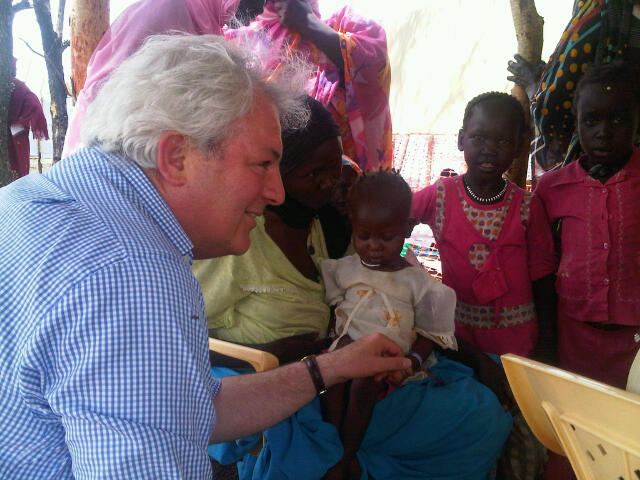
- Between January and November 2024, UNICEF screened 6.7 million children under 5 for malnutrition and more than 415,772 children suffering from severe acute malnutrition were treated. UNICEF recently regained access to South Kordofan, delivering convoys of essential medicines and ready-to-use therapeutic food — a nutrient-rich peanut paste that can save children suffering from acute malnutrition. For parents like Zahra, whose three-year-old daughter Tahir was suffering from malnutrition, this convoy was the first real sign of relief and survival for her child in many months.
- WFP delivers both food aid and cash assistance through its Food Assistance for Assets program, while distributing its micronutrient-rich product “VITAMINO” to children under 5, as well as pregnant and nursing mothers. As of December 2024, WFP had delivered food assistance to more than 800,000 Sudanese at risk of famine.
In addition, both UNICEF and the WFP offer vocational training for adolescents and adults, respectively, to provide greater access to livelihood opportunities as a safeguard against multigenerational poverty and hunger.
Looking Ahead
Despite encouraging signs that progress has occurred towards SDG 2 in Sudan has not completely ceased as famine in Sudan remains one of the most urgent humanitarian crises in the world with UNICEF stating that advocacy is crucial in the desire for greater humanitarian access across conflict lines both to provide more aid and to collect more data, increased foreign aid, mainly in the form of flexible spending, as well as a cessation of hostilities, the latter of which both UNICEF and the WFP deem vital in containing food insecurity and malnutrition.
With the FAO stating its need for $156.7 million for 2025 to assist 14.2 million people, UNICEF also urges the international community, including U.S. Congress and other donor governments, to increase flexible funding that allows rapid allocation to the most vulnerable.
Despite the dire circumstances, the persistence of local farmers, aid workers and global partners continues to plant the seeds of hope that sustain SDG 2’s mission. Each harvest supported, each child treated for malnutrition and each family trained for self-reliance moves Sudan — however slowly — closer to the promise of zero hunger.
– Luca Hanlon
Luca is based in Brooklyn, NY, USA and focuses on Good News and Politics for The Borgen Project.
Photo: Wikimedia Commons
